Alfred Barkov
English > The novel > Interpretations > Alfred Barkov
Most readers of The Master and Margarita agree that Mikhail Bulgakov himself was the prototype for the character of the master, and that his third wife, Yelena Sergeevna, was the inspiration for the character of Margarita. I'm not claiming that the majority is always right, but there is indeed more than enough evidence to support that assertion. We find it in the texts of the various versions of the novel, in the annotations, diaries, and letters of the author, his wife, and his friends, and in his biographical details.. According to the Ukrainian polemist Alfred Nikolaevich Barkov (1941-2004), however, this interpretation is thoroughly wrong. And not just this one. After all, he had a very idiosyncratic vision on almost all aspects of the novel.
Alfred Barkov, a mining engineer from Mariupol, Ukraine, published his first book of nearly 300 pages on this theme in 1994. The book's title was Роман Михаила Булгакова 'Мастер и Маргарита': альтернативное прочтение or Mikhail Bulgakov's novel "The Master and Margarita": an alternative lecture, a tour de force that he repeated in 1996 with his work Роман М.А. Булгакова 'Мастер и Маргарита': верновечная любовь или литературная мистификация? or M.A. Bulgakov's novel 'The Master and Margarita': a perpetual love or a literary mystification?. In both essays he vigorously argued against what he called the mistaken view that Bulgakov saw himself as the master, and Yelena Sergeevna as Margarita. According to Barkov, this interpretation would not be consistent with the true content of the novel and with the real intentions of the author. More than that, he rejected this view as «misleading and false».
He summarised it as follows: «Many pretentious things have been said about the novel 'The Master and Margarita' by Mikhail Bulgakov since it was first published almost thirty-five years ago. The misleading pro-Soviet and pro-Stalinist concept prevents the readers from noticing in the text the manifold elements indicating that the true content is completely different from the imposed interpretation»
This was not Barkov's first attempt to launch idiosyncratic ideas about literary works. Before that, he had already polemized about the «true content» of the theatre plays Hamlet by William Shakespeare (1564-1616) and Yevgeny Onegin by Aleksandr Pushkin (1831-1837). Barkov was defending categoric points of view that were seriously opposed to more common opinions. He also fought a public controversy with the Russian chess grandmaster Garry Kasparov (°1963) about intelligence and intellect. The readers who speak Russian are still able to follow the discussion on the website dasintellekt.narod.ru and on various blogs.
As far as The Master and Margarita is concerned, Barkov argued that the various studies of Bulgakov's work refuse to see the subtle hints in the novel to real situations, and consequently don't understand the satire. In his opinion, especially non-Russians can never understand it because the hints are so subtle that no translation can ever catch them.
Meanwhile, Barkov's own language was not really subtle. Anyone having dissenting views from his, he called «pretentious» and «deceiving», and on the English version of his website he described his own interpretation as «The True Content». Modestly, he continued: «Actually, this is the very first work containing an attempt to reveal the 'secret key' to the inner structure of the masterpieces created by Shakespeare, Pushkin, and Bulgakov». Good to know...
Barkov advances the thesis that The Master and Margarita is a parody of the theatre play Faust and the City, written by Anatoly Vasilyevich Lunacharsky (1875-1933), the People's Commissar for Education, Enlightenment and Sciences in the Soviet Union from 1917 to 1929. In Faust and the City, Lunacharsky sketches an interesting sequel of the famous Faust story written by Johann Wolfgang von Goethe (1749-1832). He starts from the last scene in Goethe's tragedy and shows Faust as the enlightened ruler over the land he conquered from the sea. The people under Faust's rule are ready to free themselves from despotism, so there is a revolution. Faust is happy with this evolution because he sees it as the realisation of an old dream - free people in a free world. Lunacharsky presents a social revolution as the start of a new historical era.
Despite this ode to freedom in his play, it was Lunacharsky who organised, as a People's Commissar, the first campaigns of censorship in the Soviet Union and he was heavily opposed to Bulgakov. In 1928 he delivered a speech on the Central Comittee of the Communist Party in which he called Bulgakov «the worst anti-Soviet author». According to Barkov, Lunacharsky was Bulgakov's prototype for two characters in The Master and Margarita: the critic Latunsky, and Arkadi Sempleyarov, the self-satisfied chairman of the Acoustics Commission of the Moscow theatres. There are, however, other prototypes for these characters with whom Bulgakov was directly confronted and whose characteristics correspond much better with the details he provides, as you can read on this page.
Barkov describes many more prototypes from the novel and situates a lot of them in the Moscow Art Theater MKhAT. The MKhAT is the theater for which Bulgakov wrote several plays. Barkov sees the MKhAT as the prototype of the Variety Theatre, although the Московский мюзик-холл or the Moscow Music Hall, which was right next to Bolshaya Sadovaya number 10, better matches the descriptions in the novel. The various acts which Mikhail Bulgakov described in The Master and Margarita were on the repertoire of the Music Hall, and not on the MKhAT's. The MKhAT was not a variety theater. On the contrary, it was one of the first theaters to receive the Academic level, and represented plays written by, among others, Charles Dickens (1812-1870), Henrik Ibsen (1828-1906), Jean-Baptiste Molière (1622-1673), Anton Chekhov (1860-1904) and William Shakespeare (1564-1610).
Anyway, according to Alfred Barkov, the MkhAT was the hub of Woland's show. The characters of Grigori Rimsky and Ivan Varenukha were, so he claimed, based on Constantin Stanislavsky (1863-1938) and Vladimir Nemirovich-Danchenko (1859-1943), the founding fathers of the MKhAT. The Koroviev character would have been a parody of Vasily Ivanovich Kachalov (1875-1948), an actor of the MKhAT, and the female vampire Hella would have been based on Olga Sergeevna Bokshanskaya (1891-1948). Olga Sergeevna was Yelena Sergeevna's sister and the personal assistant of MKhAT-director Vladimir Nemirovich-Danchenko. Bulgakov didn't always get along with his sister-in-law, but yet she had typed an important part of the text of The Master and Margarita in the spring of 1938.
Everyone is of course entitled to his own opinion. Other analysts suggest other prototypes for Latunsky and Sempleyarov but that should not be a surprise - it's absolutely normal that in a satire which is criticising a political system, characteristics of different protagonists of the system are bundled in one or more characters. But often it seems that Barkov's sole objective is to make conflicting statements, just as a principle.
The way Barkov analyses the text of The Master and Margarita to come to his conclusions looks sometimes rather weird, but I think it's worthwhile to get acquainted with it.
For example, Barkov holds an endless plea to prove that the Koroviev character is the narrator in The Master and Margarita. One can ask why he spents so considerable effort on it, but we'll talk about that later. Let us first have a look at his way of reasoning. What follows is just an arbitrary grasp from the material he provides. Barkov analyses the scene in which the master meets Ivan and starts telling the story of his awakening love. There are three successive paragraphs, all on the same page, starting with more or less the same phrase. In the English translation (1979 - Richard Pevear and Larissa Volokhonsky) they sound like this: «Ivan learned that the master and the unknown woman...», «Ivan learned that his guest and his secret wife...» and «Ivan learned from the guest's story how the lovers...». According to Alfred Barkov, this is a stylistic lapse. And an important one because, if the narrator was Bulgakov himself, it would be nothing less than an «artistic catastrophy», which Barkov «refuses to believe». So he concludes: this styllistic lapse can only come from someone with a low educational level but who is, by the amount of knowledge he appears to have, close enough to the leading character of the book. So, according to him, it had to be Koroviev, one of Woland's henchmen. Barkov completely ignores the most obvious explanation, namely that Bulgakov wanted to parody the lower level of the loyal and programmed party comrade Ivan Bezdomny with this «stylistic lapse».
To argue this further, Barkov gathers, in a rather selective way, statements and excerpts from the novel's text. With this collection of citations, Barkov sets out what he calls a language zone. That's a quite homogeneous and harmonious aggregate of excerpts with the same level of phraseology, grammatical characteristics and figures of speech. And, I have to admit, the collection which Barkov builts up to define the narrators language zone is impressive and corresponds pretty well to Koroviev's language zone. At least in some fragments. Because, probably for his own convenience, he forgot to include in the defined language zone a whole number of statements in which the narrator actually shows a very high level of education. So Barkov puts considerable effort in proving that Koroviev is the narrator. He spends almost the full second quarter of his 298 pages plea on it. One could wonder why, but that will become clear later on. Let's first have a look at his other conclusions.
According to Barkov, the real life prototype of the Woland character was Vladimir Ilyich Lenin (1870-1924) - this was the revolutionary pseudonym of Vladimir Ilyich Ulyanov. For proving this, he refers to other Professors who appeared in previous novels of Bulgakov like The Fatal Eggs and Heart of the Dog, and to many other details like, for instance, the fact that Woland would have had difficulties to pronounce the letter «V», which would have been a speech impediment from which Lenin also would have suffered.
The next argument Barkov used for considering Lenin the prototype for Woland demonstrates the lengths he was willing to go to in order to prove his point. At the beginning of the 20th century, Lenin had sent several letters to Capri, the Italian island where the Russian writer Maksim Gorky (1868-1936) - pseudonym for Aleksei Maksimovich Peshkov - resided. He sent these letters from Geneva, Bern, and Paris, and thus used his surname (Ulyanov) and the initial of his first name (Vladimir) in the French transcription as the sender. He did, however, use «W» instead of «V» as the initial for his first name. In Russian, no distinction is made between the two. As a result, according to Barkov, the name on letters would have been written as «Wl. Oulianoff», which according to him looks very much like «Woland» in a Russian transcription . But perhaps he himself sensed that this was a bit of a stretch, because he wrote: все составляющие слово «Воланд» буквы, за исключением последней «д» or all the components of the word «Woland», except for the letter «d». Not a very strong claim in my opinion, because I think there are more differences than similarities between the words В. Ульянов and Воланд.
According to Barkov, the aforementioned Maksim Gorki was the prototype for the character of the master. Gorky had been appointed by Stalin as the first chairman of the so-called Союз Советских Писателей [Soyuz Sovyetskikh Pisateley] or Union of Soviet Writers. The union was founded in 1932 and all other writers' associations were dissolved. The membership was open to all writers - including critics and translators - who were «striving for the realisation of the socialist reality». Non-partymembers could also qualify as so-called попутчики [poputshiki] or fellow-travellers. At the first congress, in 1934, the Social Realism was proclaimed as the only essential artistic working method. As from 1934-1935 it was almost impossible for non-members to publish their works. Until his death in 1936, Gorky was systematically called master by the communist party newspaper Pravda.
As a consequence of this opinion Margarita's character would have been a prostitute, hired by «dark forces» to charm the master. For this thesis Barkov suggests Maria Fyodorovna Yurkovskaya (1868-1953) being the real prootype of Margarita. She was an actress of the MKhAT using the pseudonym Maria Andreeva. Before the revolution, when the bolsheviks were still operating in the underground, she was one of Vladimir Lenin's assistants, comparable to Hella for Woland in the novel. From 1918 to 1921 Maria Andreeva was Commissar for Theatres and Public Spectacles in Petrograd, and from 1931 to 1948 she was Director of the House of Sciences in Moscow. It is said that it was on Lenin's orders that Maria Andreeva «recruted» the talented writer Gorky to serve the bolsheviks. Barkov was not really font of Maria Andreeva, as is shown in his following description: «When this beautiful woman was fourteen, she entertained herself with cutting cats' throats».
As a result, Barkov did not like the Margarita character neither. According to him, she would have betrayed the master to the secret police, just like the prostitute Niza had lured Judas to his murderers in the biblical story. Barkov's concluded: «In 'The Master and Margarita', Bulgakov depicted Margarita as a bestial whore betraying the master to the secret police. The belief that Margarita reflects Bulgakov's third wife is erroneous». He proves his these by the fact that Margarita leaves the master in the basement saying «that she was expected, that she had tot bow to necessity», after which he was arrested. It is clear to Barkov that this shows her contacts with the secret police and that Margarita betrayed the master.
For the sake of convenience, Barkov forgets that in the novel is unveiled that the master was betrayed by Aloisy Mogarych, the «new friend» of the master who wanted to take over his basement, and who had to justify himself for this at Woland's after the ball.
And here it becomes clear why Barkov needed to identify Koroviev as the narrator of the story. Because, if this accomplice of the devil, this professional liar, is the narrator, then all passages which don't comply with Barkov's theory - and there are many! - can be easily called «attempts of a born liar to veil the truth». «Just like we can observe it in the works of Shakespeare and Pushkin, the biased language of the narrator is deliberately intended to indoctrinate the readers with a false perception of the true content», Barkov writes. So...
But all right... what else did Barkov discover? Well, he confirms that Mikhail Bulgakov would have played a role in his own novel indeed, not as the master though, but as Ivan Bezdomny. One of Barkov's arguments is that, in one of the earlier versions of The Master and Margarita, the poet was called Ivanushka Popov. Popov is one of the most common surnames in Russian, and it means «son of the priest». According to Barkov, that is a reference to Afanasy Ivanovich Bulgakov (1859-1907), the father of the author, who was a professor at the Theological Academy in Kyiv. Furthermore, Barkov relies on a note that Bulgakov made in his diary on July 21, 1924, after a visit to Lyubov Evgenyva Belozerskaya (1894-1987), who later became his second wife. Bulgakov felt somewhat depressed that evening and wrote: «I went away into the rain feeling sad and somehow homeless». Bezdomny means the homeless, hence.
Of course it is interesting to observe how a man finds evidence to justify a theory by intense and sustained research, often in very small details. But one could wonder if, at such level of details, he can distance himself sufficiently. It seems that Barkov, by searching for details, doesn't see the more obvious and visible clues, needing less coils to fit or, worse, that he ignores them consciously. Alfred Nikolayevich Barkov antagonized many Russian literary researchers with his theories. No great matter as such, of course, it can only keep them alert.
On this website I also give many explanations of prototypes, but I do not suffer from the In-depth Search Syndrome like Barkov. In a satire, every word does not have to have a deeper meaning. Sometimes I take it for granted that the author, when he describes «a rose», simply has «a beautiful flower» in mind.
Barkov also pushed the polemic at the top with statements such as: «the most important thing in literary criticism is not to invent versions that close the question without solving anything...». In the light of his own criticisms you would almost think that this was meant ironically.
But at times when people make less time to check and double-check the facts, there is a risk that such nonsense is captured and spread by others as genuine information. On some contributions about Mikhail Bulgakov on Wikipedia, Barkov is presented as a reliable scientific reference, and the website of the BBC - the respectable British public broadcaster - explicitly referred to Barkov in 2006 to argue that the character of Woland was based on Lenin with the following justification:«Not only is Woland [...] bearded, he also has difficulty in pronouncing the letter «V», a speech impediment from which Lenin also suffered.» Well how about that... a beard? One of the first things which Bulgakov writes about Woland is that he is выбрит гладко [vybrit gladko] or clean-shaven. And as far as the speech impedement is concerned: in Russian, the name Woland is written as Воланд. This can be transliterated as Woland, but Voland is also accurate. So it depends on the translator whether Woland, according to the BBC, has got a speech impediment in English or not.
In November 2003, Barkov promised to do his utmost to publish his disclosures on the internet in English as soon as possible. He would never be able to keep his promises, When I was in Ukraine in 2004 and tried to contact him, I heard that he died earlier that year, on January 4, 2004.
In 2016, the Moscow publishing house Algoritm tried once more to spread Barkov's ideas by re-publishing his «alternative reading», albeit under a different title: Метла Маргариты. Ключи к роману Булгакова [Metla Margarity. Klyuchi k romanu Bulgakova] or Margarita's broom. Keys to Bulgakov's novel.
It should be clear by now that I'm not endorsing the theorems of Alfred Barkov. But, as the English writer Evelyn Beatrice Hall (1868-1939) wrote in in her book The Friends of Voltaire from 1906: «I disapprove of what he says, but I will defend to the death his right to say it». So, since the texts of Barkov are disappearing from the Internet one after the other since he died, I've made the effort to re-compile them and to make them available in the Archives section of this website.
The Russian text of the first essay
A partial English translation of the first essay
The Russian text of the second essay
An English summary of the second essay
Sources
Barkov, Alfred Nikolaevich, Роман Михаила Булгакова "Мастер и Маргарита": альтернативное прочтение, Tekhna, Kyiv, 1994, 298 p. - ISBN 5770770643.
Barkov, Alfred Nikolaevich, Метла Маргариты. Ключи к роману Булгакова, Algoritm, Moscow, 2016, 384 p. - ISBN 978-5-906842-35-0.
Barkov, Alfred Nikolaevich, Роман М.А. Булгакова 'Мастер и Маргарита': верновечная любовь или литературная мистификация? Not published in book form.
Share this page |
authors
Illustrations
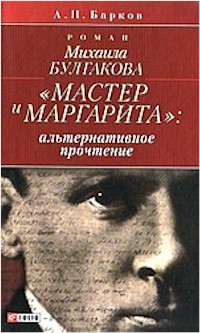
Alfred Barkov - M.A. Bulgakov's novel
'The Master and Margarita': an
alternative reading (1994)
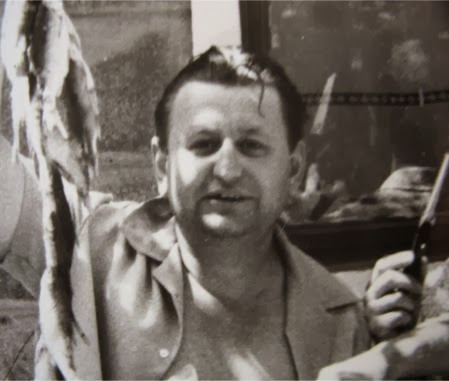
Alfred Barkov
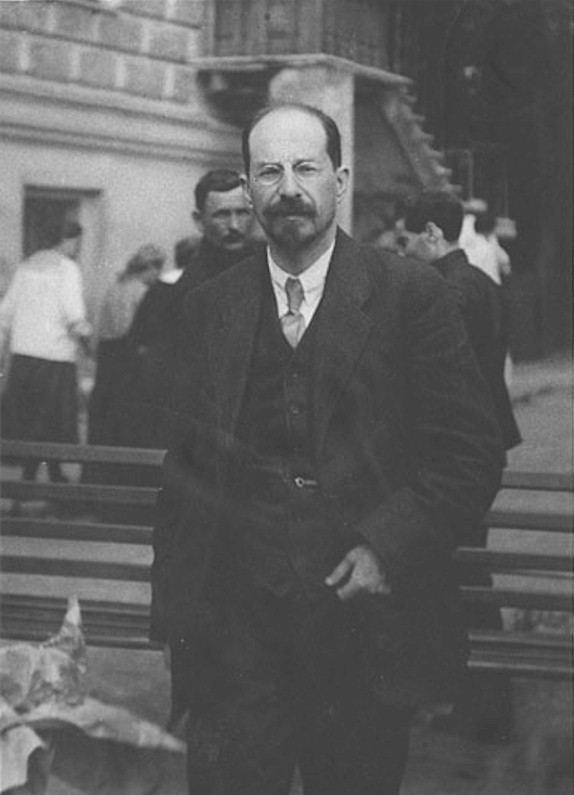
Anatoly Lunacharsky

Anatoly Lunacharsky - Faust and the city
(1918)
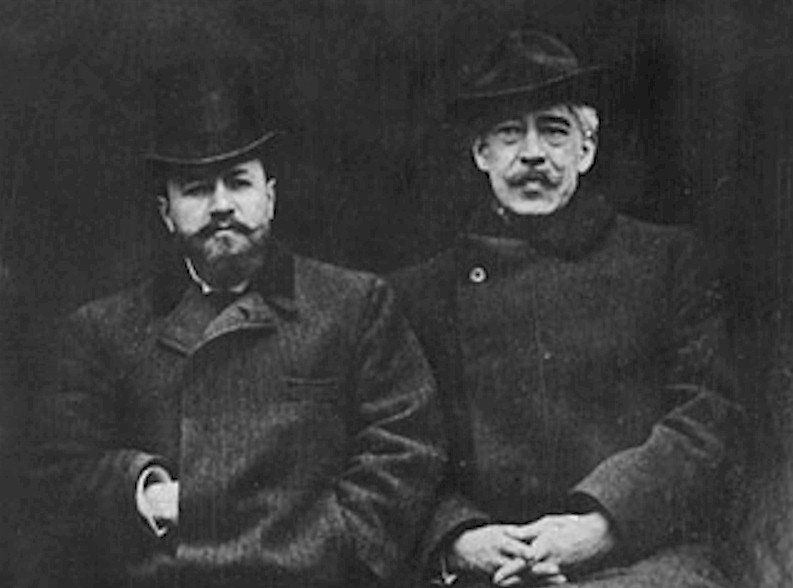
Nemirovich-Danchenko and Stanislavsky
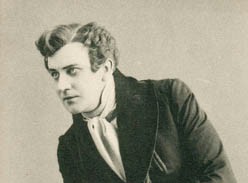
Vasily Ivanovich Kachalov

Maxim Gorky
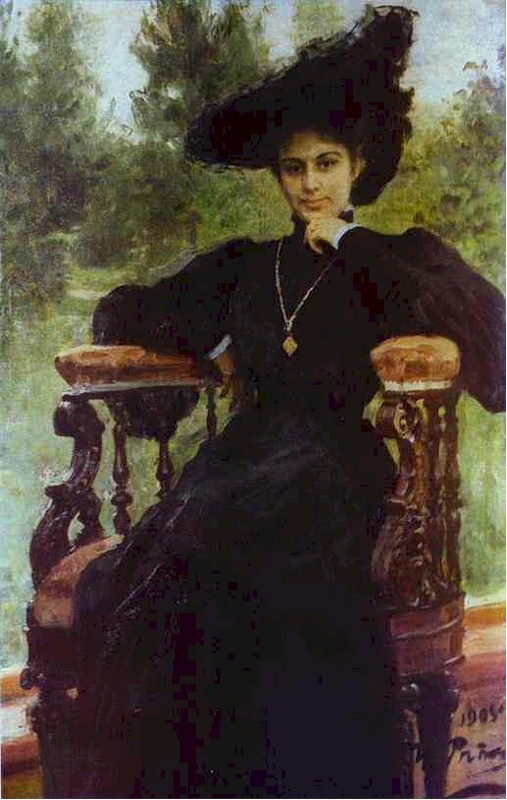
Maria Andreeva
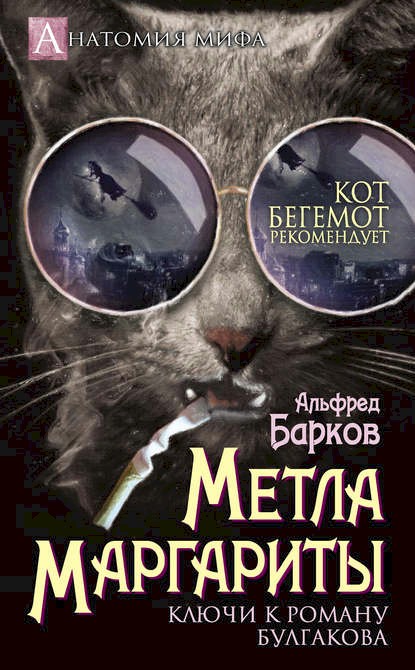
Alfred Barkov - Margarita's broom.
Keys to Bulgakov's novel. (2016)
Your guide through the novel

In this section are explained, per chapter, all typical notions, names of people and places, quotations and expressions from the novel with a description of the political, social, economical and cultural context.
Bulgakov's Moscow

Have a look at the most important places from the novel at a single glance on a clickable map of Moscow.