The writers at Griboedov's
English > Characters > Moscow characters > The writers at Gridoedov's
Bulgakov describes the visitors of the Griboedov house on the evening of Berlioz' death. Most of them he only mentioned briefly, but with some striking characteristics. Often it are hints enabling the reader to connect them with real life characters.
First there are the twelve members of Massolit's executive board. Their chairman, Berlioz, just decapitated, is not present for obvious reasons. Ten others are explicetly mentioned by Bulgakov: Beskudnikov, Dvubratsky, Bos'n George, Zagrivov, Poprichin, Ababkov, Glukharev, Deniskin, Quant and Zjeldybin. We can only guess who the two other characters are. Maybe one of them is the voice we only hear once in the discussion, when Boz'n says that there's three thousand of them in Massolit. «Three thousand one hundred and eleven», someone put in from the corner.
Further that night are prominently present on the dancing floor: the poetess Tamara Polumesyats, the novelist Zhukopov, the beautiful Semeikina-Gall, an architect, Dragunsky and Cherdakchi, the writer Johann from Kronstadt and a certain Vitya Kuftik from Rostov, apparently a stage director. And also the most eminent representatives of the poetry section of Massolit - Baboonov, Blasphemsky, Sweetkin, Smatchstik and Addphina Buzdyak are mentioned.
Rather than parodying specific writers, Bulgakov also employs Gogol's device of significant and funny-sounding names in this passage, like:
Glukharev - Глухарев - black grouse
Dragunsky - Драгунский - dragoon
Baboonov - Павианов (Pavyanov) -baboon
Blasphemsky - Богохульский (Borokhulsky) - blasphemer
The belletrist Beskudnikov
The belletrist Beskudnikov is a «quiet, decently dressed man with attentive and at the same time elusive eyes». In an earlier version of the novel he was depicted as «a good looking, Frenchy man with a suit and solid shoes made in France». The real life prototype for the belletrist Beskudnikov could have been the writer and playwright Vladimir Mikhailovich Kirshon (1902-1938), one of the secretaries of the RAPP in Moscow, and one of the most relentless persecutors of Bulgakov. In August 1937, Kirshon was arrested along with other former RAPP leaders, and the next year he was executed at the Butyrka prison in Moscow.
But in the third version of The Master and Margarita, on which Bulgakov worked from 1932 to 1934, the Beskudnikov character was introduced as «the chairmain of the Playwrights Section» of Massolit. This could be an indication that its real life prototype was Yuri Livovich Slyozkin (1885-1947). In his notebooks, under the title Results 1928-1929, Bulgakov wrote: «Slyozkin proudly announced his appointment as the Chairman of the Bureau of the Drama Section». Slyozkin was a novelist which Bulgakov had met in 1920 in Vladikavkaz. One year later, he had introduced Bulgakov in the literary circles of Moscow. But in 1925, this «supposed friend» would use him in a rather malicious manner as a prototype for the journalist Alexey Vasilievich in his novel Девушка с гор [Debushka s gor] or The girl from the mountains. In return, Bulgakov would use Slyozkin as a prototype for the elderly, patronizing and jealous writer Likospastov - «an unbelievable scum» - in his Theatrical Novel.
The poet Dvubratsky
Dvubratsky is derived from the Russian word Двубратский [dvubratsky], which means two-brotherly, but which is also used to say opportunistic. It is likely that the poet and translator Alexander Ilich Bezymensky (1898-1973) was the real prototype for Dvubratsky. Bezymensky means The Nameless, which feeds the theory of some scholars that Bezymensky could as well have been the real prototype of Ivan Bezdomny, the Homeless. The name Bezymensky was not a pseudonym, though. But Bezymensky was such a proletarian poet that he said: «if Bezymensky had not been my birth name, I would have taken it as a pseudonym».
In 1929, Bezymensky had written a theatre play Выстрел [Vystrel] or The Shot, which partly was a parody of Bulgakov's The Days of the Turbins. In the 1929-1932 version of The Master and Margarita, the poet Dvubratsky was called Aleksandr Ivanovich Zhitomirsky. Zhitomir is the city, 140 km west from Kyiv, where Bezymensky was born.
Boz'n George
It is a natural conclusion that behind Boz'n George, the male pseudonym for the female writer Natasha Lukinisha Nepremenova in the novel, we suppose a parody of the French writer Amandine Dupin (1804-1876) who used the pseudonym Georges Sand. Sand was a 19th-century feminist, who had a relation of nine years with the composer Frédéric Chopin (1810-1849). She wrote novels inspired by socialism and was politically active, by being a member of the Temporary Government in 1848, in the build-up to the Second Republic in France.
However, according to Elena Sergeevna, Bulgakov's third wife, he would have integrated some more writers in his description of the Boz'n George character. Like, for instance, the playwright Sofya Aleksandrovna Apraksina-Lavrinaitis (1885-?), who used the male pseudonym Сергей Мятежный [Sergey Myatezhny] or Sergey the Rebel. She knew Bulgakov and presented him, in 1939, a libretto for the Bolshoy Theatre.
The scenarist Glukharev
Glukharev is derived from the Russian word глухарь [glukhar], which is a grouse, a bird of the family of the gallinaceans.
Tamara Polumesyats
The name Полумесяц [Polumesyats] means half moon.
The novelist Zhukopov
Zhukopov is derived from the Russian word жук [zhuk], which means beetle or bug. According to the Russian psychologist and translator Valery Konstantinovich Mershavka (°1957), Bulgakov would have found his inspiration for this character with Alexander Gavrilovich Shlyapnikov (1885-1937), a revolutionary of the first hour who was leader of the so-called Workers' Opposition in the 1920s. In 1931, Shlyapnikov published the book On the eve of 1917, with his memoirs about the Russian Revolution. However, we have not found any confirmation that Shlyapnikov would be the prototype of Zhukopov.
some movie actress in a yellow dress
In the early versions of The Master and Margarita, Zhukopov the novelist danced just «with a movie actress». It was only in 1934 that this description was changed into «some movie actress in a yellow dress». We therefore have good reasons to believe that the prototype of this movie actress was none other than Lyubov Petrovna Orlova (1902-1975).
Indeed, in 1934, the successful film Весёлые ребята [Besyolye rebyata] or Jolly Fellows by director Grigory Vasilevich Aleksandrov (1903-1983) was released in Russia, with Orlova, the director's wife, in the leading role. The film was of course in black and white, but Orlova shone in a yellow dress on the poster, made by Yosif Vasilevich Gerasimovich (1894-1982). Two years later, the couple Aleksandrov-Orlova would make Цирк [Tsirk] or The Circus, a propagandist movie which glorified the Soviet regime, and about which you can read more in the Context section of this website.
Click here to read more on The Circus
Cherdakchi
Cherdakchi is derived from the Russian word чердак [cherdak], which means attic, junk room or loft.
The writer Johann from Kronstadt
With this character Bulgakov refers to the two film scripts of Vsevolod Vitalyevich Vishnevsky (1900-1951), the man who inspired him to study in depth the character of Mstislav Lavrovich. In these scripts, We from Kronstadt (1933) and We are the Russian People (1937), there is a charachter named Johann Ilyich Sergeev (1829-1908), nicknamed Father Johann, rector of the cathedral of Kronstadt, which is not far from Saint-Petersburg. He organised many activities for the poor and was canonised by the Russian orthodox church.
Mstislav Lavrovich
Mstislav Lavrovich is the critic who reviled the novel of the master and proposed to strike back hard against «pilatism» and «icon-daubers». According to the literators in Griboedov he has got «five rooms to himself in Perelygino». Perelygino is a symbol for Peredelkino, a place at 25 km southwest of Moscow. It was very popular among the cultural and literary elite in the Soviet era. In 1958 it became very famous when Boris Leonidovich Pasternak (1890-1960) won the Nobel Prize for Literature. Pasternak had a dacha there in which he worked on his novel Doctor Zhivago. Nowadays the new rich are buying the whole village. They demolish the wooden houses for replacing them by luxury palaces.
Lavrovich is a parody to Vsevolod Vitalyevich Vishnevsky (1900-1951), a novellist and playwright and a rabid rival of Bulgakov. He prevented that Bulgakov's pieces Бег [Beg] or The Flight and Мольер [Molière] could be performed.
Share this page |
Characters in Moscow
- Annushka
- Archibald Archibaldovich
- George Bengalsky
- Mikhail Aleksandrovich Berlioz
- Ivan Nikolayevich Ponyrov (Homeless)
- Nikanor Ivanovich Bosoy
- The sketch-writer Khustov
- Latunsky, Ariman and Lavrovich
- Stepan Bogdanovich Likhodeev (Styopa)
- Savva Potapovich Kurolesov
- Professor Kuzmin
- Baron Meigel
- Aloisy Mogarych
- Maximilian Andreevich Poplavsky
- Alexander Riukhin
- Arkady Appolonovich Sempleyarov
- Andrey Fokich Sokov
- Doctor Stravinsky
- Ace of Diamonds
- The writers at Griboedov's
- Other characters in Moscow
Illustrations
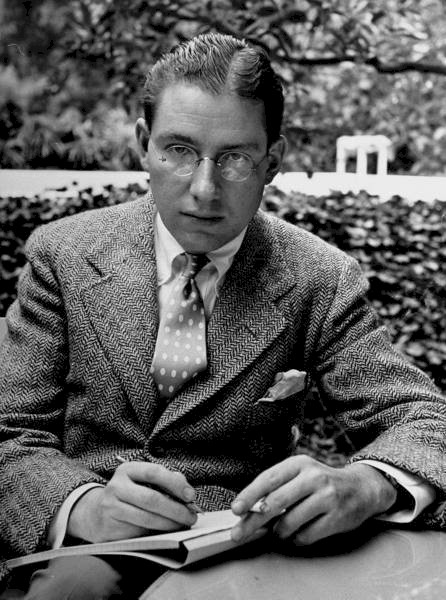
Vladimir Mikhailovich Kirshon
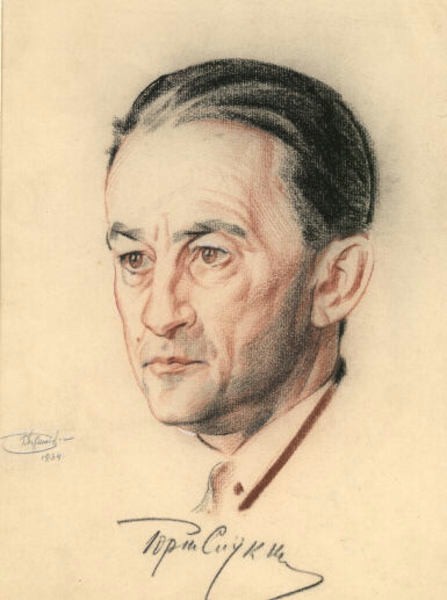
Yuri Livovich Slyozkin
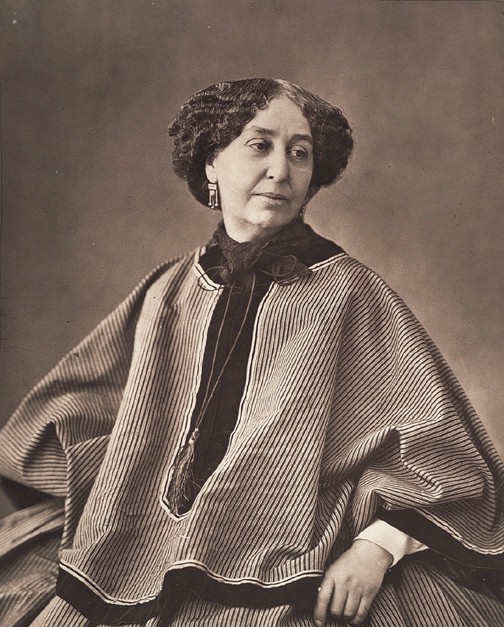
Georges Sand
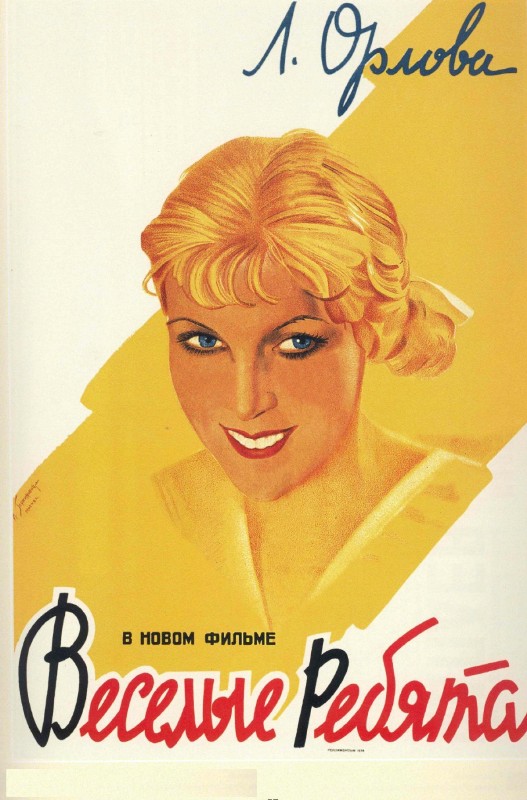
The actress in a yellow dress
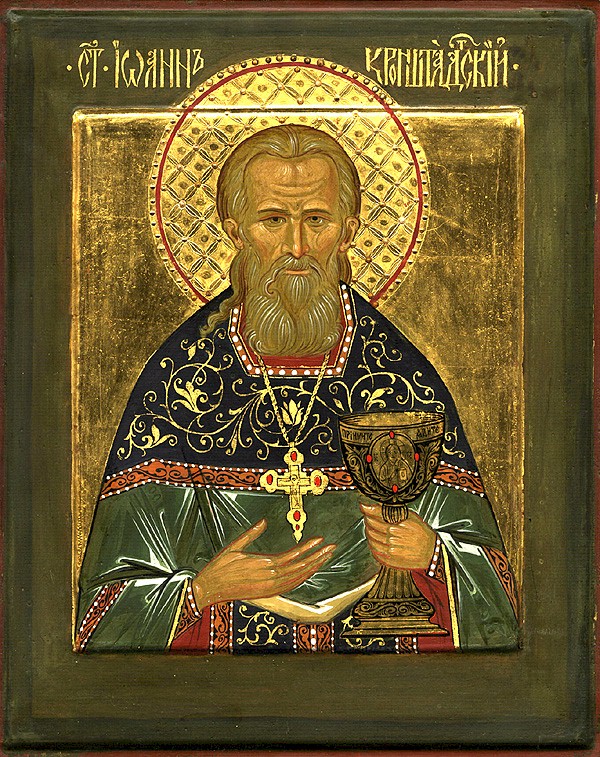
Johann Ilyich Sergeev from Kronstadt
Your guide through the novel

In this section are explained, per chapter, all typical notions, names of people and places, quotations and expressions from the novel with a description of the political, social, economical and cultural context.
Subtitles

Your webmaster subtitled various films and series based on The Master and Margarita in English, French, Dutch, German, Italian and Spanish.