The Spaso house
English > Locations > Locations from the novel > The Spaso house
To describe the Great Ball at Satan's in chapter 23 of The Master and Margarita, Mikhail Bulgakov found his inspiration in the Spaso house.
A house with a history
The Spaso House is close to the Arbat, in Spasopeskovskaya ploshad no. 10. Since 1933 it serves as the residence of the American ambassador in Moscow.
In the 17th century, the vicinity of the Spaso House was populated with royal huntsmen and falconers. The house and the square where it was situated were named after a most charming Russian-orthodox church nearby: Церковь Спасителя (Tserkov Spasitelya) or Church of the Saviour.
In 1914, at the beginning of World War I, the house got its present outlook under orders of the wealthy Russian merchant and industrialist Nikolay Alexandrovich Vtorov (1866-1918). The architects Vladimir Dmitrevich Adamovich (1872-1941) and Vladimir Matveevich Mayat (1876-1954) constructed a villa in New Empire style, with an impressive interior. The huge hall is over 20 meters long and is characterised by a huge chandelier of Russian crystal. After the revolution, in 1920, the new Soviet government expropriated the house and started using it for official occasions. The first new tenant was the People's Commissar for Foreign Affairs.
The receptions of William Bullitt
In 1933, the United States of America and the Soviet Union established diplomatic relations again. After the October revolution of November 7, 1917 the United States did not acknowledge the bolshevik government and exactly one year later, on November 7, 1918, they called back their ambassador. The embassy in Moscow was closed down on September 14, 1919. But in 1933 a new ambassador was installed, it was William Christian Bullitt Jr. (1891-1967). The Soviet government proposed to him three possible residences. He chose for the Spaso House. In March 1934 he moved in, and in 1935 the new ballroom was finished. In the summer of 1934 the first parties were held - they would soon have a special reputation.
Bulgakov attended some of the receptions here. Ambassador William Bullitt had seen The Days of the Turbins in the Moscow Art Theatre MKhAT and he had sent Bulgakov several invitations to cosey evenings. Guests of the American embassy visited the Bulgakovs in their apartment and the Bulgakov’s were invited to glorious feasts.
The 1934 Christmas reception
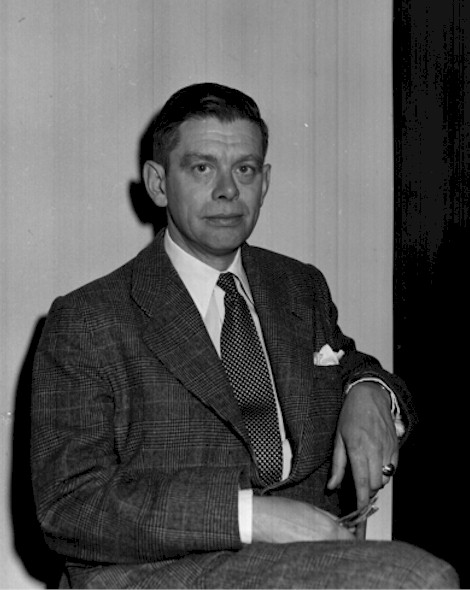
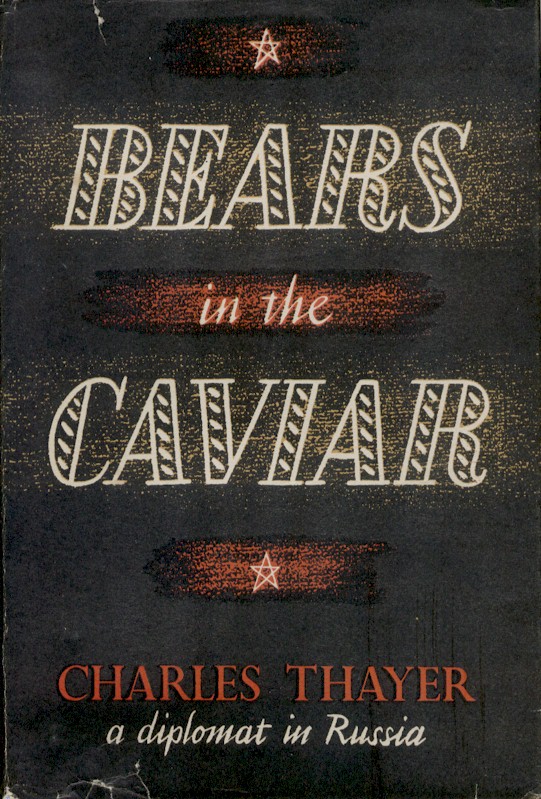
One of the most notorious parties organised by William Bullitt in the Spaso House was the Christmas reception in 1934. Charles Wheeler Thayer (1910-1961), one of the Embassy employees, colourfully described it in his book Bears in the Caviar (1951). Ambassador Bullitt, who was not really impressed by the «party circuit» in Stalin's Moscow, had ordered his staff to organise a unique reception for the American Colony in Moscow. «And make it good», he insisted. «They've been long enough without a real shindig.» Unfortunately, he was called back to Washington before the holiday for consultation with the President, and his Counselor, John Cooper Wiley (1893-1967), was to act as host instead.
During the party the upper lights all of the sudden went out, and the attendees saw three big black sea lions crawl from the bathroom into the reception hall: Misha, Shura and Lyuba. One of them was holding on its nose a little Christmas tree, while skillfully balancing it, the other held a tray with glasses and the third a bottle of champagne. They even played the Internationale on accordions. Suddenly the animal trainer from the Moscow circus, who had one too many, suddenly knocked off his feet. «The artists» felt right away that they were at large now and kicked up a real brawl. It took a lot of trouble to catch the animals and bring them to the truck to get them back to the circus where they came from.
And even on the way back the animals continued to provide entertainment. Halfway home, Lyuba managed to jump off the truck.In winter the streets of Moscow are usually an icy composition of hard-packed snow, so Lyuba was in her element when she frolicked along the boulevard. Half of the police of the Arbat District were deployed to chase her down to the banks of the Moscow River, before they surrounded her.
The 1935 Spring Festival
Some months later the staff of the Embassy showed that they had not learned from the experience with the sea lions at the Christmas reception. In the spring of 1935, William Bullitt was again called back to Washington, and before his departure he again instructed that three days after his return a reception should be organised that would compete with anything Moscow had yet experienced, before or after the Revolution. «The sky's the limit», he said, «just so long as it's good and different». Irena, the wife of counselor John Wiley, suggested to call it the Spring Festival.
Almost every important member of the Politburo was present at the party, along with the crème-de-le-crème of the artistic elite, including Mikhail Bulgakov and his spouse Elena Sergeevna Shilovskaya (1893-1970).
The Embassy staff had hired some hundred rare finches, a little bear, cocks and other animals from the farm, an orchestra from Prague, flowers from Helsinki, paté from Strasbourg, a sword dancer from Tbilisi, and much more unusual things to impress the Soviet guests. Alas.
The animals, borrowed from the Moscow zoo, caused much uproar. The unhousebroken baby bear ruined the uniform of Soviet general Alexander Ilyich Yegorov (1883-1939), and hundreds of finches, also not housebroken, flew noisily about the high-ceilinged rooms during the party and for days thereafter.
In her diary, Elena Sergeevna wrote about the 1935 Spring Festival as follows:
«I have never seen such ball in my life. They were all carrying tail coats, there were only a few jackets and smokings.
They danced in a room with columns lit by streams of light coming from a gallery; behind a gate which separated them from the orchestra, there were living pheasants and other birds. We had dinner at small tables in a huge dining room with, in a corner, living baby bears, goats and roosters in cages. During dinner, musicians played the accordeon.
In the room where we had dinner, the table where we were sitting was covered with a green transparant cloth lit from inside. There were armfuls of tulips and roses. I do not mention the abundance of food and champagne. On the upper floor (it is a big and luxurious mansion) they had arranged a room with a grillroom for shashlik and people were doing Caucasian dances.
We wanted to leave the place at half past three but they did not allow us to leave. We left at half past five in one of the cars of the embassy. A certain Steiger, I believe, a man whom we do not know but whom all Moscow knows and who can always be found when there are foreigners, joined us in the car. He was sitting next to the driver and we were in the rear. It was already daylight when we arrived home.»
The man Steiger was Boris Sergeevich Steiger (1892-1937), the «stool pigeon» who was the prototype for Baron Meigel in the novel.
Click here to read Charles Thayer's report on the receptions [en]
Commemoration
On October 29, 2010, the American Ambassador John Beyrle hosted an Enchanted Ball at the Spaso House, to mark the 75th anniversary of Ambassador William Bullitt's legendary Spaso House receptions in 1934 and 1935.
Watch the video of this ball, created by Vitaliy Mendeleev
Metro: Смоленская (Smolenskaya)
Share this page |
locations
Moscow map

Have a look at the most important places from the novel at a single glance on a clickable map of Moscow.
Illustrations
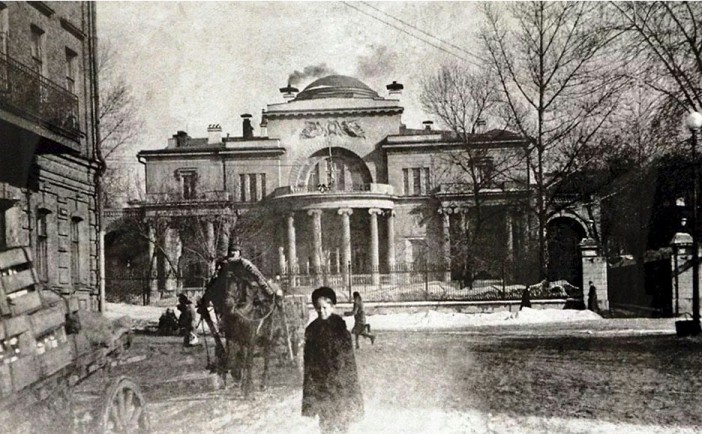
The Spaso house in 1937
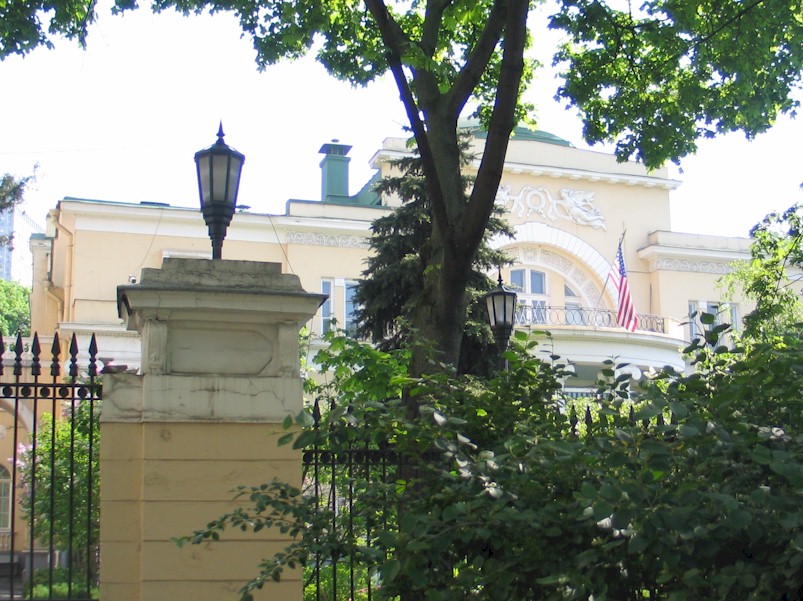
The Spaso house today
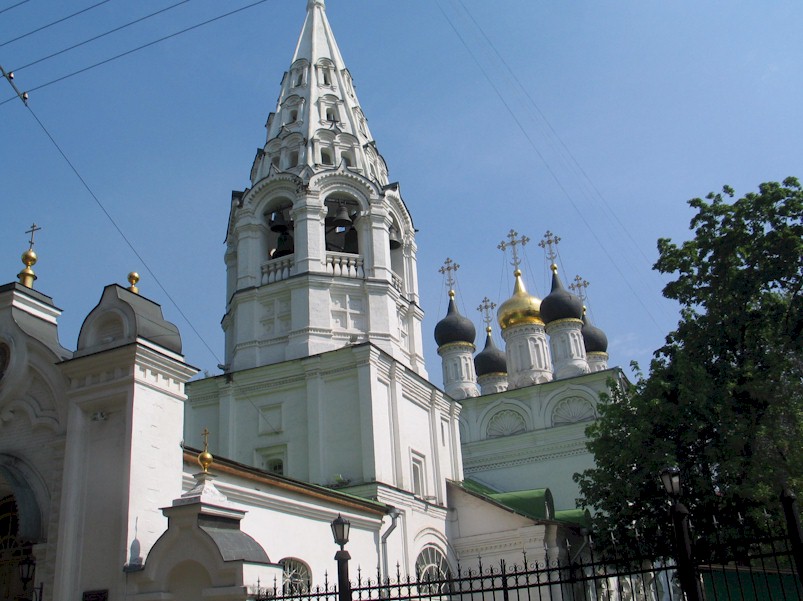
The church of the Saviour
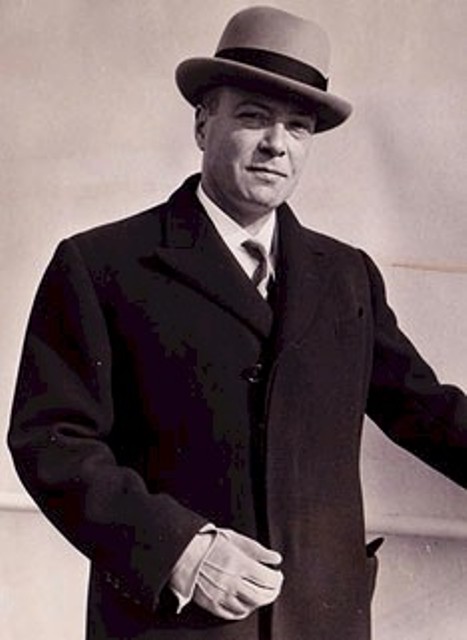
William Christian Bullitt Jr.
Charles Wheeler Thayer
Bears in the Caviar by Charles Thayer