Roubles and chervontsy
English > Context > Economical > Roubles and chervontsy
Most people think that the rouble was the currency in the Soviet Union. And it was, although only partly. In The Master and Margarita, Bulgakov always uses the word червонец [chernovets] to denote a so-called ten roubles bill. And in chapter 12, when the bank notes began falling from the ceiling of the Variety Theatre, the spectators are trying to find out if «the bills were real or some sort of magic ones». But that is a mistranslation. Because Bulgakov did not use the word рубль [ruble] in this passage. He used the word червонцы [chervontsy].
Later in the novel, strange things happened with money. But those strange things never happened to rubles, only to chervontsy. This was an essential element of Bulgakov's satire. To understand this satire fully, one should know the story of the chervontsy.
A new currency
The Soviet Union did not have a stable currency at the end of the civil war, and the government realized that it could not achieve its ambitious economic development plans of the New Economic Policy (NEP) without first solving this pressing monetary problem. In Bulgakov's diary, we can read that, on April 18, 1922, the rent in Bolshaya Sadovaya was increased to one and a half million roubles. And it was for «a room which is worth nothing, and the neighbours either». A pound of flour was 18 million roubles, a white bread was 375 thousand per pound, and butter was 1 million 200 thousand per pound. One year later, on July 11, 1923, the white bread reached 14 million per pound. Three months later, on October 18, 1923, it was at 65 million.
A decree of October 11, 1922, issued by the sovnarkom, authorized the Soviet state bank to issue the chervonets bank notes as the equivalent of the prerevolutionary ten roubles gold coin (7.74232 grams of pure gold). This legislation required at least 25 percent of chervontsy (plural) to be backed by precious metals and hard currency.
The first step in the issuing of chervonets bank notes began at the end of November 1922. Curiously enough, the ruble continued to exist, and the citizens trusted it more than the new money, since the ruble was called казнаки [kaznaki], which is short for казначейские знаки [kaznacheyskie znaki] or treasury bank notes, while the chervontsy were referred to as совзнаки [sovznaki] which is short for Советские знаки [Sovietskie znaki] or Soviet bank notes. As if the notion Soviet was something strange, from abroad.
The ratio of the chervontsy to the old rubles, which were not backed by gold at all, was to be two to one. And not ten to one, as suggested by the ten roubles bill translations. No exchange rate was established between the two currencies, by the way, so the chervonets, the gold-backed currency would eventually prevail.
Actually, the chervontsy did drive the old paper money away. Whereas at the beginning of 1923 the chervontsy represented only 3 per cent of all money in circulation, the percentage increased to 83.6 per cent in February 1924, on the eve of the final act of currency reform.
Through the 1920s, the chervonets was officially quoted on foreign exchanges. However, this attempt to maintain a «hard» Soviet currency was controversial almost from its inception and quickly ended along with the NEP itself. On June 9, 1926, the government passed a resolution forbidding the export of Soviet currency abroad, and in February 1930, all transactions to sell gold and foreign currency to private individuals for chervonets at a fixed rate were banned, the Soviet currency was withdrawn from foreign exchanges and a quoting commission was set up under the State Bank’s Board to set the exchange rates of foreign currencies.
In 1937, Lenin’s portrait appeared on the chernovets bank notes. But the life of chervonets was not long. Twenty five years after the creation of the chervonets, the rouble became the main currency unit again. The word chervonets existed untill 1947. To normalise money circulation, a confiscatory monetary reform was then conducted, during which old money was exchanged for new roubles at the rate of 10 to 1. And this is probably the reason why some people think that a chervonets bill is the same as a ten roubles bill.
Satire
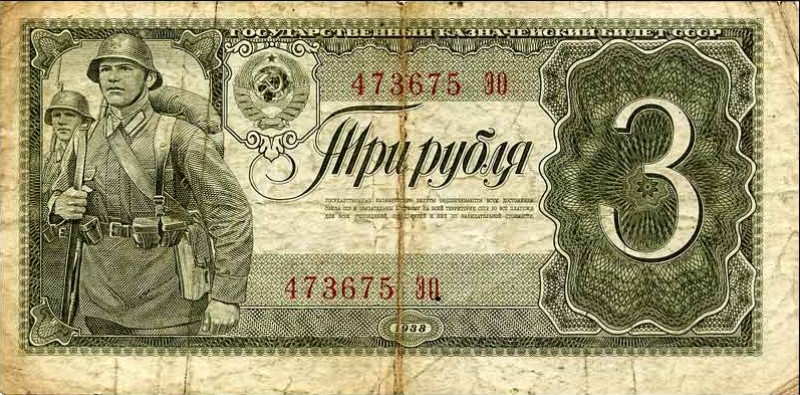
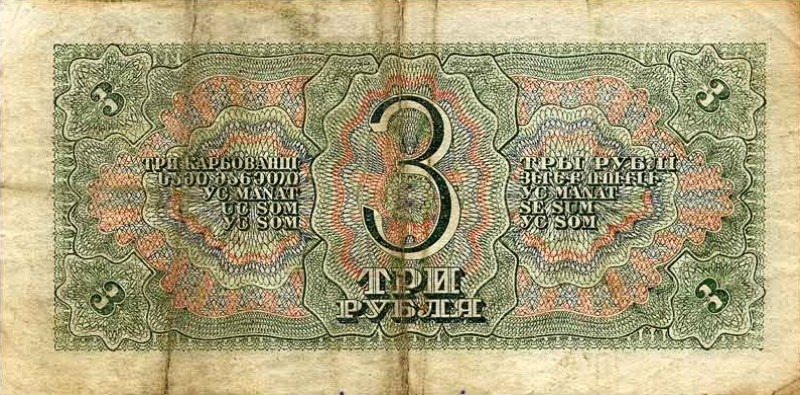
In The Master and Margarita, Bulgakov criticizes the use of the chervonets more than once. The bills which change into worthless paper, in labels of Narzan mineral water, in labels of Abrau-Durso wine, or in foreign currency, always are chervontsy, never roubles. And the taxi-drivers at the Variety Theatre only wants to take Vasily Stepanovich Lastochkin if he pays with Трешки [treshki] or three-roubles bills. He accepts only good, solid roubles, not chervontsy. For the Soviet citizens did not trust this currency imposed by the Soviet authorities.
It's a pity that most translators of The Master and Margarita always translate the word червонец [chernovets] by ten-rouble bill and, by doing so, miss a part of Bulgakov’s satire on the subject of money in the Soviet Union. Let's illustrate it with the passage in which the money swirls down from the ceiling of the Variety Theatre. Here's Bulgakov's original text, followed by the English translation by Richard Pevear and Larissa Volokhonsky (but it could have been any other translator):
Соседи навалились на него, а он в изумлении ковырял ногтем обложку, стараясь дознаться, настоящие ли это червонцы или какие-нибудь волшебные.
- Ей богу, настоящие! Червонцы! - кричали с галерки радостно.
His neighbours hovered over him, and he, in amazement, picked at the wrapper with his fingernail, trying to find out if the bills were real or some sort of magic ones.
- By God, they're real! Ten-rouble bills! - joyful cries came from the gallery.
A correct translation of this passage should look like this:
His neighbours hovered over him, and he, in amazement, picked at the wrapper with his fingernail, trying to find out if the bills were real chervontsy or some sort of magic tricks.
- By God, they're real! Chervontsy! - joyful cries came from the gallery.
Why does it matter? First of all because chervontsy were not ten-rouble bills at all. When the chervonets was introduced, the initial value of one chervonets was two roubles. There were notes of 1, 2, 3, 5, 10 and 25 chervontsy, just as there were several rouble notes. After the introduction of the chervonets, the chervonets and the rouble existed totally separately and there was no mutual exchange rate. But the first one was the new money imposed by the Soviet government, in which the citizens had no faith, and to which strange things happen throughout Bulgakov's novel. The second was the old, solid rouble.
Let's have a look at another illustration of this difference: the passage in which Vasily Stepanovich Lastochkin tries to catch a taxi. Here's the original text of Bulgakov and the English translation by Richard Pevear and Larissa Volokhonsky:
- Деньги покажите, - со злобой ответил шофер, не глядя на пассажира. Все более поражаясь, бухгалтер, зажав драгоценный портфель под мышкой, вытащил из бумажника червонец и показал его шоферу.
- Не поеду! - кратко сказал тот.
- Я извиняюсь… - начал было бухгалтер, но шофер его перебил:
- Трешки есть?
Совершенно сбитый с толку бухгалтер вынул из бумажника две трешки и показал шоферу.
- Садитесь
- Show your money,' - the driver replied angrily, without looking at the passenger.
With increasing amazement, the bookkeeper, pressing the precious briefcase under his arm,
pulled a ten-rouble bill from his wallet and showed it to the driver.
-
I won't go!' the man said curtly.
-
I beg your pardon...' the bookkeeper tried to begin, but the driver interrupted him.
-
Got any threes?
The completely bewildered bookkeeper took two three-rouble bills from his wallet and showed
them to the driver.
-
Get in
A correct translation of this passage should look like this:
- Show your money,' - the driver replied angrily, without looking at the passenger.
With increasing amazement, the bookkeeper, pressing the precious briefcase under his arm,
pulled a chervonets from his wallet and sho-wed it to the driver.
-
I won't go!' the man said curtly.
-
I beg your pardon...' the bookkeeper tried to begin, but the driver interrupted him.
-
Got any threes?
The completely bewildered bookkeeper took two three-rouble bills from his wallet and showed
them to the driver.
-
Get in
There are many other examples in The Master and Margarita, but it will be clear now to the reader that, throughout the novel, Bulgakov did not like the chervontsy introduced by the regime, and preferred the «good old ruble». In the novel, chervontsy are synonymous with troubles and disaster, but rubles are not. Russian readers understand this satire because Bulgakov clearly distinguishes between «chervontsy» and «rubles», but readers of most translations know only «ten-ruble bills».
In real life, the chervontsy were issued by a new regime which, in a brutal way, had no respect for the traditions of the «Russian soul», the society, religion or culture, and which set the lives of the people upside down in all aspects: housing, work, economy, leisure activities, calendar, currency and many more. In the novel the chervontsy were introduced by the devil, and put the lives of Muscovites also upside down.
In their hearts, many Russians disliked the decisions of the Soviet authorities to replace pre-revolutionary values with new norms and standards, which were often diametrically against the sentiments of the people. But they could not openly express their criticism. The denial of the new reality created by the regime could be seen as subversive by the authorities - exile to labour camps or even execution could result from it. Yet the dissatisfaction had to be expressed, which happened often through clandestine behavior or humour in veiled terms.
In the real life of his time, Mikhail Bulgakov used linguistic tools to denounce the ridiculous character of the official discourse through a hierarchical shift between the use of words and the actions of the authorities. What was true or false in the language of the Soviet authorities was more important than reality. So Bulgakov fought the enemy with his own weapons. But he did it with more linguistic feeling, more sense of perspective, more sense of beauty, less arbitrariness and more respect for the reader or listener than the Soviet authorities.
Share this page |
Economical context
illustrations
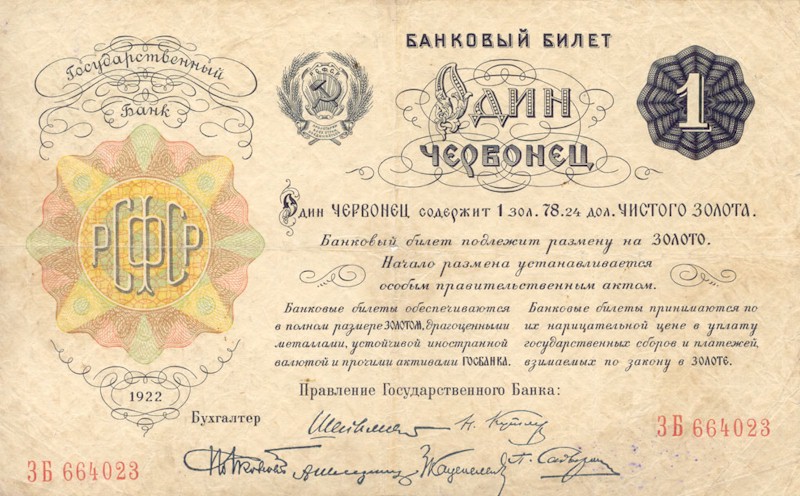
A chervonets bill from 1922
From 1922 to 1947 both the rouble and
the chervonets were currencies in the
Soviet Union.
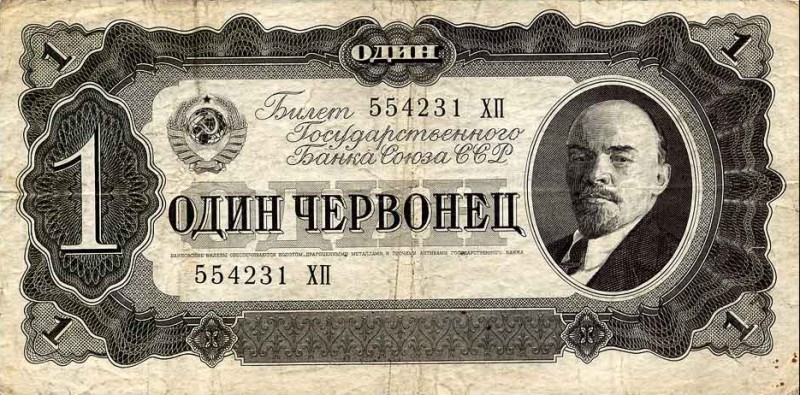
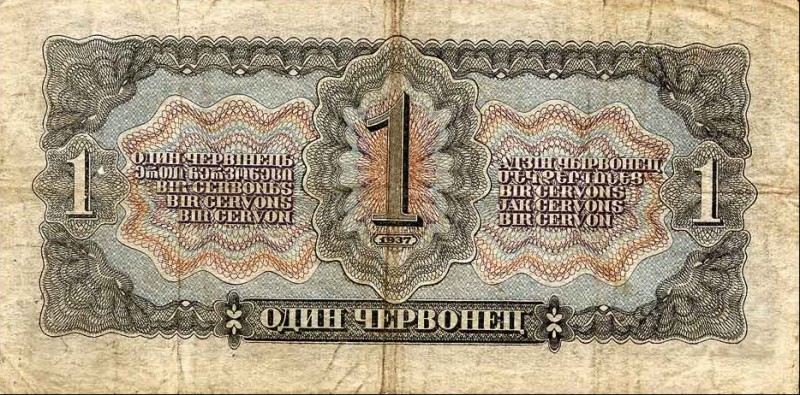
A chervonets from 1936
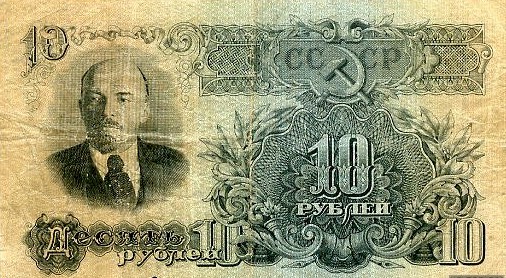
A real ten rouble bill from 1936