The musical scenery in the Soviet Union
Shortly after the revolution in 1917, the movement пролетарская культура [proletarskaya kultura] or proletarian culture, probably better known under its abbreviation пролеткульт [proletkult], emerged in the Soviet Union, under the inluence of the Marxist philosopher Aleksandr Aleksandrovich Bogdanov (1873-1928). Bogdanov argued for autonomy in art, which should not depend on the political control of the Communist Party. The art should elevate the proletarians to «class consciousness», without having to rely on «bourgeois specialists» or «revolutionary intellectuals».
In 1920, at the instigation of Vladimir Ilyich Lenin (1870-1924), the organisation of the musical scenery in the Soviet Union was given to the Народный комиссариат просвещения (Наркомпрос) [Narodny komissariat prosveshcheniya] (Narkompros) or the People's Commissariat for Enlightenment.
The proletkult was initially supported by the Narkompros, with a prominent advocate in the person of the People's Commissar for Education, Science and Education Anatoly Vasilyevich Lunacharsky (1875-1933). According to some scholars, Lunacharsky, who succeeded in launching a large-scale literacy campaign, would heve been the prototype for the character of Mikhail Berlioz in The Master and Margarita. But others think he was the prototype for the critic Latunsky.
However, after Lenin's death in 1924, the creation and representation of innovative music was soon curtailed again. At first, Lunacharsky himself helped to organise the censorship, but later he was kicked upstairs by Joseph Stalin (1878-1953). All musical experiments deviating from the norms of the party, or perceived as possible threats to the regime, were criticised or banned.
In the Roaring '20s, when the jazz music came into the Soviet Union from the United States, it was first viewed suspiciously, and when it appeared to become successful, measures were taken to bring it under the control of the regime. The establishment of the State Jazz Orchestra of the USSR led by composer Matvey Isaakovich Blanter (1903-1990) and Viktor Nikolaevich Knushevitsky (1906-1972) in 1936 was part of the control device. Their first production was the song Katyusha, which many people mistakenly considered as a traditional Russian folk song. The officially admitted jazz bands were in reality big bands with a repertoire of foxtrots, tangos, Dixieland, swing and other more or less «neatly danceable» rhythms.
The film soundtracks played an important role in the distribution of music which was not threatening the regime. Moreover, the medium film became an important tool of Soviet propaganda to glorify the real or imaginary achievements of the state and to keep the utopia of the new Soviet citizen alive. The genre created its own heroes. Besides the famous composer Sergey Sergeevich Prokofyev (1891-1953) who wrote the music for the historical epics of Sergey Mikhailovich Eisenstein (1898-1948), the composer Isaak Osipovich Dunaevsky (1900-1955) became also popular with his pompous marches and jazz music for the films of Grigory Vasilyevich Aleksandrov (1903-1983).
Melodiya
In 1948, some record companies introduced sound recordings on vinyl in the market. In the United States, CBS came up with the 33-rpm LP and RCA with the 45-rpm single. In 1958, when the recordings on vinyl could also play stereo music, the distribution of popular music accelerated dramatically even in the Soviet Union. In 1964, the regime responded by creating the State enterprise for the production, storage and distribution of sound recordings Мелодия (Melodiya).
Big budgets were allocated to Melodiya and it built a network of recording studios, production and distribution centers and a full promotion system across the country. It produced 200 million records and one million audio cassettes per year. Of course, only the music approved by the State was distributed.
The bards
In the period from 1973 to 1986, often referred to as the эпоха застоя [epokha zastoya] or the era of stagnation, which roughly corresponds to the period in which Leonid Ilyich Brezhnev (1906-1982), Yuri Vladimirovich Andropov (1914-1984) and Konstantin Ustinovich Chernenko (1911-1985) were into power, the music of the Russian bards became very popular. The most renowned among them were Bulat Shalvovich Okudzhava (1924-1997), the poet of the Arbat, and Vladimir Semyonovich Vysotsky (1938-1980).
The songs of the bards were never or only rarely distributed by Melodiya. By analogy with the самиздат [samizdat], the clandestine publishing system in the literature, the songs of the bards were often distributed through the магнитиздат [magnitizdat]. The term is a contraction of магнитная пленка [magnitnaya plyenka] or magnetic tape and издать [izdat] or to publish.
Light music
In the 60s, the Soviet authorities tried to get the emerging pop and rock music under control through the so-called VIA's. The term VIA was short for the Вокально-Инструментальные Ансамбли [Vokalno-instrumentalnye Ansambli] or vocal-instrumental ensembles. A VIA was a State-approved band of professional musicians who performed music that was written by professional composers of the Союз советских композиторов [Soyuz sovietkikh kompozitorov] or Union of Soviet Composers.
Rock and roll and punk
The popularity of both the jazz bands and the bards began to wane in the '80s, when the rock music was rising. Initially, the rock and roll was not accepted by Melodiya. Consequently, this less polished music was recorded and distributed through the magnitizdat. But despite the fact that the texts of the пункы [punki] or punk bands and металлисты [metallisti] or heavy metal bands often exceeded the limits of what was politically permitted, and despite the fact that their loud music was mainly appreciated by rebellious youngsters, their performances were more and more allowed in Moscow and in Leningrad. In the 90s, the Russian rock music lost much of the innovative and satirical characteristics of the magnitizdat period, and now the Russian rock and punk bands differ little from the ones in the West.
Rap music
It looks like the Russian Federation wants to fall back on Stalin's reaction to jazz music in 1936. At a meeting of the Presidential Council on Culture and Art in December 2018, Vladimir Putin called for avoiding extremes with restrictions on culture, including in the field of rap music. «If it is impossible to stop, then you need to lead and guide accordingly», he said.
Share this page |
Musical context
Illustrations
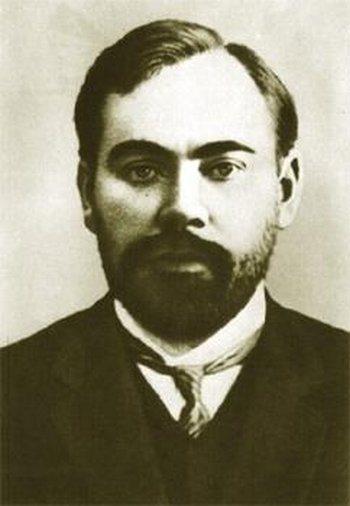
Aleksandr Bogdanov

Portrait of Sergey Prokofyev
by Gladkych
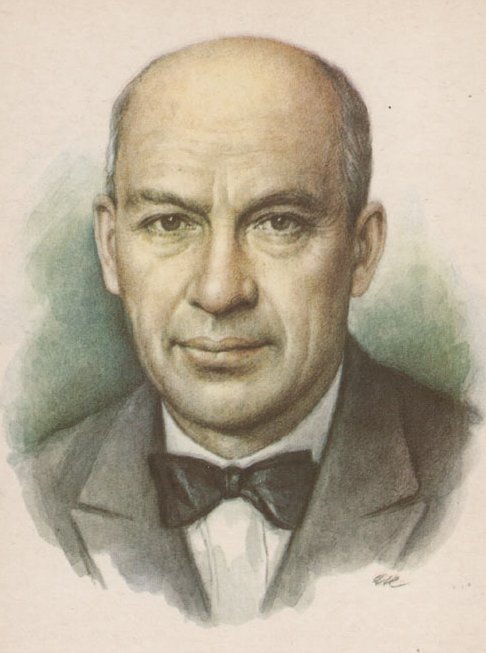
Isaak Dunaevsky
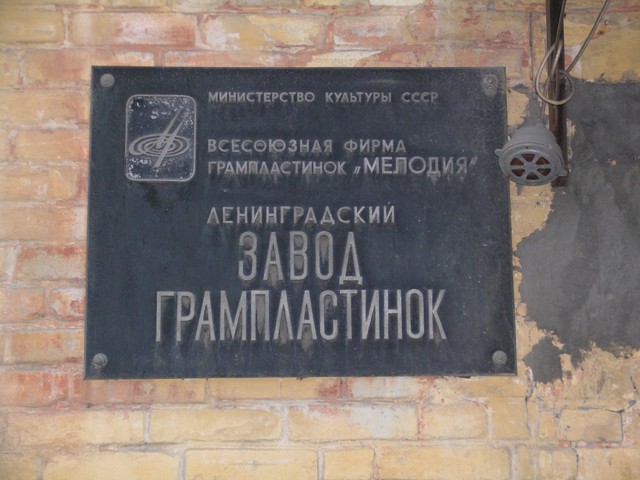
Sign board of the Melodiya factory
in Leningrad