Woland
English > Characters > Main characters > Woland
Context
At the beginning of The Master and Margarita, Woland is called a stranger, causing mixed feelings to Ivan and Berlioz, his first contacts in Moscow. And soon it will become clear why. Professor Woland is hypocritical and cunning, but he can also be noble and generous. The contrasts in his personality are also reflected in his appearance: «Right eye black, left - for some reason - green. Dark eyebrows, but one higher than the other. In short, a foreigner». He claimed to have been there when Pontius Pilate condemned Jesus and added that he could predict the future, including the beheading of Berlioz.
Woland and his retinue caused major chaos in Moscow. They organised a show with black magic in the Variety Theatre, where they gave delightful new clothes to all the women present and let money swirl down from the ceiling. Shortly thereafter, however, the women ran screaming through the streets, in underwear or completely naked, and the money which initially looked authentic had turned into ordinary paper. drops his disguise as a professor and shows that he is the devil. After the ball,l he and his retinue ride back to the underworld on magical black stallions.
The devil in Moscow
In the book My Life with Mikhail Bulgakov, which was written in 1968-1969 by Lyubov Yevgenyeva Belozerskaya (1894-1987), Bulgakov's second wife, we can read that Bulgakov got the idea of writing a novel about the devil in Moscow from Natalia Abramovna Lyamina-Ushakova (1899-1990), the wife of his best friend Nikolay Nikolaevich Lyamin (1892-1941).
Natalia had designed the cover of the book Venediktov, or the memorable events of my life, a story of 64 pages written by Professor Alexander Vasilyevich Chayanov (1888-1937) in 1922. She was astounded to see that the hero of Chayanov's story, in which Satan turns up in Moscow, had the name Bulgakov. And Mikhail Bulgakov was «no less astounded by this coincidence».
The name
The name Woland is very un-russian. It's a variant of the devil's name in Faust, written by Johan Wolfgang von Goethe (1749-1842): the squire Voland or Faland. In Faust the devil is called Mephistopheles, but on the infamous Walpurgis night he calls himself Voland once: «Platz! Junker Voland kommt!» or «Make room! Squire Voland comes!».
In the successive versions of The Master and Margarita that Bulgakov wrote, Woland changed names a few times. In the second version from 1929, for example, a foreign doctor gave his business card to the young poet Ivanushka Bezrodny or Ivanushka Without family with the name «D-r Theodor Voland». Most striking was that Bulgakov did not write this name in cyrillic characters as could be expected in a Russian text, but that he used latin characters. «A bourgeois card», was the first thought of the young poet then. The first name Theodor comes from the Greek Θεόδωρος [Theodoros] and means God's gift.
In a subsequent version of the novel, Woland got another first name, and he became господин [gospodin] or seigneur Azazello Woland. The demon we now know as Azazello was called Fiello. Only in 1934, the definitive names of Woland and Azazello got their final meaning.
A stranger
Woland is the mysterious stranger and professor who is visiting Moscow and who instigates all events in the novel. His origins were not very clear. Ivan Bezdomny first assumed at the Patriarch's Ponds that he was a German. But he could have meant a stranger as well. A foreigner is usually referred to in Russian by the word иностранец [inostranyets], but in the past the word немец [nemets] was also used. That last word meant, besides a German, also a foreigner. So when Ivan asks Woland in the first chapter: «Вы немец?», it can be translated as «are you German?» but also as «are you a foreigner?» Немец [nemets] would be derived from the verb неметь [nemet], which means to strike dumb. So a nemets is a dumb person, in the sense of someone who doesn't speak Russian.
Bulgakov consciously wanted to present Woland as an «unknown» being. He wanted to avoid that the reader would immediately understand that he was the devil. For example, on April 26, 1939, the playwright Aleksey Mikhailovich Fayko (1893-1978) and the theater critics Vitaly Yakovlevich Vilenkin (1911-1997) and Pavel Alexandrovich Markov (1897-1980) were visiting him. That evening he read to them the beginning of the novel. Then he asked: «Who is Woland according to you?» Vilenkin said he knew and wrote the word «Satan» on a note. But «a qualified listener» like Aleksey Fayko could not guess immediately, very much to the satisfaction of Mikhail Bulgakov.
The title of the first chapter reads «Never Speak With Foreigners» or «Never Talk with Strangers». Foreigners raised curiosity and suspicion in the Soviet Union. Because they stood for the beautiful appearance and glamour of abroad, but at the same time they were a risk for espionage.
Even today, many Russians still don't know how to respond to strangers. Even in the metropolis of Moscow, there are still a lot of people who only speak Russian. When they are approached by a foreigner, even if they just ask for directions, they often turn away. In my homeland Belgium it is not exceptional that someone speaks to you in a foreign language. When you drive one hour from my home city of Leuven in any direction you are abroad. From Moscow, however, you have to travel thousands of kilometers to meet people who don't speak Russian, and most Russians have never been outside Russia - or at least outside the former Soviet Union. Incidentally, you will rarely find people with a black skin colour in Russia. When a Muscovite speaks of a «black person» he usually does not talk about someone with a black skin, but he refers to someone with «black hair», someone from the Caucasus.
Prototype
Elsewhere on this website you can read that some biblical characters from The Master and Margarita such as Yeshua Ha-Nozri and Yehuda from Kiriath do not really correspond with their prototypes from canonical christian doctrine. The same applies to Woland to a large extent.
The prototype of Woland is Satan, the devil, the leader of the rebellious fallen angels who were thrown out of heaven by God when they rebelled against him. He has since been the master of the forces of darkness, which moves people to sin. He personifies the evil, the false and the dark side, and by disguising himself he can seduce and deceive people without being recognized.
In The Master and Margarita Woland has got a completely different image. He is honest and even noble in some ways, and personifies justice. Satan makes false promises, but Woland does what he promises, and even more. Margarita not only gets her master back, but she was also allowed to release Frieda from her handkerchief. Where Satan tries to seduce people into immoral acts like greed, condemnation, cruelty, bribery and the like, Woland punishes these things. But he does it with a certain kindness for those who show no real anger. Bengalsky, the master of ceremonies at the Variety Theatre, is being decapitated but that is being compensated, and no one was injured in the shooting with Behemoth in the chandelier. But for hard-core ideologists of communism he knows less grace, as Mikhail Berlioz and baron Meigel could experience.
Other opinions on prototypes
Some see Woland as a parody on Josef Vissarionovich Stalin (1878-1953). And there are indeed similarities. Just like Stalin saved Bulgakov while he eliminated others unconditionally, Woland saves the master while he punishes others. And Stalin was banned from the Russian orthodox seminar of Tbilisi in 1899, just like Satan, as a fallen angel, was banned from heaven.
In his book Эрос невозможного. История психоанализа в России or Eros of the Impossible. The History of Psychoanalysis In Russia from 1993, the Russian psychologist and philosopher Alexander Etkind (°1955), professor at the Department of History and Civilization at the European University Institute in Florence, Italy, suggests that the prototype of Woland would have been William Christian Bullitt Jr. (1891-1967), the American ambassador in the Soviet Union from 1933 to 1936, who became notorious for the receptions which he used to hold at the Spaso House, his residence in Moscow and which inspired Bulgakov to describe Woland's ball in The Master and Margarita. It is strange that Etkind supports his thesis, for example, by referring to a perceived physical resemblance between Woland and Bullitt: «Буллит тоже был лыс...», he wrote, or «Bullitt was also bald». But in The Master and Margarita, Woland was not bald at all, he was «Брюнет» or «dark-haired». So I wonder if someone who does not read well what is really written, can formulate reliable conclusions about what is not written.
The self-willed Ukrainean polemicist Alfred Nikolajevich Barkov (1941-2004) argued that Vladimir Ilyich Lenin (1870-1924) was Woland's prototype. The master would then be the Russian author Maxim Gorky (1868-1936). And Margarita would be inspired by Maria Fyodorovna Yurkovskaya (1868-1953), an actress of the Moscow Art Theatre MKhAT, known under the pseudonym Maria Andreeva. She was Gorky's mistress. According to Barkov, Margarita would have been a prostitute sent to the master by Woland - as the impersonation of Vladimir Lenin.
Share this page |
Main characters
Illustrations
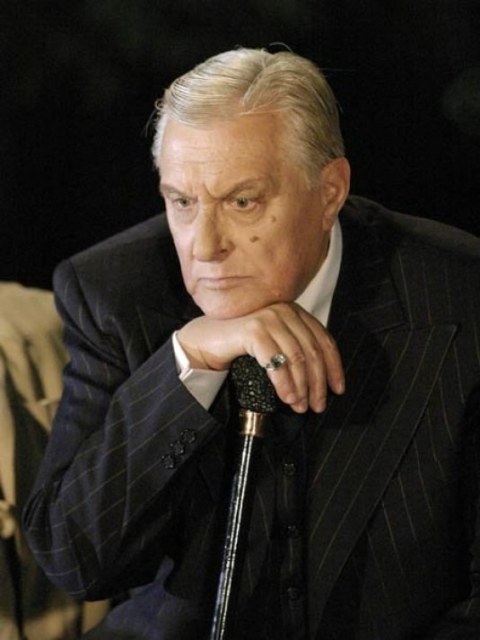
Oleg Basilashvili as Woland
Vladimir Bortko (2005)
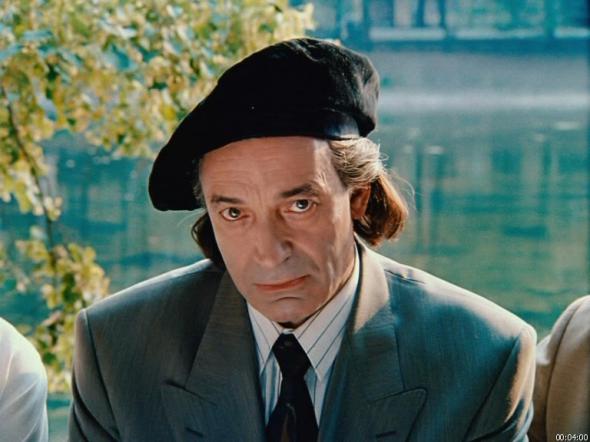
Valentin Gaft as Woland
Yuri Kara (1994/2011)
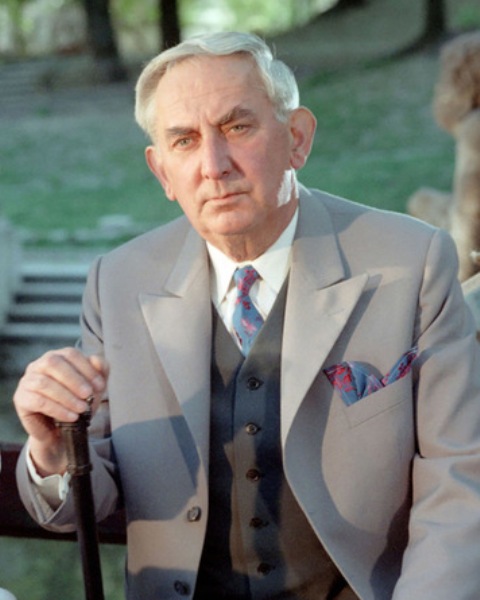
Gustaw Holoubek as Woland
Maciej Wojtyszko (1990)
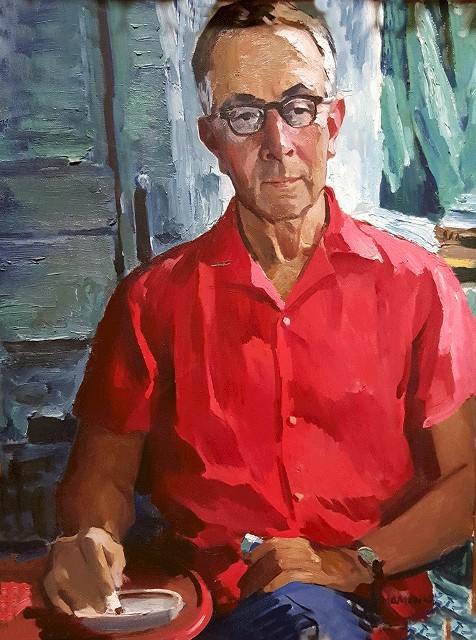
Vitaly Yakovlevich Vilenkin
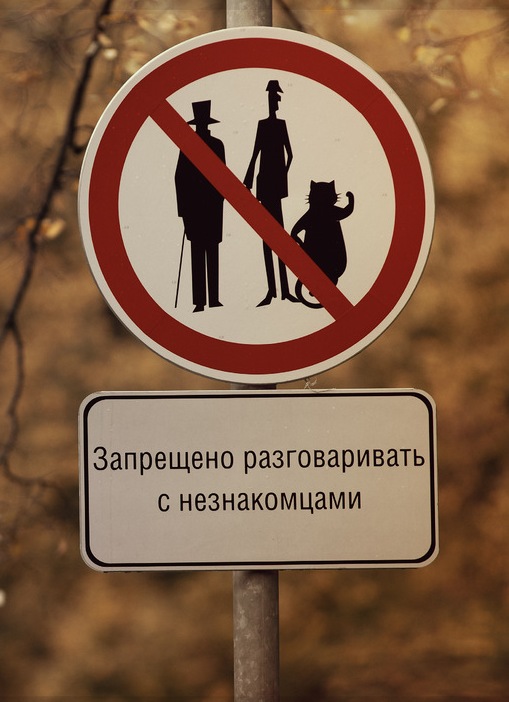
Do not talk with strangers
Patriarch's Ponds, Moscow
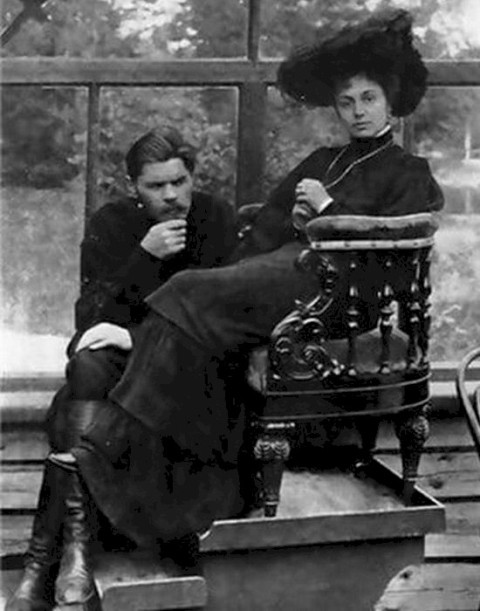
Gorky and Maria Andreeva
Your guide through the novel

In this section are explained, per chapter, all typical notions, names of people and places, quotations and expressions from the novel with a description of the political, social, economical and cultural context.