Рубли и червонци
Русский > Контекст > Экономический контекст > Рубли и червонци
Это, наверное, по-настоящему утомительно для любого переводчика Михаила Булгакова понять сатиру в «Мастер и Маргарита». Основной талант Булгакова был в его способности трансформировать свои впечатления и измышления в сатиру. Он работал над «Мастер и Маргарита» тайно во время продолжающихся в тридцатые годы репрессий в Советском Союзе. Роман превратился не только в прославление свободы и великолепной истории любви, но и стал книгой, которой он отомстил советским литераторам за срыв его планов, и советским властям - часто сам Сталин был инициатором гигантских построек сродни мании величия, которые были в соответствии с партийной пропагандой предназначены для создания социалистической утопии, но на самом деле разрушали жизни людей, а зачастую даже внезапно прекращали её. Не удивительно, что многие персонажи, места, дома и ситуации только на первый взгляд кажутся вымышленными. Иногда это очень легко узнать, кого и что имеет в виду Булгаков, но иногда для этого нужно больше проницательности.
Большинство переводчиков пытались, уважая стиль Булгакова, сделать его сатиру хорошо понятной даже для не русских читателей. Что было достаточно сложно, потому что нет окончательного авторского текста, и первым переводчикам, таким как Майкл Гленни, пришлось работать с сильно изуродованным исходным текстом. Тем не менее, это позор, что некоторые очевидные элементы сатиры, которые явно присутствуют во всех версиях исходных текстов Булгакова, не были выделены ни одним из переводчиков.
Примером очевидной сатиры является тема денег. Деньги играют важную роль в «Мастер и Маргарита». Существует, конечно, вопрос о запрещенной иностранной валюте и коварное существование валютных магазинов. Но есть и другие, потому что странные вещи происходят с банкнотами в Москве после шоу черной магии Воланда в Театре Варьете. Бумажные деньги внезапно превращаются в этикетки с бутылок минеральной воды Нарзан или вина Абрау-Дюрсо, они превращаются в обрезки бумаги или даже в иностранную валюту. Не всегда, но иногда в романе деньги оказываются вполне надежной валютой.
Если вы читаете английский, французский или голландский перевод, вы можете удивиться, почему эти странные вещи иногда случаются с банкнотами. И те и другие переводчики называют рублями. Но русский читатель знает лучше: в оригинальном тексте Булгаков, вообще, относится к деньгам, как к рублям, это так, но он последовательно использует определенные другие слова - червонец или червонцы - для обозначения конкретного вида банкноты- червонца, большинство же переводчиков называют червонцем десяти-рублевую банкноту.
Денежные проблемы в Советском Союзе
Советский Союз не имел стабильной валюты к концу гражданской войны и правительство понимало, что не сможет достичь своих амбициозных планов экономического развития Новой Экономической Политики (НЭП) без первоочередного решения этой насущной денежной проблемы. Была настоятельная необходимость сдерживать хаос в денежном стандарте и остановить гиперинфляцию. В дневнике Булгакова мы можем прочитать, что 18 апреля 1922 года стоимость аренды его квартиры на Большой Садовой улице - квартира с привидениями в романе - была увеличена до полутора миллионов рублей. И это было для "комната, в которой ничего не стоит, и соседи также". Фунт муки стоил 18 млн рублей, белый хлеб 375000 за фунт, и масло было 1 миллион 200 тысяч за фунт. Через год, 11 июля 1923 года, цена белого хлеба достигла 14 миллионов за фунт. Три месяца спустя, 18 октября 1923 года цена была 65 миллионов за фунт.
Для того чтобы остановить эту гиперинфляцию, Совнарком, административный филиал советского правительства, издал указ от 11 октября 1922 года, которым уполномочил советский государственный банк выпустить новую валюту: банковские билеты - червонец. Червонец был выпущен в качестве эквивалента дореволюционной золотой монеты достоинством десять рублей (7,74232 г чистого золота). Законодательство требовало, чтобы червонцы (множественное число для червонца), были обеспечены драгоценными металлами и твердой валютой , по крайней мере, на 25 процентов.
Первый этап выдачи червонцев, начался в конце ноября 1922 года. Червонцы были банкнотами, которые иногда называли «совзнаки». Соотношение червонцев к старым рублям, также упоминаемым как «гознаки», и на самом деле не обеспеченным золотом вообще, должен был быть 2:1. Обменный курс между двумя валютами не был создан, поэтому золотом обеспеченная валюта должна была со временем восторжествовать.
И червонцы изгнали старые бумажные деньги. В то время как в начале 1923 г. червонцы составляли лишь 3 процента всех денег в обращении, в феврале 1924 года, накануне заключительного акта денежной реформы, процент увеличился до 83,6.
С 1920-х годов, червонец официально котируется на зарубежных биржах. Однако эта попытка сохранить «твердую» Советский валюту была спорной чуть ли не с момента своего создания и быстро закончилась вместе с самой НЭП. 9 июня 1926 года, правительство приняло постановление, запрещающее экспорт советской валюты за рубеж, в феврале 1930 все сделки по продаже золота и иностранной валюты физическим лицам за червонцы по фиксированной ставке были запрещены, советская валюта была изъята из зарубежных бирж и при Совете Госбанка была создана оценочная комиссия для установки курса иностранных валют.
В 1937 году на банкнотах червонец появился портрет Ленина. Но жизнь червонца не была долгой. Рубль снова стал главной денежной единицей. Хотя червонец существовал до 1947 года. Для нормализации денежного обращения конфискационный денежную реформу, то был проведен, в течение которого старые деньги обменивались на новые рубли по курсу 10 к 1. Для нормализации денежного обращения была проведена конфискационная денежная реформа, в течение которого старые деньги обменивались на новые рубли по курсу 10 к 1.
Сатира Булгакова
В «Мастер и Маргарита» Булгаков критикует существование червонца несколько раз, но кажется, что никто из английских, французских или голландских переводчиков не уловил его сатирического отношения и, следовательно, упустил возможность показать некоторые типичные аспекты отношения русского народа к разработке великолепных и часто помпезных проектов советских властей. Отношение, которое характеризуется смешанными чувствами и двойственностью поведения большинства россиян: показывая внешним видом принятие и даже одобрение политической системы, с одной стороны, с другой стороны они демонстрировали непревзойденный мастерство обходить официальную политику и выражать свои критические замечания на эту тему с помощью юмора. В сердцах многих россиян не было согласия с решениями советских властей заменить дореволюционные значения новыми нормами и стандартами, которые часто противоречили чувствам народа. Но они не могли критиковать открыто. Отрицание реальности, которая была создана властями, могла рассматриваться как подрывная деятельность - наказание за это могла быть ссылка в трудовые лагеря или даже казнь. Но все же недовольство должно было быть выражено. Что часто происходило через подпольную деятельность или в юмористической речи в завуалированной форме. Многие россияне, например, на словах официально заявляли об атеизма, но своих детей тайно крестили в запрещенной православной церкви. И такое же отношение было показано к червонцу. Их убедили, использовать его, чтобы оплачивать свои счета, но они не разлюбили рубль, в их сердцах осталась одна-единственная настоящая русская валюта
Булгаков начинает критиковать червонец с некоторой мягкой иронией в сцене в Театре Варьете. «Растерянный гражданин» в галерее думал, что он найдет колоду карт в кармане, но это оказался банком-завернутый пакет с надписью "одна тысяча рублей". В своем первоначальном тексте Булгаков рассказал, что когда этот гражданин поднял обертку ногтем, он пытался разобраться, являются ли банкноты червонцами или они какие-нибудь волшебные (какие-нибудь магические те).
Соседи навалились на него, а он в изумлении ковырял ногтем облож-ку, стараясь дознаться, настоящие ли это червонцы или какие-ни-будь волшебные.
- Ей богу, настоящие! Червонцы! - кричали с галерки радостно.
His neighbours hovered over him, and he, in amazement, picked at the wrapper with his fingernail, trying to find out if the bills were real chervontsy or some sort of magic tricks.
- By God, they're real! Chervontsy! - joyful cries came from the gallery.
Ни один из переводчиков, однако, не использовал слово «червонцы», все они перевели его как десяти-рублевые купюры, реальные деньги или просто деньги, и они продолжали делать так на протяжении всего романа, Как будто не было никакого различия между червонцем и рублём.
Вывод общественности в театре, однако, было совершенно ясен: «Ей богу, настоящие Червонцы!» или, на английском языке: «By God, they're real! Chervontsi!» В этом простом и коротком предложении скрыта полноценная сатира на денежную политику советских властей. С помощью нескольких хорошо подобранных слов, Булгаков умело и обильно маскирует постоянное чередование иллюзии и реальности, озвучивание или сокрытие понятий, как инструменты для создания фантастических и гротескных эффектов. Червонцы называют «реальные деньги», в отличие от «любые магические те» - которые могут быть только рублями, конечно. Но в следующих главах мы увидим, что сверхъестественные вещи случаются только с червонцами, никогда с рублями.
Когда финансовый директор Театра Варьете, Григорий Римский, смотрел «с воспаленными глазами» на банкноты в своем кабинете, Булгаков описал червонцы, как магические и когда Римский положил их в свай портфель чуть позже, они описаны как гипнотизерские (гипнотические). Гипнотические –как если бы Булгаков хотел сказать, что червонцы никогда не бывают реальными деньгами, это только иллюзия, созданная высшей властью или, в более широком смысле, пыль в глаза. Чуть дальше в романе мы поймем почему… потому что странные вещи происходят с червонцами, вещи, которые никогда или редко случаются с твердыми и надежными рублями.
Первый странная вещь случилась с Василием Степановичем Ласточкиным, бухгалтером театра Варьете. Василий Степанович хотел поехать в Финзрелищный сектор чтобы сдать выручку после шоу Воланда в театре, он видел пустые кабины таксистов и он также заметил, кашлянув от удивления, как лицо водителя скрутило, как только он увидел пассажира. «Деньги покажите»-со злобой сказал водитель. Он хотел убедиться, что Василий Степанович будет платить не червонцами, а более надежными Трешками (трех-рублевая банкнота).
- Деньги покажите, - со злобой ответил шофер, не глядя на пасса-жира. Все более поражаясь, бухгалтер, зажав драгоценный порт-фель под мышкой, вытащил из бумажника червонец и показал его шоферу.
- Не поеду! - кратко сказал тот.
- Я извиняюсь… - начал было бухгалтер, но шофер его перебил:
- Трешки есть?
Совершенно сбитый с толку бухгалтер вынул из бумажника две трешки и показал шоферу.
- Садитесь
- Show your money,' - the driver replied angrily, without looking at the pas-senger.
With increasing amazement, the bookkeeper, pressing the pre-cious briefcase under his arm,
pulled a chervonets from his wallet and sho-wed it to the driver.
-
I won't go!' the man said curtly.
-
I beg your pardon...' the bookkeeper tried to begin, but the driver interrup-ted him.
-
Got any threes?
The completely bewildered bookkeeper took two three-rouble bills from his wallet and showed
them to the driver.
-
Get in
Водитель был очень подозрителен по отношению к червонцам, потому что раньше в этот день с ним рассчитались червонцами, а они превратились в этикетки от минеральной воды «Нарзан».
- Дает какой-то сукин сын червонец, я ему сдачи -- четыре пятьдесят... Вылез, сволочь! Минут через пять смотрю: вместо червонца бумажка с нарзанной бутылки!
- Some son of a bitch gives me a chervonets, I give him change - four-fifty. He gets out, the scum! About five minutes later, I look: instead of a chervonets, it's a label from a bottle of Narzan!'
Чуть позже, когда Василий Степанович был в кассе сектора Finspectacle, все поплыло перед глазами, когда не червонцы, но иностранные деньги мелькали перед его глазами: стеки канадских долларов, английских фунтов, голландских гульденов, латвийских лат, эстонских крон... И, конечно, он был сразу арестован.
Следующей жертвой магических червонцев был Андрей Фокич Соков, бармен театра Варьете. Он пожаловался Воланду на червонцы, которыми рассчитывались посетители после шоу черной магии Воланда. Червонцы превратились в нарезанную бумагу. Бар был наказан на сто девять рублей.
- И вот заходит ко мне в буфет молодой человек, дает червонец, я сдачи ему восемь с полтиной... Потом другой.
- Тоже молодой человек?
- Нет, пожилой. Третий, четвертый. Я все даю сдачи. А сегодня стал проверять кассу, глядь, а вместо денег - резаная бумага. На сто девять рублей наказали буфет.
- And then a young man comes to my bar and gives me a chervonets, I give him eight-fifty in change... Then another one ...'
- Also a young man?'
- No, an older one. Then a third, and a fourth ... I keep giving them change. And today I went to check the cash box, and there, instead of money - cut- up paper. They hit the buffet for a hundred and nine roubles.
Соков в свою очередь заплатил профессору Кузьмину три червонца. Был вечер и уже сумерки установились, поэтому у профессора было немного пациентов, последний из которых уже ушел. Профессор снял белый халат, взглянул на место на столе, где Андрей Фокич оставил три червонца и увидел, что это больше не червонцы, а три этикетки от бутылок вина «Абрау-Дюрсо».
Больных в тот вечер у профессора было немного, и с приближением сумерек ушел последний. Снимая халат, профессор глянул на то место, где буфетчик оставил червонцы, и увидел, что никаких червонцев там нет, а лежат три этикетки с бутылок «Абрау-Дюрсо».
That evening the professor had few patients, and as twilight approached the last one left. Taking off his white coat, the professor glanced at the spot where the barman had left his chervontsi and saw no chervontsi there but only three labels from bottles of Abrau- Durso wine.
Есть еще очень много примеров в «Мастер и Маргарита», но теперь читателю должно быть ясно, на протяжении всего романа становится очевидным, что, по мнению Булгакова, существовала огромная разница между вновь введенными червонцами в Советском Союзе и старыми добрыми расчетами в рублях. В романе червонцы означают проблемы, рубли - нет. Российские читатели находят очевидную сатиру в том, что случилось с червонцем, но английский, французский и голландский читатели этого не понимают. В реальной жизни, червонцы были выпущены новым режимом, который действовал жестоким образом, без уважения к традициям русской души, общества, религии или культура и, тем самым, перевернул жизнь людей с ног на голову. В романе червонцы были внесены дьяволом, который также жестоким образом перевернул полностью жизнь москвичей.
В реальной жизни своего времени и места, Михаил Булгаков использовал лингвистические инструменты, чтобы осудить смешной характер официального дискурса генерации иерархического сдвига между языком и реальностью, которая была, по сути, тем, что власть сделала себя бессменной. То, что было истинным или ложным на языке советских властей господствует над тем, что было истинным или ложным в реальности. Так Булгаков боролся с врагом его же оружием. Тем не менее, с большим чувством языка, большим чувством перспективы, с меньшим произволом и большим уважением к читателю или слушателю. Жаль, что переводчики не понимают всего этого…
Поместить эту страницу |
Экономический контекст
Иллюстрации
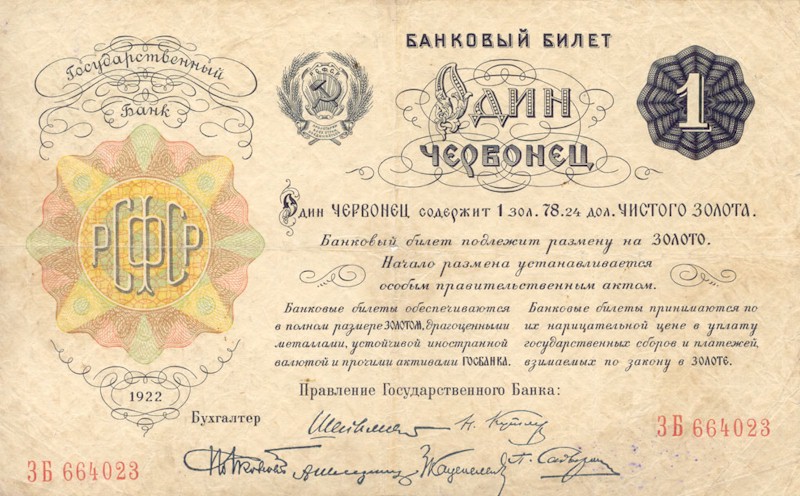
Банкнота червонца с 1922
С 1922 по 1947 год как рубль и червонец были валюты в Советском Союзе.
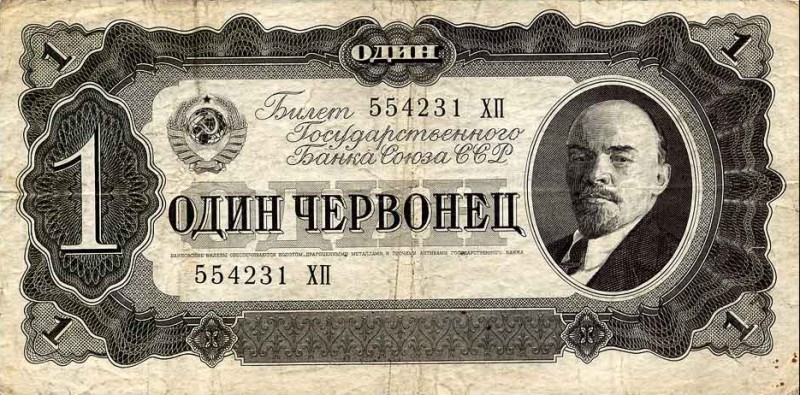
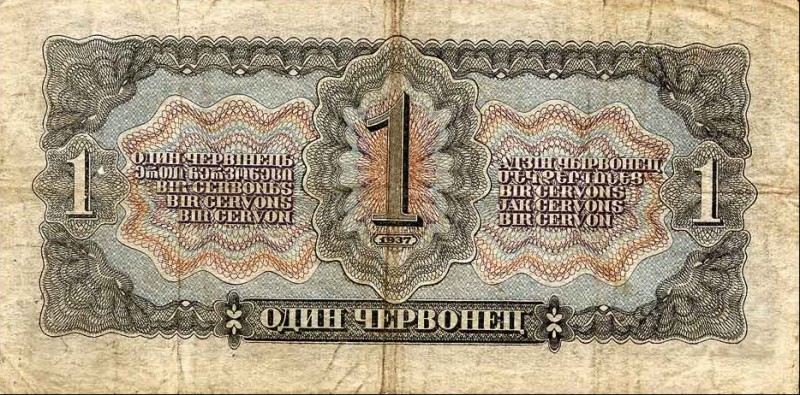
Червонец с 1936
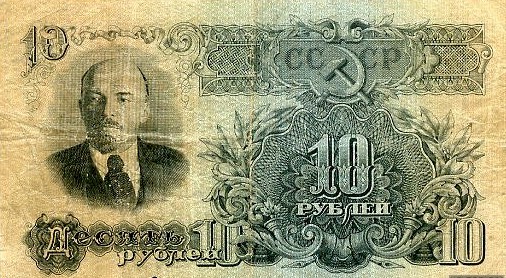
Банкнота десяти рублей с 1936
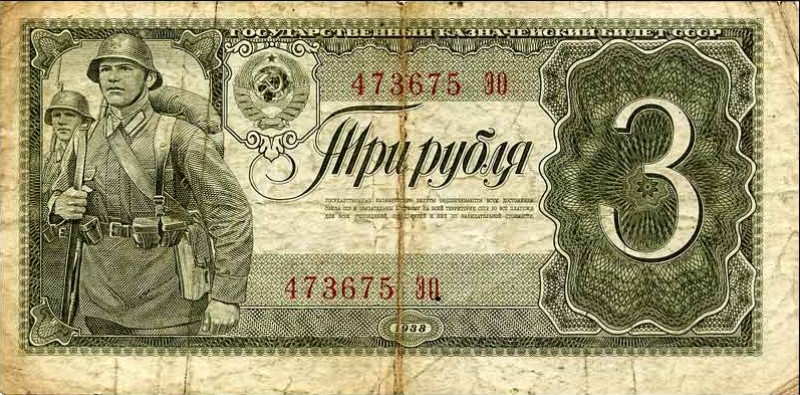
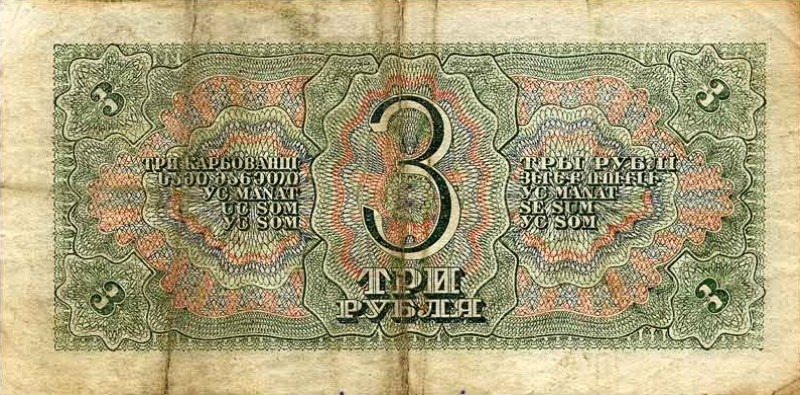
Банкнота трех рублей или Трешка