Сталинизм и путинизм
РусскийПолитический > Контекст > Путинизм
Мы продолжаем напряженно работать, чтобы улучшить наш сайт и перевести его на другие языки. Русская версия этой страницы еще не совсем готова. Поэтому мы представляем здесь пока английскую версию. Мы благодарим вас за понимание.
History repeats itself
When the late Alexei Anatolievich Navalny was subjected to one show trial after another with the regularity of a clock, the situation in the Russian Federation was often compared to the dark times of the Stalin regime, under which Mikhail Bulgakov suffered greatly and to which he responded by writing, among other works, The Master and Margarita. On 20 July 2013, this even prompted Denis MacShane, the former UK Minister for European Affairs, to ask: «Where are you» Mikhail Bulgakov when we need you?».
MacShane's sigh was not so far-fetched. Since the then Russian President Boris Nikolayevich Yeltsin (1931-2007) resigned on December 31, 1999 and his successor Vladimir Vladimirovich Putin (°1952) came to power, many customs of Stalin's regime have not only come back into use, but have also been perfected.
Click here to read more about Putin's personality
Under Vladimir Putin, a cult of personality created by the regime was reintroduced, based on ultra-nationalist sentiments, with all the stereotypical characteristics suc cult entails: the «‘dehumanisation» of dissenters or even of an entire population, such as the Ukrainians; the glorification of the regime’s so-called «achievements»; a portrayal of «foreign agents» – a concept that was even granted legal status by Federal Law No. 327-FZ, adopted on 25 November 2017 – and so on.
New propaganda tools
Since Vladimir Putin came to power, all newspapers, radio stations and other news media in Russia have been brought under the Kremlin’s control, just as was the case under Stalin’s regime. The content of news programmes shown in cinemas during Stalin’s time was determined by the government. That role played by cinemas has been taken over by television channels and digital providers, but all the independent initiatives in that sector – which sprang up like mushrooms after the collapse of the Soviet Union and which, under President Boris Yeltsin, often produced high-quality programmes – were declared bankrupt, forced to move abroad, or brought under government control.
Of course, social media did not exist in Stalin’s day, but the Kremlin now makes good use of it to – just as агитпроп [agitprop] did back then, to gloss over or outright deny the regime’s failures, to inflate minor achievements into colossal successes, to fabricate non-existent successes in the political, economic, scientific and social spheres, or to rewrite history. The falsification of photographs is now being refined by the new possibilities created by the rapid development of digital technologies. The first experiments with running campaigns on social media were carried out during the 2009 regional elections, and in 2013 the first genuine troll factories were set up, from which thousands of posts were published daily across all possible social media platforms both at home and abroad. At that time, this was still done by deploying hundreds of crammed-together, underpaid staff in cramped little rooms, but ten years later, professional groups began to exploit the exponential growth in the possibilities offered by Artificial Intelligence to indoctrinate and mislead the public through the development of increasingly sophisticated algorithms. Credible-looking fake mirror websites modelled on major news outlets were created to spread fake news and manipulate elections – including abroad – and work began on producing misleading videos featuring actors or AI-generated fake characters that are becoming increasingly difficult to distinguish from the real thing.
The Soviet-era youth movements such as the Pioneers and the Komsomol were revived with the creation of Идущие вместе [Idushchie vmyezhe] or Walking Together, later followed by Наши [Nashi] or Ours in March 2005 and Мишки [Mishki] or The Little Bears in December 2007. From a very young age, children are brainwashed into showing their unconditional love for Vladimir Putin, and are rounded up to take part in demonstrations such as, amongst others, those in the run-up to the infamous 2012 elections, following which thousands of videos of instances of electoral fraud were circulated. And new initiatives are still being launched, such as the Движением Первых! [Dvizheniyem Pervykh] or Movement of the First! and the Юнармия [Yunarmiya] or Young Army.
Stricter censorship
Despite the fact that Article 29, paragraph 5 of the Constitution of the Russian Federation prohibits any form of censorship, publications are banned and the freedom to disseminate information is severely restricted by the government, public organisations and groups of citizens who feel offended and organise their organise their ‘self-defence’ – whether or not they are influenced or incited by frontmen acting on behalf of the Kremlin or local authorities.
Every Friday, the Kremlin organises meetings with the leading media outlets at which guidelines are issued on what may be published and how. One of the main pillars of censorship is the Федеральная служба по надзору в сфере связи, информационных технологий и массовых коммуникаций (Роскомнадзор) or the Federal Service for Supervision of Communications, Information Technology and Mass Media (Roskomnadzor), established on 3 December 2008, which took over the responsibilities of the censorship bodies Glavlit, Glavrepertkom and Glaviskustvo, which were active during the period when Mikhail Bulgakov wrote The Master and Margarita.
Show Trials
Under Putin, Show Trials were reintroduced. Opponents of the regime, when they are deemed a threat, are once again accused of unproven and fabricated crimes, usually relating to fraud, corruption, embezzlement and the like – for which it is fairly easy to fabricate «evidence». If the regime considers that, at the end of their prison sentence, the individual in question may still pose a threat, new charges are simply fabricated and new sentences handed down. It is not uncommon for a convicted person to die whilst in custody. Well-known victims of these practices include Mikhail Khodorkovsky, Alexei Navalny and Vladimir Kara-Murza. Magistrates do not shy away from acting just as absurdly and grotesquely as their predecessors did during the Stalin era. For instance, on 11 July 2013, the Tver District Court convicted Sergei Magnitsky of embezzling 230 million dollars. A macabre detail: Magnitsky had died three and a half years earlier in a cell at Butyrka Prison in Moscow – eight days before he was due to be released under the law. When Magnitsky’s lawyers indicated that they would lodge an appeal, the prosecutor responded with the laconic remark that «the dead cannot lodge an appeal». But how they can still be convicted was not explained.
Other old Soviet practices were also brought out of the closet. In her book Putin's Russia, first published in the UK in 2004, journalist Anna Politkovskaya revealed that the Kamera, the notorious KGB laboratory No. 12, which specialised in preparing all kinds of poisons and which had been closed by President Boris Nikolaevich Yeltsin (1931-2007), had been reactivated.
Political murders
Many opponents of Vladimir Putin's regime were never brought to justice, but were immediately eliminated. Journalists who wrote critical articles about the regime are often brutally murdered. No fewer than 144 journalists were killed between 1999, the year Putin first became president, and 2014. The most famous of them was undoubtedly the aforementioned Anna Politkovskaya, who was shot, not coincidentally, on October 7, 2006, Vladimir Putin's birthday.
A means regularly used by the regime to eliminate opponents is poisoning with radioactive polonium-210 or with Novichok, one of the deadliest nerve agents. Since the beginning of the war in Ukraine, many opponents of the war have also been killed by a fatal fall from a window. In 2022, the first year of the war, 35 influential Russians were killed in questionable circumstances. Among them are oligarchs, high-ranking officials and politicians..
Since the large-scale invasion of Ukraine on 24 February 2024, the war has also been used as a means of eliminating opponents. The front-line troops include tens of thousands of former prisoners who were recruited from Russian prisons, lured by the prospect of high pay and release after their term of service. The practice of permanently eliminating their resistance is so widespread that it even has a specific term: обнуления [obnuleniya] or zeroing. Soldiers are forced to carry out suicide attacks or are tied to trees as маячки [mayachki] or beacons to act as bait for drones, buried alive or drowned in flooded trenches.
Stalinism and Putinism This section of our website provides a detailed picture of the many similarities between the regime of Vladimir Putin and the period of the Great Terror under the regime of Joseph Stalin in the 1930s. We show the unlimited means of propaganda, the far-reaching censorship measures, the pattern of political show trials and the cases of political murders for which evidence was provided. All facts on which our findings and conclusions are based were supported by our own observations or by third-party testimonies that were confirmed by at least two independent sources. |
Режим Путина
Иллюстрации
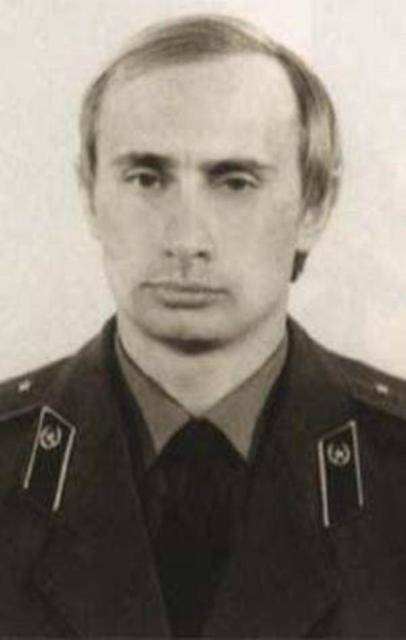
Человек КГБ Владимир Путин

Алексей Навальный во время суда

Денис МакШейн

Идущие вместе

Владимир Кара-Мурза
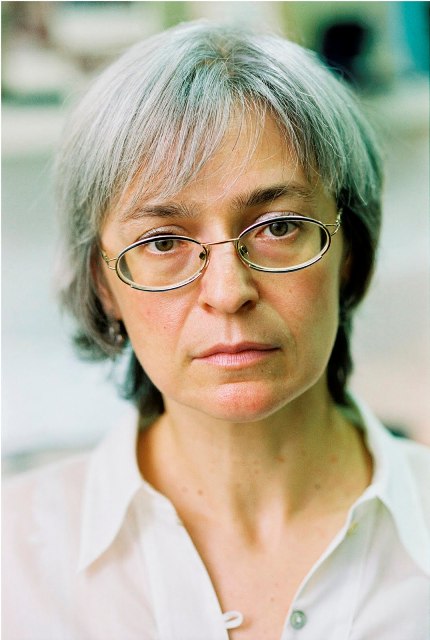
Анна Политковская