The Quest of Michael Lang
English > Adaptations > Films > Feature films > Michael Lang
A name that crops up more than once in the story of the agony that directors and producers endured to adapt The Master and Margarita for the screen is Michael Lang (1944-2022).
Michael Lang was a concert promoter and music manager, and one of the organizers of the famous Woodstock Music and Arts Festival in August 1969. He also founded the Michael Lang Organisation (MLO), which focused on the production of live events, film production, and artist management.
Many misunderstandings
What was striking about Lang was that his accounts of certain events didn't necessarily align with how others experienced the same events, or that he himself offered different versions of the same events at different times.
For example, Lang told Variety magazine on July 10, 1995, that he read The Master and Margarita for the first first in London in 1981 and that he was immediately captivated by the novel. However, on December 18, 2019, he himself stated on the Woodstock Festival website: «I read the novel fr the first time in 1990 and immediately fell in love with it. It took a long time for the right director and production team to come together, but it was worth the wait».
Different versions also exist regarding the copyrights for adapting the novel for film.
In the Variety interview was mentioned that during a series of events about Russian art in the United States, Michael Lang met with a certain Vladimir Ilyich Litvinov, a former head of the Soviet Ministry of Culture, and that Litvinov arranged that he could meet with Sergei Shilovsky, Yelena Sergeevna's grandson, in New York in December 1994. However, the website article states: «I've owned the film rights for over 25 years. In 1995, I traveled to Moscow to make a deal».
Sergei Shilovsky certainly disagrees with the «over 25 years» claim, but I'll come back to that in a moment.
In a conversation with Mia Taylor of Tinhouse Issues in January 2001, the tone was again different: «It was assumed to be in the public domain, but I never felt comfortable with that. I was working on a project in the Kremlin, where I met Bulgakov's grandson. I made a deal with him for the rights. You need a translation to write the screenplay, so we bought the rights to Ardis's translation, the best I've ever read». Ardis's translation is the one by Diana Burgin and Katherine O'Connor, published in 1995.
Be that as it may, Michael Lang was indeed captivated by the novel, and we know for sure that he tried three times to collaborate on a film project, each time claiming he owned the rights, but his efforts have been unsuccessful so far.
Ray Manzarek
In 1989, Michael Lang became involved with Ray Manzarek's (1939-2013) plans to adapt The Master and Margarita. Manzarek was a member of the legendary rock band The Doors, but a filmmaker by training. He, too, was a great admirer of the novel and was eager to bring its complex, satirical, and fantastical world to the screen: «I first read the book ten or fifteen years ago. I didn't necessarily think, 'I have to make a movie of this.' I thought, 'What an incredibly cinematic book!' Then I met screenwriter Rick Valentine, who said he was working on a script, and I said, 'Impossible! I love it, but it's impossible!' Then I read his script - a masterpiece! I said, 'Okay, let's see if we can sell this, let's get it on the screen.'»
Manzarek considered Mick Jagger (°1943), lead singer of The Rolling Stones, to play Woland. Jerry Hall (°1956), Jagger's longtime partner, told him: «It's his favorite book! That role is his! He's simply Professor Woland». Manzarek had approached actress Julie Delpy (°1969) for the role of Margarita.
When plans are made to adapt a book for the screen, existing translations are usually used to base the screenplay. But Manzarek took a different approach: «We have a private translation. I have a Russian friend who translated the entire novel. We based the script on his translation».
Manzarek considered the Hungarian-British director Peter Medak (°1937) to direct the film. But neither Michael Lang nor Peter Medak shared Manzarek's opinion that Rick Valentine's screenplay was a «masterpiece» - quite the opposite, as Medak backed out.
On December 26, 2026, Sergey Shilovsky reflected on that period during an interview with Kinopoisk magazine: «Lang's option for Manzarek's project was valid for a year, but nothing happened during that time. Then Lang made the second payment, with the possibility of an extension. But I returned the money and let him know I no longer wanted to do business with him. It turned out he couldn't find the money for the production because he was heavily in debt».
Roman Polanski
Still in 1989, Michael Lang attempted to realize his dream through a collaboration with director Roman Polanski (°1933), known for films including Rosemary's Baby and Chinatown. Polanski had convinced Terry Semel (°1943), then head of Warner Brothers, to invest in a film adaptation of The Master and Margarita.
It was the Hungarian producer András Hámori (1953-2024), then head of the independent film studio Alliance Pictures, who brought them together: «His script came the closest, but it wasn't quite perfect yet.Later I heard that this guy in New York, Michael Lang, owned the rights. His partner, Ira Deutschman actually brought it to me, when I was running Alliance Pictures. They said they have Polanski attached, so I called Roman, and he said, I used to want to do it, but I don't know anymore. So the whole thing disappeared, but never completely».
Polanski co-wrote the screenplay with translator John Brownjohn (1929-2020) and later called it «the best of his career».But Michael Lang didn't approve, partly because the scene of Woland's ball had been omitted. Warner Bros. head Terry Semel, who hadn't read the screenplay when he initially approved it, also didn't like it. Polanski recalled it this way: «We had long talks, and he didn't believe the picture had commercial potential to justify the expense. Finally, it was dragging for long time, and I said, okay, let's forget it. I tried to set it up with some other companies, which I think was a mistake, because once the word goes around that the studio dropped the project, even if you asked them to, the word is out, and I could not put it together».
In Polanski and Brownjohn's story, the master and Margarita are no adulterous lovers, but neighbours, with Margarita being a young music teacher. In response to Lang's objections about the ball scene, Polanski defended himself by saying that he felt that Satan's ball, which plays such a prominent role in the book, wasn't really relevant to Bulgakov's message. «Sometimes the most popular pieces can be removed without hurting much. How much would Hamlet suffer without 'To be or not to be'? In fact it would not change a thing». Lang responded, saying: «It's such a great scene. He said Hamlet would have been Hamlet without 'To be or not to be,' and I said, but what do people remember?»
Shortly afterward, the whole idea was abandoned, partly because of the cost, and partly because Warner Brothers felt that a satire on the Soviet Union would no longer be relevant after the fall of the Berlin Wall.
Svetlana Migunova-Dali and Grace Loh
Lang's third attempt is still relevant, even though Michael Lang himself is no longer around.
In 2016, Mivhael Lang managed to join the team of Svetlana Migunova-Dali and Grace Loh. Shilovsky claimed they brought him in to avoid copyright issues: «Lang persisted in his belief that he had an option on the film rights, even after his agreement with us had expired, which could have triggered a protracted and costly legal battle».
Whether that holds water, however, is questionable, because in 2016, Migunova-Dali herself had signed a new licensing agreement with Shilovsky, which stipulated, among other things, that if a new Russian film were released, it would not immediately be released in English in the United Kingdom or the United States.
In any case, Lang certainly had a knack for creating problems for his competitors. And he proved this in 2020 when the Russian production company Mars Media announced that they also wanted to release an English-language version of the new Russian film, which was then still in production with director Nikolai Lebedev. Lang was the one who filed a lawsuit against Mars Media on behalf of the Migunova-Dali team.
This would be his final action, and he would no longer be able to write the rest of the story, as Michael Lang died of lymphoma on January 8, 2022.
You can stay informed about developments, including the appearance of Johnny Depp by clicking this link.
Feature films
- Introduction
- Baz Luhrmann or Johnny Depp - 20??
- Michael Lockshin - 2024
- Nikolai Lebedev - 2020
- Charlotte Waligòra - 2017
- Stone Village Productions - 2012
- Giovanni Brancale - 2008
- Ibolya Fekete - 2005
- Sergey Desnitsky - 1996
- Yuri Kara - 1994
- Paul Bryers - 1992
- Oldřich Daněk - 1991
- Andras Szirtes - 1990
- Vladimir Vasilyev - Boris Yermolaev - 1986
- Aleksandar Petrovic - 1972
- Andrzej Wajda - 1972
- Seppo Wallin - 1970
Other film genres
Illustrations
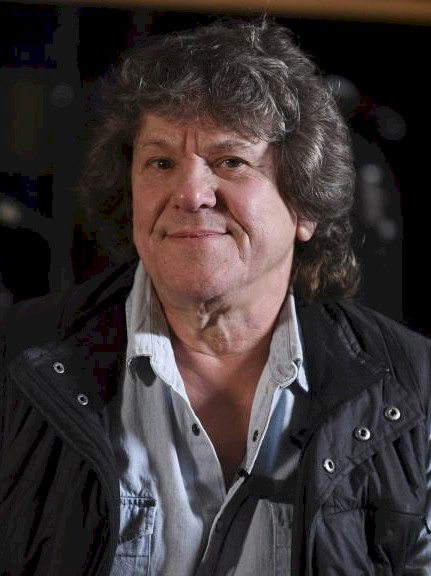
Michael Lang

Sergey Shilovsky
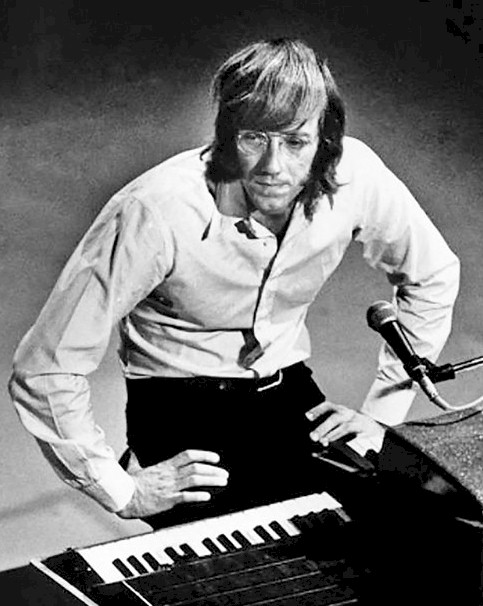
Ray Manzarek with The Doors
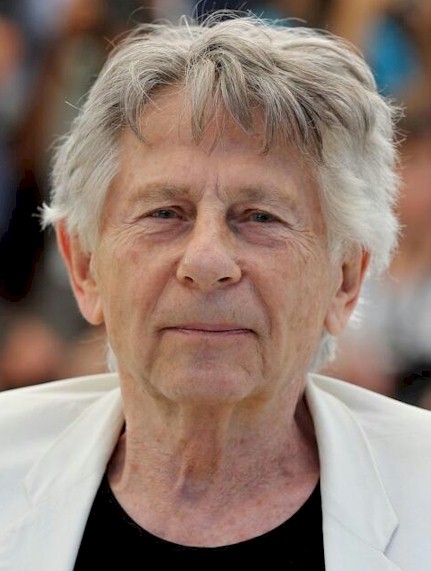
Roman Polanski

András Hámori

Svetlana Migunova-Dali