2. Pontius Pilate
English > The novel > Annotations per chapter > Chapter 2
The Chapter's Title
In 1998, the Seattle based rock band Pearl Jam released the song Pilate, inspired by this chapter.
Click here to listen to the song
Judea
Judea is the southern part of Palestina, occupied by Rome in 65 BC. It was named after Judah, Jacob's fourth son. In the year 6 it became a Roman province. The residence of the prefect - called «procurator» by Bulgakov - was in Caesarea on the Mediterranean.
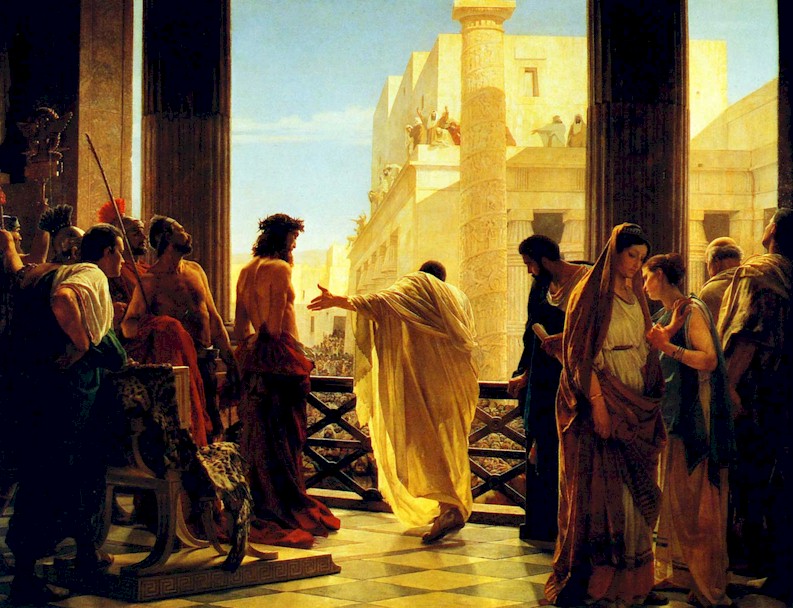
Pontius Pilate
Pontius Pilate (?-38) was the fifth Roman prefect of Judea from 26 to 36. Mikhail Bulgakov drew details for his portrayal of the procurator from David Strauss (1808-1874), already mentioned in the first chapter, but also from Life of Christ by the Dean of the Canterbury Cathedral, Frederic Farrar (1851-1905), from Vie de Jésus by the French historian Ernest Renan (1823-1892), Le Procurateur de Judée by Jacques Anatole François Thibault (1844-1924), who wrote under the pseudonym Anatole France, and the Gospel of Nicodemus, which probably was written in the fourth century, and of which the first part was entitles Acta Pilati, or the Acts of Pilate. You can download all these works for free in the archives of this website. You can read why we call Pilate a «prefect» and not a «procurator» by clicking on the link below.
Click here to read more on Pontius Pilate
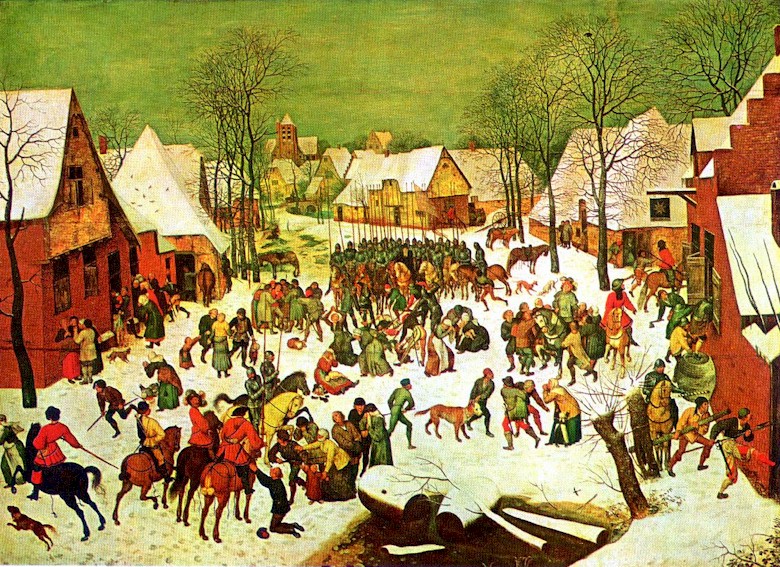
Herod the Great
Herod the Great (?75 BC-04), was the client king in Judea whom the Romans rewarded for his services by making him king. According to the New Testament, he ordered the murder of Jewish children - the Massacre of the Innocents - when he heard of the birth of the Messiah - the future «King of the Jews». A better translation might be: «King of the Judeans», as it was more for his influence on the kingdom of Judea than on his religious opinions that was executed.
Herod loved buildings in Roman style. It can be seen in the many palaces and other constructions he built in Jerusalem and in the city of Caesarea at the Mediterrean shore. According to the master's Pilate story, Caesarea was Pilate's preferred residence.
The Twelfth Lightning legion
The twelfth legion, Legio XII, was a Roman legion, levied by Julius Caesar (100 BC-44 BC) in 58 BC, which accompanied him during the Gallic wars until 49 BC. The legion's logo was the image of a lightning which gave it the name Fulminata - lightning is fulmen in Latin. The twelfth legion was also known as Paterna, Victrix, Antiqua, Certa Constans, and Galliena. Bulgakov found the name from the book L’Antéchrist (The Antichrist) another work by Ernest Renan (1823-1892), and made the annotation «12-й Fulminata» [12th Fulminata] in his notebook.
Yershalaim
Bulgakov uses an alternative transliteration of the Hebrew ירושלים (Yeru-shalayim) for the name of the city of Jerusalem. In certain other cases as well, Bulgakov has preferred the distancing effect of these alternatives: Yeshua for Jesus, Ha-Nozri for Nazareth, Kaifa for Caiaphas, Kiriath for Iscariot.
Click here to read more about transliterations
O gods, gods...
The refrain «O gods, gods...» runs through The Master and Margarita like a leitmotiv. It appears ten times in the novel and is taken from the opera Aïda written by Giuseppe Verdi (1813-1901), which Bulgakov knew and loved and also quoted in other works.
Click here to watch and hear the leitmotiv from Aïda
Galilee
Galilee is the northern part of Palestine, green and fertile, with its capital at Tiberias on the Sea of Galilee, also known as Lake Kinnereth or Lake of Gennesaret.
The tetrarch
In Pilate's time Galilee was ruled by the tetrarch Herod Antipas (20 BC-30), son of Herod the Great (73 BC-4BC). In a tetrarchy, the power is divided between four individuals. In the first century, the Romans also used the title of tetrarch to indicate the ruler of a smaller part of their vast empire.
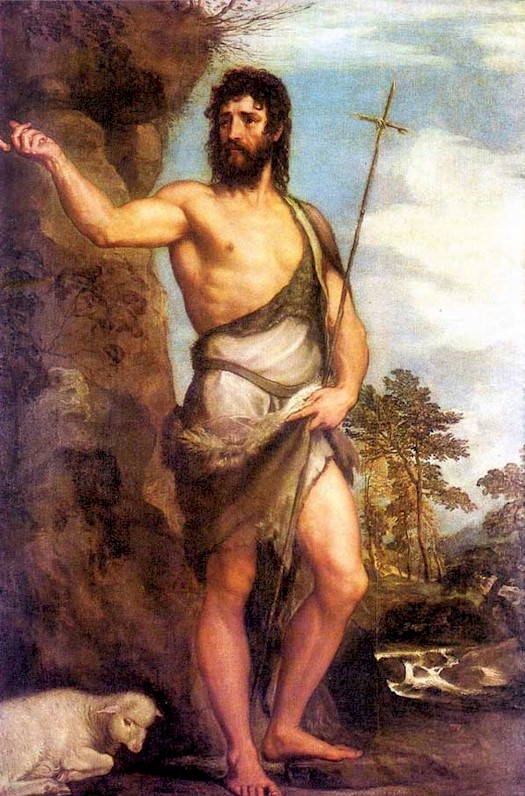
Herod Antipas was responsible for the decapitation of John the Baptist (7BC-29).
According to the Gospel of Luke (23:7-12), Herod Antipas was in Jerusalem at the time of Christ's crucifixion. Pontius Pilate had sent Jesus to Herod to pronounce judgment. It was meant to flatter him because they were at odds with each other. Herod was honoured but sent Jesus back to Pilate. The latter made judgment and washed his hands saying he was innocent of the blood of this just person. Since then Herod and Pilate were friends again. Luke 23:12 - «And Herod and Pilate became friends with each other that very day, for before this they had been at enmity with each other».
Sanhedrin
The Sanhedrin was the highest Jewish legislative and judicial body, headed by the high priest of the temple in Jerusalem. The lower courts of justice were called lesser sanhedrins. The Sanhedrin followed the Jewish law under supervision of the Romans.
A man of about twenty-seven
According to the New Testament, Jesus Christ was about thirty-three years old when he died. This is one of the many details in which Bulgakov deviates from the traditional biblical story. In his annotations for the third version of The Master and Margarita he wrote: «33-й год нашей эры. Иешуа мог родиться и в 4-10 году нашей эры (23 года?)» or «The year 33 of our era. Yeshua could have been born between the years 4 and 10 of our era (23 years?)».
Dressed in an old and torn light-blue chiton
The chiton is an ancient Greek garment consisting of straight pieces of cloth which had different sizes. These pieces of cloth were draped around the body, no scissors nor needles were used. Men wore a short chiton without sleeves, women a long one with sleeves.
Blue was a favourite colour among the Jews and was considered sacred. Bulgakov got this description from Life of Christ by Frederic Farrar (1851-1905): «...at each corner of His dress the fringe and blue riband which the Law enjoins (...) He is in the ordinary dress of His time and country».
Aramaic
Aramaic is a West-Semitic language which is spoken today as a first language in some villages around Damascus in Syria and in other parts of the Middle-East.
Originally it was spoken by the Aramaeans, but eventually it became the lingua franca of the entire Persian empire. So it became widely spread all over the Middle East, and consequently Palestina. Some passages of the Bible are written in Aramaic and not in Hebrew, and it is very likely that Jesus spoke Aramaic in his daily contacts with people. In the movie picture The Passion of the Christ (2004), directed by Mel Gibson (°1956), most of the dialogues are in Aramaic.
Ernest Renan (1823-92) wrote that «l'idiome propre de Jésus était le dialecte syriaque mêlé d'hébreu qu'on parlait alors en Palestine» or «Jesus' mother tongue was the Syriac dialect mixed with Hebrew, which was then spoken in Palestine». The Syriac was a dialect of Aramaic.
Today the language is considered to be endangered. After thousands of years it risks to disappear under the pressure of dominant languages and cultures in those areas where still exist Aramaic groups.
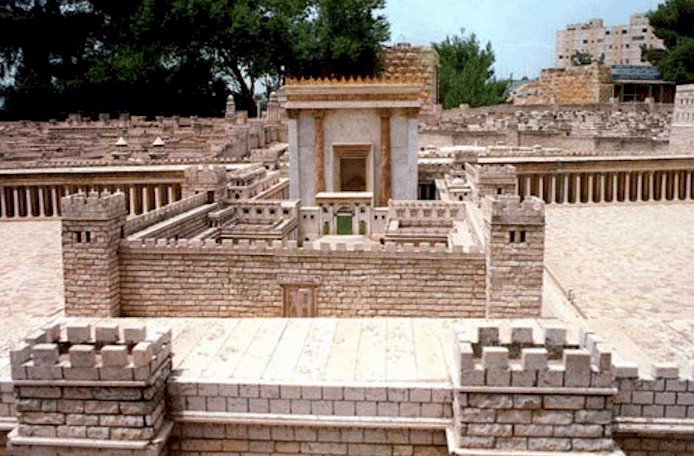
The temple of Yershalaim
The temple of Jerusalem was originally built by King Solomon (1000 BC-928 BC) in the 10th century BC. It was destroyed the first time by the Babylonian invaders in 586 BC and reconstructed in the 5th century BC. Herod the Great renewed it completely, but it was destroyed completely by Titus in 70.
Ratslayer
Bulgakov calls him Марк Крысобой [Mark Krysoboy]. Крыса [krysa] is rat and бой [boy] means fight. In the English translations he's called Muribellum (Glenny, 1967) or Ratslayer (Pevear and Volokhonsky, 1997). Muribellum means Mousefighter. It was a Roman nickname for fearful and pusillanimous soldiers. Muribellum is meant ironically, because Mark Ratslayer was not a coward at all.
At the foot of a bronze statue
Statues in the decoration of palaces was a characteristic of the Hellenistic culture, and thus familiar to the Roman Pilate, but for Jews it was very unusual. But Frederic Farrar (1851-1905) wrote about the presence of sculptural porticos in the palace of Herod.
Hegemon
Ηγεμών or hegemon is Greek for leader, ruler or guide.
Yeshua
The name ישוע [Yeshua] is Aramaic and means the Lord is salvation. The name הנצרי [Ha-Nozri] means from Nazareth, the city in Galilea where Jesus lived before he started his public life.
 Next page of Annotations chapter 2
Share this page |
Chapters
- Introduction
- 1 Never Talk with Strangers
- 2 Pontius Pilate
- 3 The Seventh Proof
- 4 The Chase
- 5 There were Doings at Griboedov's
- 6 Schizophrenia, as was Said
- 7 A Naughty Apartment
- 8 The Combat between the Professor...
- 9 Koroviev's Stunts
- 10 News From Yalta
- 11 Ivan Splits in Two
- 12 Black Magic and Its Exposure
- 13 The Hero Enters
- 14 Glory to the Cock!
- 15 Nikanor Ivanovich's Dream
- 16 The Execution
- 17 An Unquiet Day
- 18 Hapless Visitors
- 19 Margarita
- 20 Azazello's Cream
- 21 Flight
- 22 By Candlelight
- 23 The Great Ball at Satan's
- 24 The Extraction of the Master
- 25 How the Procurator Tried...
- 26 The Burial
- 27 The End of Apartment No. 50
- 28 The Last Adventures of Koroviev...
- 29 The Fate of the Master and...
- 30 It's Time! It's Time!
- 31 On Sparrow Hills
- 32 Forgiveness and Eternal Refuge
- Epilogue
English subtitles

All films based on The Master and Margarita are subtitled in English, French, German, Dutch, Spanish and Italian.