17. An unquiet Day
English > The novel > Annotations per chapter > Chapter 17
Vassily Stepanovich Lastochkin
Vassily Stepanovich Lastochkin, the bookkeeper of the Variety Theatre is a modest and quiet man who, unexpectedly, by the disappearance of the other directors, turns out to be the senior member of the whole Variety team. Which he will regret at the end of the chapter.
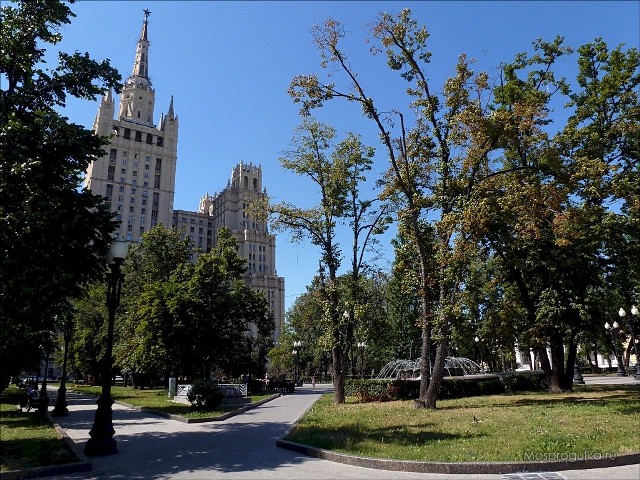
A queue of many thousands clung in two rows, its tail reaching to Kudrinskaya Square
The Kudrinskaya square in Moscow is situated at the intersection of Sadovaya Kudrinskaya ulitsa (the continuation of Bolshaya Sadovaya ulitsa) and Bolshaya Nikitskaya ulitsa. Which means that there were two rows waiting in a long line indeed, about one kilometer.
The famous Ace of Diamonds
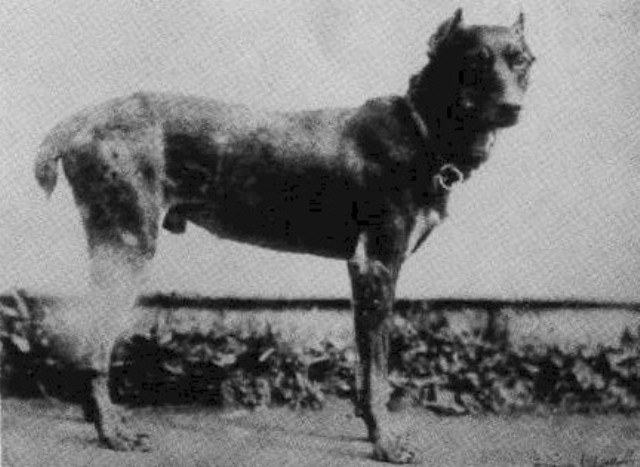
In Russian, Bulgakov’s police dog is called Тузбубен [Tuzbubyen]. Туз [tuz] means ace and бубен [bubyen] means diamonds. Tuzbubyen or Ace of Diamonds is probably a strange name for a police dog, but we don’t need to search much for the explanation. It’s a parody of a famous pre-revolutionary real police dog called Треф [Tref], which means Clubs.
In Bulgakov’s archive was found a newspaper cutting from the Pravda of November 6, 1921, about the experiences of Vladimir Ilyich Lenin (1870-1924) in the summer of 1917, when he had to escape to Finland. In that newspaper article we can read that not only the counterintelligence and police detectives were brought into action to track Lenin, but also dogs, among which the famous police dog Tref.
In 1907, after he had been visiting the Police Dog School of the city of Ghent in Belgium, Vasily Ivanovich Lebedev (1868-1930), Head of the Police Department of the Russian Ministry of Interior, published his book Полицейская собака в Генте [Politseyskaya sobaka v Gentye] or Police Dogs in Ghent. The ideas developed by Lebedev in the book were highly appreciated, and on June 21, 1909, the first Russian Полицейская школа собаководства [Politseyskaya Shkola sobakovodstva] or Police School for Dog Breeding and Training was founded in Staraya Derevnya near Saint Petersburg.
One of the first dogs sent to the school was Tref, a dobermann male, born in December 1908 in the von Thüringen dog nursery owned by Otto Geller in Riga, Latvia. Tref was trained by Vladimir Dmitriev, district head of Moscow city police. Tref, only 11 months old, won the first exam for «graduates» of the school on October 25, 1909, and became famous in Russia since he contributed to the solution of more than 1,500 criminal facts.
In the early 1920s, Dmitriev would have been executed in Lubyanka. It is not known what has happened to Tref.
Faland
Faland is actually the German form of Woland's name that appears in the drama Faust, written by Johann Wolfgang von Goethe (1749-1842).
Got any threes?
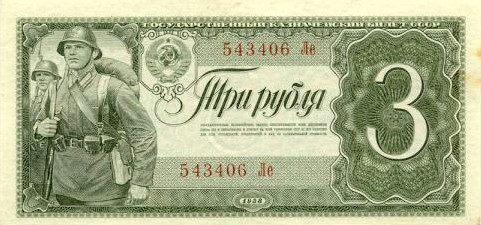
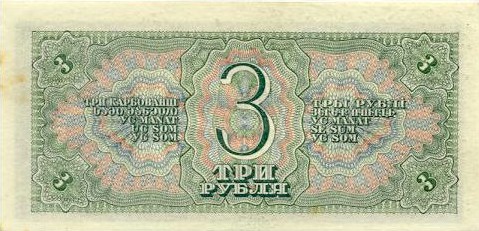
Just like in Chapter 12, the Russian chervonets is translated here as ten-rouble bill. Threes, however, is indeed the correct translation of the word Трешки [Treshki] in the original text.
In the conversation between Vassily Stepanovich Lastochkin and the cab driver, Bulgakov plays again with the «unreliable» chervonets and the «solid» rouble. The driver refuses to accept chervontsy, but treshki - three-rouble bills - are welcome.
Click here to read more about the monetary issues in the Soviet Union
Read more about the difference between a chervonets and a ten-rouble bill
A label from a seltzer bottle
In the original Russian text Bulgakov didn’t talk about ordinary seltzer. He mentioned the brand. The labels are from bottles of the Вода минерала нарзан [Voda minerala Narzan] or Narzan mineral water. Since 1894 this water is bottled in Kislovodsk, a city in the region of Stavropol in Ukraine.
In Bulgakov’s time, Narzan water has been associated with this sunny resort town in the North Caucasus for more than a century, comparable to the Spa water in Belgium or Vittel in France. But in the chaos of post-communist Russia, the eminent old plant had to stoop to producing cheap junk. Counterfeiters tried to rip off the Narzan label.
When communism collapsed, Narzan had immaterial assets that most other domestic enterprises could only dream of - a pre-Revolutionary brand name, an established reputation and a quality product. But in everything else it was like any other company emerging from the dysfunctional - if secure - command economy. When regular orders from the state dried up, the factory was forced to switch to products targeted at mass consumers: cheap fortified wine and bedroom slippers.
It was quite a step down from the days when the company made special deliveries to ailing Soviet leader Vladimir Ilyich Lenin (1870-1924) in the 1920s. To make matters worse, Narzan's equipment was beginning to fall apart. and there was zero investment. But things can change for the better: today Narzan is an advanced company. The U.S.-educated manager Vyacheslav Stanislavovich Sinadsky (°1967) was hired to develop a strategy and attract capital from a Western lending institution. The company now outperforms its Soviet peak producing 70 million liters per year and is back on the tables of the nation's elite, including the Kremlin.
The Spectacles Commission
The Spectacles Commission which Petrovich presides is presumably based on the Государственного объединения музыки, эстрады и цирка (ГОМЕЦ) [Gosusarstvennogo obedineniya muzyki, estrady i tsirka] (GOMEC) or the State Union of Music-Hall, Concert, and Circus Enterprises, which was located in the building of the Old Circus at Tsvetnoi bulvar nr. 13 in Moscow, where now is situated the Yuri Nikulin Circus.
The jacket and trousers are there, but inside the jacket there's nothing!
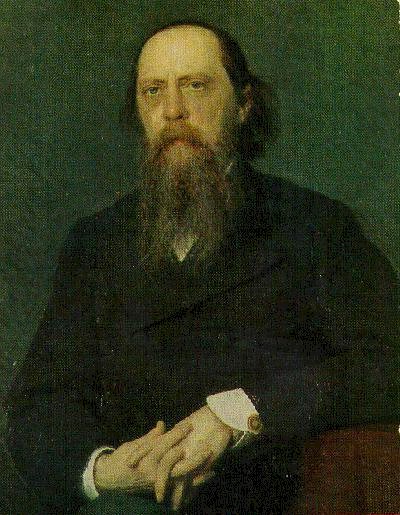
Bulgakov wrote these scenes about the same time when Ilya Ilf (1897-1937) and Yevgeny Petrov (1903-1942) were writing their novel The Golden Calf, which has a similar scene with an empty suit. The source for both may have been The History of a Town written by Mikhail Yefgrafovich Saltykov-Shchedrin (1826-1889). This book was published in 1869-1870 and it was a parody of Russian history, in the microcosm of a provincial town, whose very name - Глупов [Glupov] - is representative of its qualities, because Glupov means Sillytown.
The mayors of Glupov can be distinguished from each other only by the degree of their incompetence, but at the same time The History of a Town is an attack on the Russian people for their passivity toward their own fate.
Prosha
Anna Richardovna is is the personal secretary of Prokhor Petrovich. Her use of the familiar form «Prosha» in addressing him is not appropriate in the work environment.
A cat, black, big as a behemoth
Bulgakov shows how Behemoth got his name here. Hippopotamus in Russian is Бегемот [Begemot].
The affiliate, located in Vagankovsky Lane
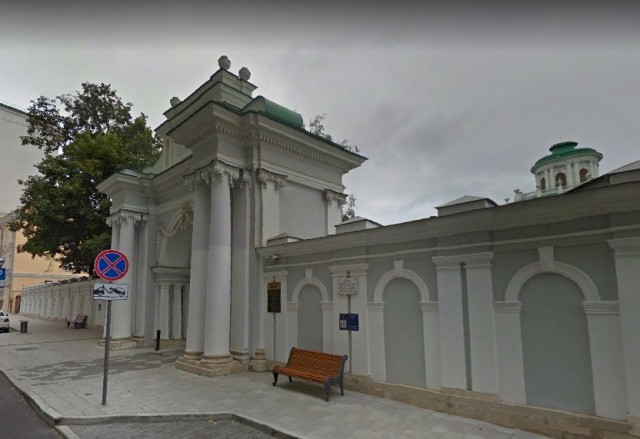
There never was an office connected with entertainment on Vagankovsky Lane - nowadays Starovagankovsky Lane -, but Bulgakov would have come to this street to visit the Rumyantsev or Lenin Library. The street takes its name from ваганить [vaganit], a dialect word meaning to clown or play the fool. The czar's jesters (called skomorokhi) used to live here. The nicest building of the street is the renowned Pashkov House.
Glorious sea, sacred Baikal
This prison song about the Siberian Baikal lake was very popular after the Revolution. Its title is Славное море, священный Байкал [Slavnoye morye, sviyashchenny Baikal] or Glorious sea, sacred Baikal.
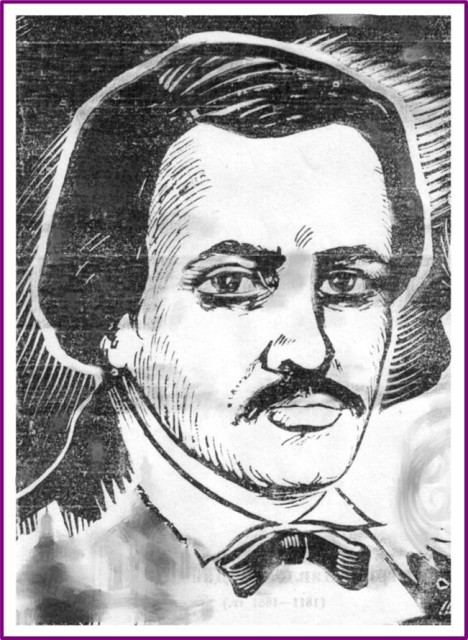
Slavnoye morye is a song which has been thought up by prisoners from the Nerchinsk prison camp in Siberia around 1850. It was based on the poem Думы беглеца на Байкале [Dumy begletsa na Baykalye] or The Soul of the Fugitives in the Baikal, which was written in 1848 by Dmitri Pavlovich Davydov (1811-1888). There exist many different versions of the song, because the original text of the poem was often changed and usually shortened considerably.
Click here to see how the staff of the Spectacles Commission sings the song
The readers of the English Michael Glenny translation and the readers of the Dutch translation may wonder why the song Glorious sea, sacred Baikal is discussed here, since neither Glenny nor Fondse were very accurate in their translations at this point. Fondse replaced the song by a Dutch childrens’ song, and Glenny substituted Glorious sea, sacred Baikal blithely by Эй ухнем [Ey Ukhnem] or The Song of the Volga Boatmen, also known as The Volga Burlak's Song. This is another well-known traditional Russian song depicting the suffering of the people in the depth of misery in czarist Russia. In 1866, this song was published in Collection of Russian Folksongs, a book by Mily Alexeevich Balakirev (1836-1910). It was taken to the number one position in the US-charts in 1941 by Glenn Miller (1904-1944), but it's not the song which Bulgakov described here in The Master and Margarita.
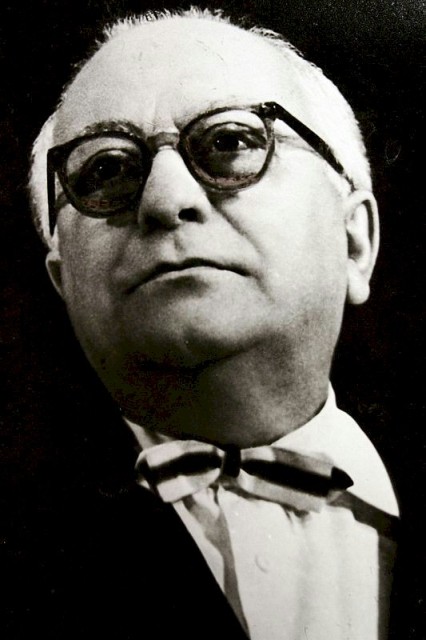
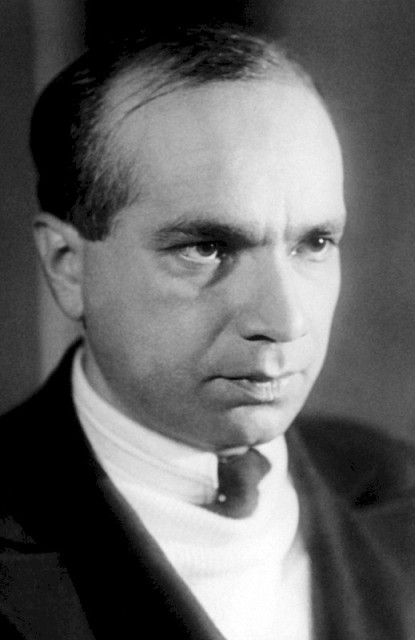
It is possible that Bulgakov got the idea for this scene from something which happened in his private life, and which his third wife Elena Sergeevna (1893-1970) described in her diary. On December 18, 1934, the actor Ruben Nikolaevich Simonov (1899-1968) had visited their home, together with other members of the Vakhtangov Theater. Simonov had played a role in Zoya's apartment. He had come to listen to a lecture of Crazy Jourdain, an adaptation which Bulgakov had made of the ballet comedy Le Bourgeois Gentilhomme by Jean-Baptiste Molière (1622-1673). After the lecture they had gone together to Simonov's flat, where the actor, along with theater director and pedagogue Yosif Mateevich Rapoport (1901-1970), had sung the song По диким степям Забайкалья [Po dikim stepyam Zabaykalya] or By the wild steppes of the Transbaykalye. It's also a song created by exiles in Siberia, with a text of which is attributed to the Belarusian writer Ivan Kuzmich Kondratyev (1849-1904). This song is also known as Бродяга [Brodyaga] or The Wanderer, and of which the lyrics were also often changed and usually shortened considerably. It was published and recorded by many artists and choirs, the first time in 1908 by Nadezhda Vasilevna Plevitskaya (1884-1940).
Simonov and Rapoport must have entertained their audience particularly well that night, since they performed a hilarious version of The Wanderer. They had forgotten the words of parts of the text, and complemented the missing parts with their own interpretations.
In the neighbouring room no. 6
Room no. 6 is a reference to Ward number 6, a popular story from 1892 by Anton Pavlovich Chekhov (1860-1904) about a lunatic asylum where a constructed reality collides with real life.
Shilka and Nerchinsk
Shilka and Nerchinsk are towns on the Shilka River, east of Baikal, known as places of exile. The Nerchinsk camp is more in particular known as the place of origin of the song Glorious sea, sacred Baikal.
«Shilka and Nerchinsk...» are the first words of the third verse of Glorious sea, sacred Baikal:
«Shilka and Nerchinsk don't scare me anymore...
The mountain guards can’t catch me».
A dose of valerian
Valerian drops are distilled from the plant Valeriana officinalis (Heliotrope). These drops are still used as a mild sedative to calm anxiety and the heart.
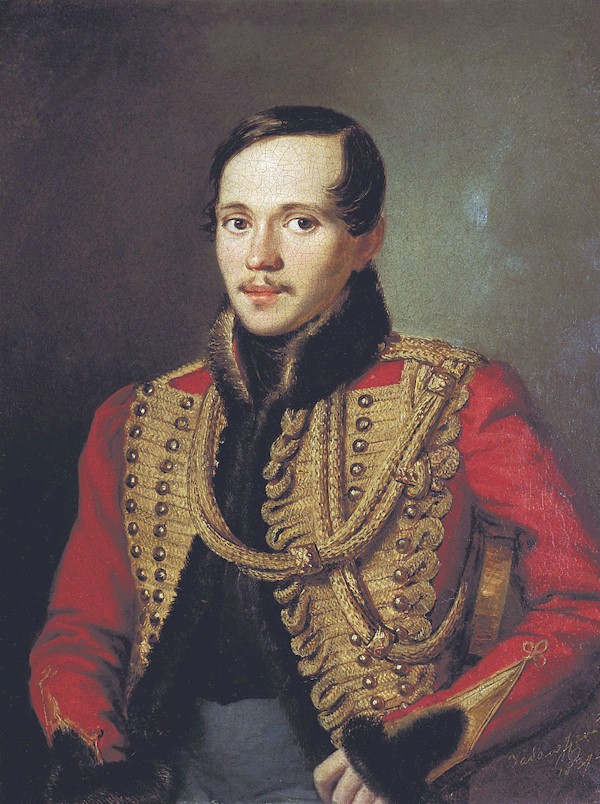
Lermontov
Mikhail Yuryevich Lermontov (1814-1841) was a lyric poet, playwright and novelist of the generation following Aleksandr Sergeevich Pushkin (1799-1837). Lermontov's work shows his aversion to the suppression of the people by the czars. That’s why he was so often in conflict with the authorities. Lermontov was absolutely not well-liked by the court. In 1837 Lermontov wrote the poem Death of a poet as a reaction to the death of Pushkin. Czar Nicolas I (1855-1796) didn’t like it and sent Lermontov in exile to the Caucasus. Inspired by his experiences, Lermontov wrote his masterpiece, the novel A Hero of Our Time (1840).
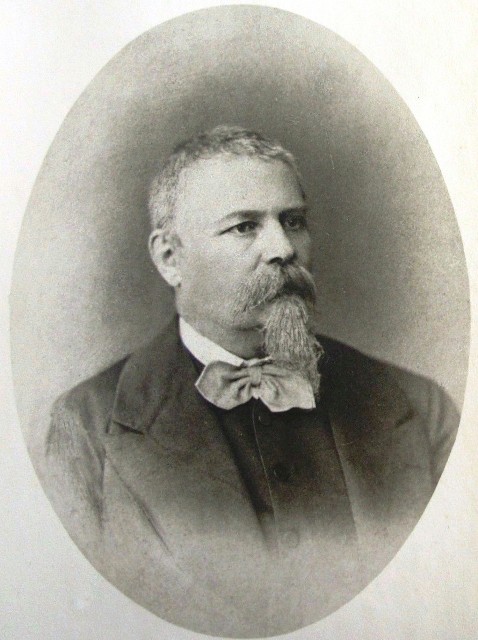
In February 1841, he stayed in the health resort Pyatigorsk for a couple of months. At this resort, it came to a duel with his fellow-officer Nikolai Solomonovich Martynov (1815-1875). Lermontov teased Martynov mercilessly until the latter couldn't stand it anymore. On July 25, 1841, Martynov challenged his offender to a duel. The fight took place two days later at the foot of Mashuk mountain. Lermontov allegedly made it known that he was going to shoot into the air. Martynov was the first to shoot and he aimed straight into the heart, killing his opponent on the spot. On July 30 Lermontov was buried, without military honours, thousands of people attending the ceremony. Some say that Martynov had orders from the court to provoke the duel and to kill Lermontov.
Fanov and Kosarchuk, well-known affiliate toadies
I don’t know (yet) if there exists a real prototype for these characters. Фан [Fan] means fan or supporter, and a Косарь [kosar] is a chopper.
Foreign money
It may be amazing that here, among the Canadian dollars, British pounds and Dutch guldens, also the Latvian lats and Estonian kroons are mentioned as «foreign money». Both Latvia and Estonia were Soviet republics. But between the wars - when Bulgakov wrote The Master and Margarita - the Baltic states were independent and had their own currencies.
Share this page |
Chapters
- Introduction
- 1 Never Talk with Strangers
- 2 Pontius Pilate
- 3 The Seventh Proof
- 4 The Chase
- 5 There were Doings at Griboedov's
- 6 Schizophrenia, as was Said
- 7 A Naughty Apartment
- 8 The Combat between the Professor...
- 9 Koroviev's Stunts
- 10 News From Yalta
- 11 Ivan Splits in Two
- 12 Black Magic and Its Exposure
- 13 The Hero Enters
- 14 Glory to the Cock!
- 15 Nikanor Ivanovich's Dream
- 16 The Execution
- 17 An Unquiet Day
- 18 Hapless Visitors
- 19 Margarita
- 20 Azazello's Cream
- 21 Flight
- 22 By Candlelight
- 23 The Great Ball at Satan's
- 24 The Extraction of the Master
- 25 How the Procurator Tried...
- 26 The Burial
- 27 The End of Apartment No. 50
- 28 The Last Adventures of Koroviev...
- 29 The Fate of the Master and...
- 30 It's Time! It's Time!
- 31 On Sparrow Hills
- 32 Forgiveness and Eternal Refuge
- Epilogue
English subtitles

All films based on The Master and Margarita are subtitled in English, French, German, Dutch, Spanish and Italian.
Illustrations
Kudrinskaya Square
The Doberman Tref,
the prototype for Ace of Diamonds
The reliable treshkas
The Narzan mineral water
Mikhail Yefgrafovich Saltykov-Shchedrin
The Pashkov House
seen from Vagankovsky Lane
Dmitri Pavlovich Davydov
Ruben Nikolaevich Simonov
Yosif Mateevich Rapoport
Mikhail Yuryevich Lermontov
Nikolai Solomonovich Martynov