32. Forgiveness and Eternal Refuge
English > The novel > Annotations per chapter > Chapter 32
Gods, my gods!
This paragraph was written when Bulgakov knew that he was dying of nephrosclerosis. According to some sources the last line of the paragraph was intentionally left unfinished. «And without regret he leaves the mists of the earth, its swamps and rivers, with a light heart he gives himself into the hands of death, knowing that she alone...»
Bulgakov's wife Elena Sergeevna Shilovskaya (1893-1970) would have insisted to finish this sentence and in some versions of the novel it ended with «…can bring him peace.» In the Russian edition there is written at the end, but between clear brackets: … < успокоит его. >. In the English traslations the sentence is simply finished with «…can comfort you» (Glenny) or «…can bring him peace» (Pevear en Volokhonsky). And the French can’t stand neither to see a sentence with no end, because the French reader sees a nicely finished phrase «…lui apportera la paix».
Koroviev, the dark-violet knight
When they leave Moscow the members of Woland’s retinue change and turn back into their original forms. Koroviev changes in a dark-violet knight with a most gloomy and never-smiling face.
This reminds to the knight Samson in the novel Don Quichote by Miguel de Cervantes Saavedra (1547-1616), which Bulgakov adapted to a theatre play. In that story Samson disguises as the Knight of the White Moon who duels with Don Quichote and wins, after which Don Quichote falls into melancholy and dies.
Click here to read about the transformation of Koroviev
The pun he thought up was not altogether good
Koroviev had once made an unfortunate joke. The pun he thought up, in a discussion about light and darkness, «was not altogether good».
The description of Koroviev's clothes, the golden chains of the bridle and the use of the word knight could have been references to Freemasonry, but the pun about the light and the darkness almost certainly is one.
In 1873, Albert Mackey (1807-1881), a prominent Freemason from Charleston, South Carolina, wrote in his Encyclopedia of Freemasonry: «Freemasons are called the Sons of the Light, because they are in possession of the true meaning of the symbol. It is stated that the uninitiated who have not received this knowledge are living in darkness.» While a Mason is making his way up through the different degrees of the Lodge, he will receive the true light, and he is considered superior to people to whom the mysteries of Freemasonry have not beeen revealed.
It is extremely inappropriate to make jokes about teachings like this. Article 16 of the Masonic Etiquette mentions, under the title No practical jokes nor off-color stories: «Why? The great lessons of Masonry, which are taught by our ritual, should never be demeaned by levity or pranks. The lodge room is not a proper location for the telling of practical jokes, pranks, horseplay nor off-color stories.»
The interest of Bulgakov for Freemasonry can be explained by the fact that, in 1903, Afanasy Ivanovich Bulgakov (1859-1907), theologian and church historian, and the father of Mikhail Afanasievich, had written an article about Modern Freemasonry in its Relationship with the Church and the State, which was published in the Acts of the Theological Academy of Kyiv. Bulgakov refers more than once to Freemasonry in the novel.
Click here to read more on Freemasonry in The Master and Margarita
Behemoth, the best jester the world has ever seen
Behemoth changes into a slim youth, a demon-page, and the «best jester the world has ever seen».
This transformation can be inspired by the character Till Eulenspiegel. This symphonic poem made by Richard Strauss (1864-1949) and based on the novel of the Flemish writer Charles de Coster (1827-1879) was, and still is very popular in Russia.
Click here to read about the transformation of Behemoth
Azazello, the demon of the waterless desert
Azazello loses his fang. His eyes were both the same, empty and black, and his face was white and cold and he showed himself «as the demon of the waterless desert, the killer-demon».
This is a hint to the apocryphal Book of Enoch, in which Azazel, on God's own demand, is cast into the darkness by the archangel Raphael, and disappears in the desert. In de Hebrew Bible there's a link to it in connection with a goat sent off to the wilderness In Leviticus 16:10 is described: «But the goat for Azazel is to be placed living before the Lord, for the taking away of sin, that it may be sent away for Azazel into the waste land».
Click here to read about the transformation of Azazello
A stony, joyless, flat summit
Bulgakov most likely describes Mont Pilatus at the lake of Luzern in Switzerland. Although the name of this mountain has probably nothing to do with Pontius Pilate. According to the apocryphal book Mors Pilati or The death of Pilate, the body of Pilate would have been transported to Losania, after some attempts to dump it, first in Rome and later in France, and it would have been buried in the mountains. But Losania may be Lausanne, and not Luzern. The name of the mountain in Luzern is almost certainly derived from Mons Pilateus, which means The mountain with the hat. Because very often at noon the clouds form some kind of a cap around the mountain’s summit.
But those who love folklore don’t mind. According to the legend the devil, each year on Good Friday, digs up Pilate’s body here to put it on a stone throne while Pilate washes his hands.
Twelve thousand moons
Margarita makes a miscalculation here: «twelve thousand moons» is one thousand years. But Pilate is sitting on this mountain since two thousand years, so she should have said «twenty four thousand moons».
Romantic master!
Here Bulgakov sets himself clearly apart from the Socialist Realism of his time and prefers to identify with the Romantics of the 19th Century such as Nikolai Vasilyevich Gogol (1809-1852) or Ernst Theodor Amadeus Hoffman (1776-1822). The individual vision of the artist was vitally important to them. Bulgakov had read an article on Hoffman which expressed the following ideas that run throughout the novel: a real artist was doomed to solitude, art is powerless when confronted with a reality that is destructive to art, the artist is not of the ordinary world, clarity and peace are needed for creation, a man of genius faces two possibilities: to succumb to reality and become a philistine or to die before his time or go mad. The Romantic idea of the artist as a tool of divine inspiration is also present as a work of art is a revelation granted to the artist.
In the evening listen to Schubert's music
Franz Schubert (1797-1828) is the famous Austrian romantic composer with several connections to Bulgakov. He died very young, set several poems of Goethe to music -including one of Faust - he suffered constant defeats in his life, and suffered from depression. Melancholy, suicide and death were his themes.
Woland threw himself into a gap
This scene corresponds to the climax of the concert opera La damnation de Faust written by the French composer Louis Hector Berlioz (1803-1869).
The master’s memory began to fade
The master's peace comes at the price of the loss of his memory, but it is his memory we must rely on for the preservation of his novel - see Margarita’s question in chapter 30.
The fifth procurator of Judea, the equestrian Pontius Pilate
The novel Bulgakov writes about the master ends with the same words as the novel the master writes about Pilate.
Share this page |
Chapters
- Introduction
- 1 Never Talk with Strangers
- 2 Pontius Pilate
- 3 The Seventh Proof
- 4 The Chase
- 5 There were Doings at Griboedov's
- 6 Schizophrenia, as was Said
- 7 A Naughty Apartment
- 8 The Combat between the Professor...
- 9 Koroviev's Stunts
- 10 News From Yalta
- 11 Ivan Splits in Two
- 12 Black Magic and Its Exposure
- 13 The Hero Enters
- 14 Glory to the Cock!
- 15 Nikanor Ivanovich's Dream
- 16 The Execution
- 17 An Unquiet Day
- 18 Hapless Visitors
- 19 Margarita
- 20 Azazello's Cream
- 21 Flight
- 22 By Candlelight
- 23 The Great Ball at Satan's
- 24 The Extraction of the Master
- 25 How the Procurator Tried...
- 26 The Burial
- 27 The End of Apartment No. 50
- 28 The Last Adventures of Koroviev...
- 29 The Fate of the Master and...
- 30 It's Time! It's Time!
- 31 On Sparrow Hills
- 32 Forgiveness and Eternal Refuge
- Epilogue
English subtitles

All films based on The Master and Margarita are subtitled in English, French, German, Dutch, Spanish and Italian.
Illustrations
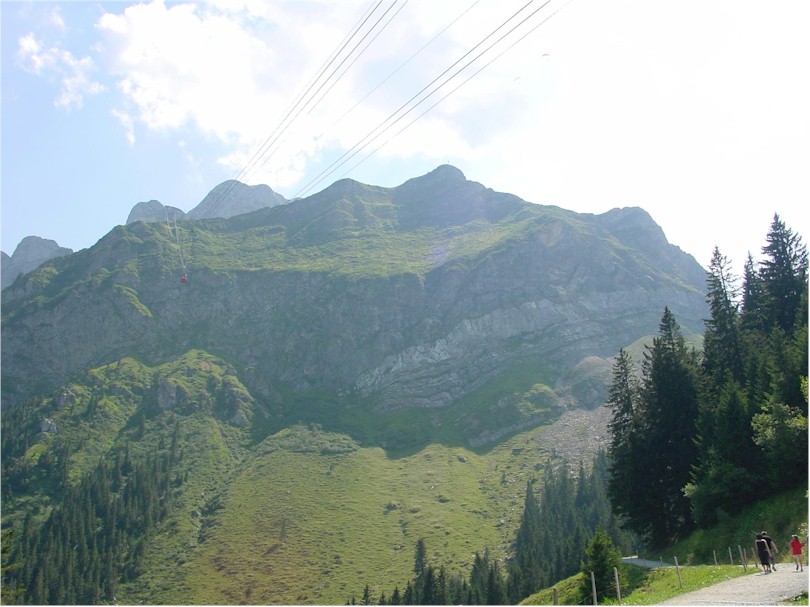
Mont Pilatus in Luzern

Franz Schubert