3. The seventh Proof
English > The novel > Annotations per chapter > Chapter 3
The seventh proof
In the first chapter Woland, Ivan and Berlioz were discussing the five proofs of the existence of God. The catholic philosopher and theologian Thomas Aquinas (1225-1274) formulated five proofs or arguments of the existence of God in his Summa Theologiae (1265-1274).
1. The argument of the unmoved mover (ex motu). Aquinas said that things move, so something or someone - an unmoved mover from whom all motion proceeds - must therefore exist.
2. The argument of the first cause (ex causa). Some things are caused by something or someone else. Therefore, there must be an uncaused cause of all caused things.
3. The argument of contingency (ex contingentia). Many things in the universe may either exist or not exist. Such things are called contingent beings. But it is impossible for everything in the universe to be contingent, therefore there must be a necessary being whose existence is not contingent.
4. The argument of degree (ex gradu). Various perfections may be found in varying degrees throughout the universe, which assumes the existence of the perfections themselves
5. The argument of design (ex fine). All designed things have a designer. The universe is designed. Therefore, the universe has a designer.
Immanuel Kant (1724-1804), the German idealist philosopher, added a sixth argument to it, though Woland doesn't seem to like it much: «he fashioned his own sixth proof as if in ridicule of himself».
Kant's proof was called the argument of the moral order. Kant said that we are rationally obliged to attain the summum bonum. And what we are obliged to attain, must be possible for us to attain. If there is no God or afterlife, it is not possible to attain the summum bonum, so God or the afterlife must exist.
In this chapter Woland asserts the existence of yet a seventh proof, which is demonstrated to Berlioz minutes later when he is decapitated by a streetcar - «At least believe that the devil exists! I no longer ask you for anything more. Mind you, there exists a seventh proof of it, the surest of all! And it is going to be presented to you right now!»
And a couple of minutes later Berlioz notices that Woland is right. The seventh proof could be called the experiential proof. Because Berlioz experiences that the devil exists, by which the seventh proof of God’s existence is given.
It may be worth to mention that Bulgakov's close friend, the philosopher and literary critic Pavel Sergeevich Popov (1892-1964), was absorbed by the problem of the proofs of the existence of God.
Bulgakov only added the title Седьмое доказательство [Sedmoye dokazatelstvo] or The Seventh Proof in The Grand Chancellor, the fourth version of The Master and Margarita, written between 1932 and 1934.
In the second version of the novel, The Engineer's Hoof, written in the years 1928 and 1929, Woland added: «I forgot to tell you that there is a sixth proof, and it will now be presented to you!», and was the title of this chapter still Шестое доказательство [Chestoye dokazatelstvo] or The Sixth Proof.
An accent, which now appeared, now disappeared
Woland, who spoke perfectly Russian in the first chapter, begins to speak with an accent which «now appeared, now disappeared». In the note books of Bulgakov we find a reference to the «typewriter with the Turkish accent» from The Golden Calf by Ilya Ilf (1897-1937) and Yevgeny Petrov (1903-1942), but also to «a Caucasian accent». That's a reference to Joseph Stalin (1878-1953), who spoke with a Georgian accent, although his language was officially labeled as «perfect». In other words: Stalin's accent «now appeared, now disappeared», depending on who was describing it. It gives power to the assumption by some that Stalin would have been the prototype for Woland.
Hotel Metropole
The Metropol hotel - no «e» at the end - in Moscow was built between 1899-1903 by William Walcott (1874-1943). This posh art-nouveau hotel has 400 rooms and suites and is decorated with mosaics by the artist Mikhail Vrubel (1856-1910). The Metropol has been the site of many historic events, including speeches by Vladimir Lenin (1870-1924) and the 1918-1919 meetings of the Central Committee of the Russian Republic. It became one of the hotels specially designated for foreigners. It is still one of the most luxurious hotels in Moscow.
Click here to see how the hotel presents itself today.
Secrecy
«I was personally present at it all. I was on Pontius Pilate's balcony, and in the garden when he talked with Kaifa, and on the platform, only secretly, incognito, so to speak, and therefore I beg you - not a word to anyone, total secrecy, shh...»
With these words Woland suggests already that he's the devil. In the previous chapter, where the meeting between Pilate and Kaifa is described, was mentioned that Pilate wanted to «speak with the president previously and alone». Without - mortal - witnesses.
There isn't any
«... no matter what one asks for, there isn't any!» Woland says, shaking with laughter, when Ivan says that there isn't any devil. This quote became very popular in Russia after the publication of The Master and Margarita. The Soviet citizens considered it as a comment on the shortage of goods in the shops.
Koroviev
The description of Koroviev's dressing refers to the devil visiting Ivan Fyodorevich Karamazov in the novel The brothers Karamazov written by Fyodor Mikhailovich Dostoevsky (1821-1881). His profession of choir master connects him to bandmaster Kreisler, a character of Ernst Theodor Amadeus Hoffman (1776-1822). This bandmaster had a cat for companion. This cat was called Murr and it was of a special kind. The bandmaster and his cat appear in the book Lebensansichten des Katers Murr (1819-1821).
The name Koroviev is derived from the Russian word корова [korova] or cow. Which refers to the Golden Calf used by Mephistoteles to celebrate the omnipotence of money in the opera Faust, composed by Charles Gounod (1818-1895).
Later in the novel, Bulgakov will use a second pseudonym for the Koroviev character. Woland will call him Fagott during the show at the Variety Theatre in Chapter 12. It connects him to the many musical themes in the story. His appearance makes us think of the long wind instrument which can be two meters long and which has a wide register. Fagott has got the capacity to change his voice.
Your uncle in Kiev
«Would you like me to have a telegram sent at once to your uncle in Kiev?», Woland calls out to Berlioz when he runs away. Berlioz winces, because how does the madman know about the existence of a Kyivan uncle? And indeed, in chapter 18 he shows up after having received a telegram from Moscow.
Above, the name of Bulgakov's hometown is written as «Kiev», the English transliteration of the Russian Киев. After all, The Master and Margarita was written in Russian, so most translators transliterated the name from Russian. Elsewhere on this website, however, the name of Mikhail's hometown is always written as «Kyiv», the English transliteration of the Ukrainian Київ.
The tramway
The tram-car that will decapitate Berlioz came racing along, turning down the «newly laid line from Yermolaevsky to Bronnaya». Bulgakov needed to mention that the line was «newly» laid, because most historians agree that there was no tramway at that place. But the influence of Bulgakov's novel has resulted in many Muscovites «recalling» such a line.
However, in a long interview, published by literary critic and psychologist Leonid Parshin (1944-2010), Tatiana Nikolaevna Lappa (1892-1982), Bulgakov's first wife said: «There was a tramway on Bolshaya Sadovaya, but not along the Patriarch's Ponds. We lived there for several years, and there was no tramway».
Boris Myagkov (1938-2003), a literature researcher who wrote several books about Bulgakov, said he had found a newspaper article from 1929, in which it was written that the construction of a tram line along Malaya Bronnaya and Spiridonovka was planned. Thorough investigation in the archives of the Управление организации пассажирских перевозок [Upravenie organizatsii passazhirskikh perevozok] or the Administration of the Organization of Public Transportation in Moscow, and several interviews with former employees of the organisation have not given any evidence of it, though.
Bulgakov disliked tramways. One of his apartments was next to the tram tracks and the squeal of brakes irritated him day and night. Trams are «crowded, suffocating people, clutching the rails. People are hanging on the fenders and the running boards, like rabbits», he wrote.
The decapitation
For the idea of decapitation by a tramway, Bulgakov might have been inspired by an anecdote from his third wife Elena Sergeevna's past.
In June 1918, when she was still Elena Sergeevna Nyurenberg, she was present at the funeral of the actor Mamont Viktorovich Dalsky, pseudonym for Mamont Viktorovich Neyolov (1865-1918). There she met the son of the actor, Yuri Mamontovich Neyolov (1894-1935?), later named Georgy. It appeared to be a good match, because Yuri became Elena Sergeevna's first husband in December of that year.
At their meeting at his father's funeral, Yuri told Elena Sergeevna how his father had died: on his way to his friend, opera singer Fyodor Ivanovich Khalyapin (1873-1938) he slipped on the sidewalk, to end up under the wheels of a streetcar.
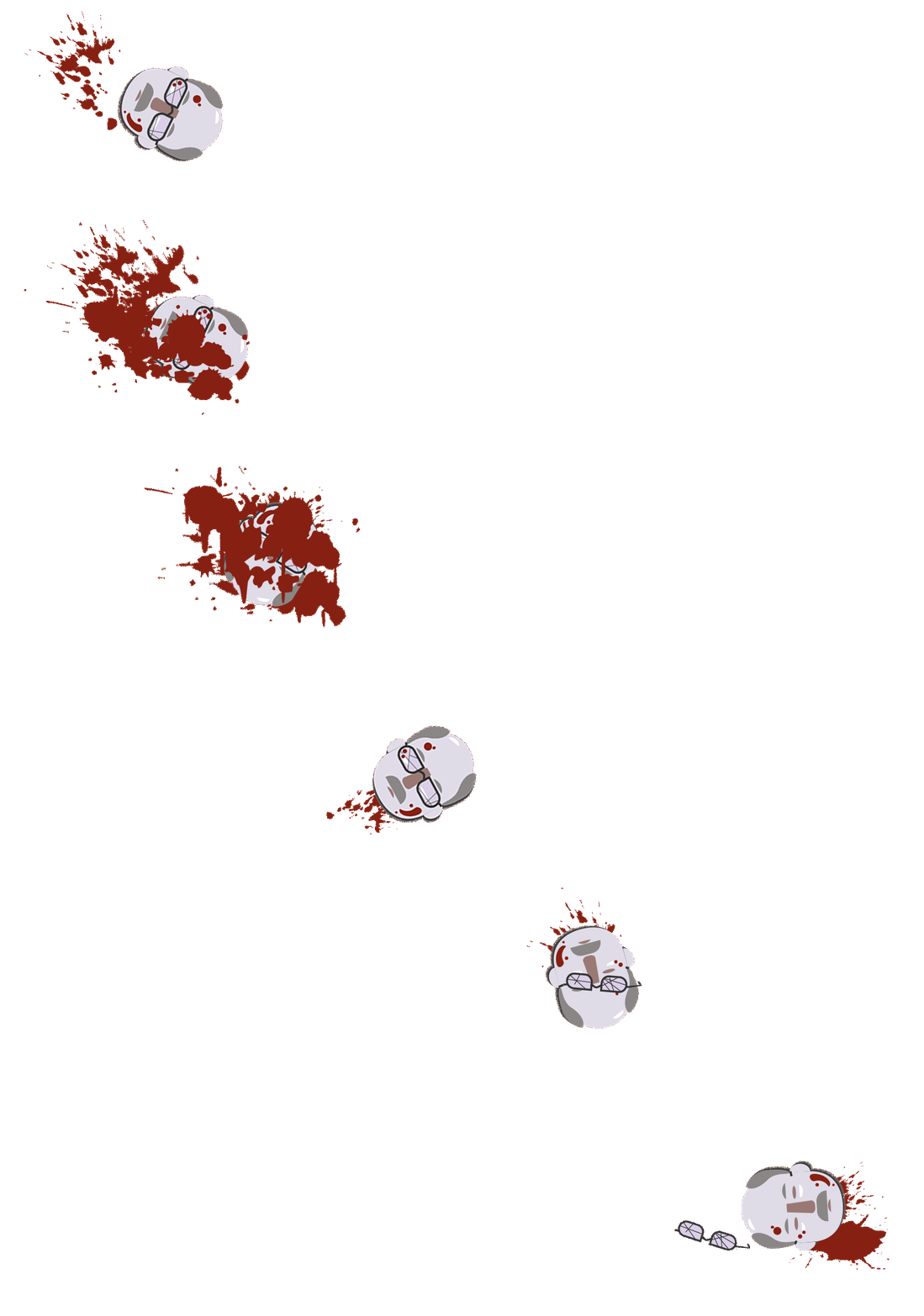
The decapitation of Berlioz - Artist: Alexandra Dalinova, HSE, Moscow, 2017
Crimson armband
According to the English translators Richard Pevear and Larissa Volokhonsky, Berlioz makes out the crimson armband of the woman driver. But this translation is not accurate. Bulgakov described her алая повязка [alaya povyazka] or scarlet scarf or necktie. Translator Michael Glenny, however, got it right. He described the driver wearing a red necktie.
This necktie proves once more that Woland's prediction in Chapter 1 was very accurate, since such necktie was the sign that the woman driver was a member of Komsomol.
Chapters
- Introduction
- 1 Never Talk with Strangers
- 2 Pontius Pilate
- 3 The Seventh Proof
- 4 The Chase
- 5 There were Doings at Griboedov's
- 6 Schizophrenia, as was Said
- 7 A Naughty Apartment
- 8 The Combat between the Professor...
- 9 Koroviev's Stunts
- 10 News From Yalta
- 11 Ivan Splits in Two
- 12 Black Magic and Its Exposure
- 13 The Hero Enters
- 14 Glory to the Cock!
- 15 Nikanor Ivanovich's Dream
- 16 The Execution
- 17 An Unquiet Day
- 18 Hapless Visitors
- 19 Margarita
- 20 Azazello's Cream
- 21 Flight
- 22 By Candlelight
- 23 The Great Ball at Satan's
- 24 The Extraction of the Master
- 25 How the Procurator Tried...
- 26 The Burial
- 27 The End of Apartment No. 50
- 28 The Last Adventures of Koroviev...
- 29 The Fate of the Master and...
- 30 It's Time! It's Time!
- 31 On Sparrow Hills
- 32 Forgiveness and Eternal Refuge
- Epilogue
English subtitles

All films based on The Master and Margarita are subtitled in English, French, German, Dutch, Spanish and Italian.
Illustrations
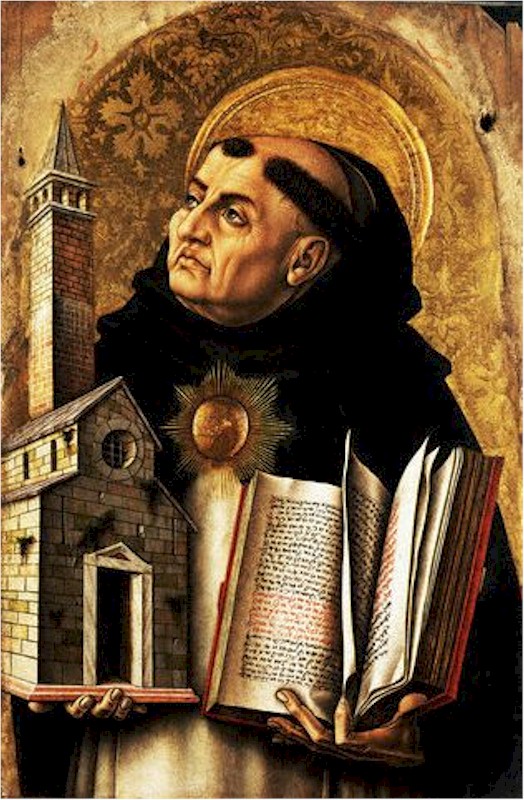
Thomas Aquinas painted by Carlo Crivelli
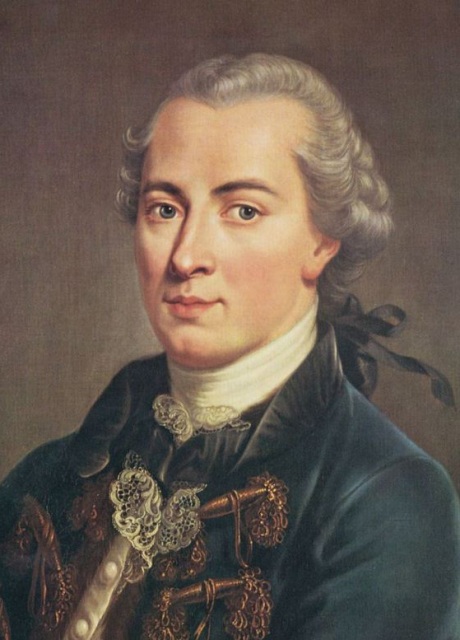
Immanuel Kant
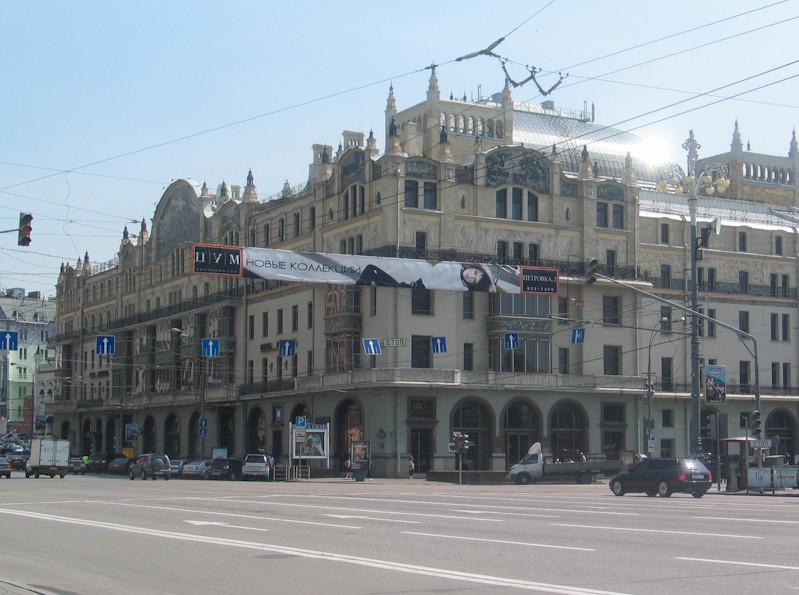
Hotel Metropol in Moscow
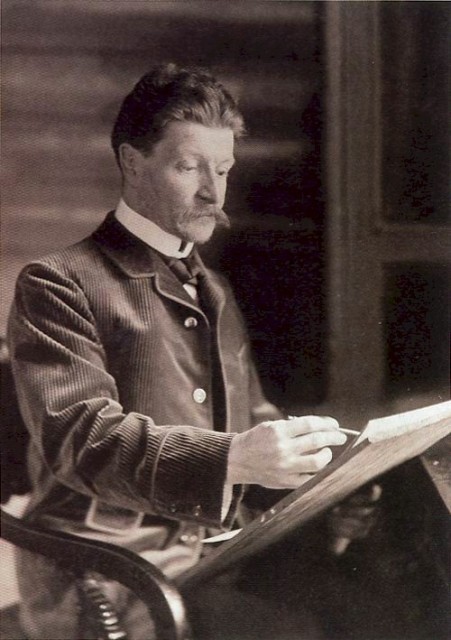
Mikhail Vrubel
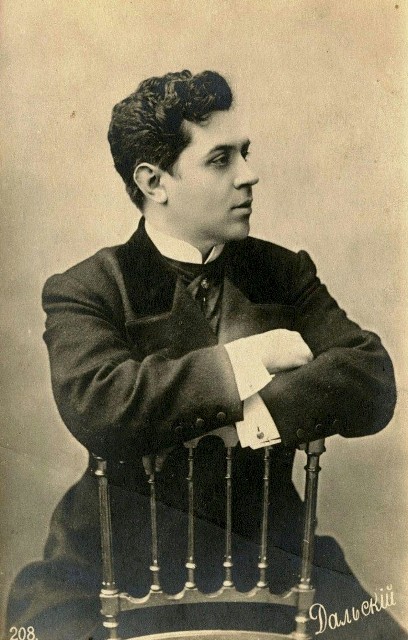
Mamont Viktorovich Dalsky