16. The Execution
English > The novel > Annotations per chapter > Chapter 16
Bald Mountain
Bald Mountain is Golgotha, which is the Aramaic word for place of the skull. The Hebrew word גולגולת [gulgôlet] means skull. Another name for Golgotha is Calvary. In the bible is written that this place, where the executions happened, was situated outside Jerusalem, but without an exact location description.
In Kyiv, Bulgakov’s native town, there is a Bald Mountain too. It is told that witches gathered there to affirm Satan's rule over the world.
The cavalry ala
Ala is Latin, and means wing - both wing of a bird and wing of an army. Ala and its derivatives, alares and alarii were used in different or at least modified senses at different periods. In the time of the Pilate story the terms alarii and cohortes alariae were used to refer to the foreign troops serving along with the Roman armies, both infantery and cavalry, and they were referred to as dextera ala (right wing) and sinistra ala (left wing). It means that the cavalry ala which is described here is not composed of Roman soldiers, but of allies
The Hebron gate
The main entrance gate to Jerusalem is the Jaffa gate. The Arab name of this gate is باب الخليل [Bab el-Halil] or Hebron gate. It means the Beloved which refers to Abraham, a common patriarch of the three Abrahamic religions (Christianity, Islam, and Judaism). Abraham was God’s beloved one who was buried in Hebron. The Hebron gate is situated at the west side of the city leading to the islamic and Armenian quarters.
Bulgakov introduces an anachronism here, because in reality this gate did not yet exist in the time of the crucifixion of Jesus. The gate was only built in 1538 under the 10th Sultan of the House of Osman, Suleiman the Magnificent (1494-1566).
In the city of Jerusalem, the rule of Suleiman and the following Ottoman Sultans brought an age of religious peace. Jews, Christians and Muslims enjoyed the freedom of religion which the Ottomans granted them.
The Cappadocian cohort
Cappadocia was an extensive inland district of Asia Minor, in Turkey. Cappadocia used to be the most powerful province of Anatolia. The province was bounded in the south by the chain of Mount Taurus, to the east by the river Euphrates, north by Pontus at the Black Sea, and west vaguely by the great central salt lake. Today Cappadocia is much smaller: now it is a piece of land between Kayseri and the three big lakes in the neighbourhood, on which the vulcanos Erciyas and the smaller Hassan Dagi poured out huge quantities of ashes, mud and lava during the big eruptions in history.
In two languages - Aramaic and Greek
The three condemned men had white boards hanging around the necks with the text «robber and rebel» written on each of them in two languages - Aramaic and Greek. In the first version of the novel, Bulgakov mentioned three languages - Latin, Hebrew and Greek. It reminds to the gospel of Luke (23: 38), who also mentioned those three languages, albeit with a different text: «This is the king of the Jews». John (19: 20) mentioned about the same text - «Jesus of Nazareth, the king of the jews» -, but in other languages: Aramaic, Latin and Greek. Furthermore, according to John's gospel, this text would have been prepared by Pontius Pilate himself. When the chief priests of the Jews protested, he would have answered: «What I have written, I have written».
In the final version of The Master and Margarita, Bulgakov opted for two languages, Aramaic and Greek, and a rather different text: «разбойник и мятежник» [razboynik i myatezhnik] or «robber and rebel».
A long, razor-sharp bread knife
After the Hebron gate this is the second anachronism in this chapter, since bread was not cut with knives at the time, it was broken by the hand.
«I curse you, God!»
When Matthew Levi curses God and is convinced of God's injustice, it bears a striking resemblance to the work of the Russian writer Vladimir Yakovlevich Zazubrin (1895-1937). In his novel Два мира [Dva mira] or Two Worlds (1921), he writes about an officer of the White Army during the civil war who kneels before an icon and curses God: «You see? You see our torments, evil old man? How stupid I was when I believed in your wisdom and goodness. Your joy is the suffering of men. No, I don't believe in you. You are the god of lies, violence, deception. You are the gd of inquisitors, sadists, executioners, robbers, murderers! You are their patron and defender».
Zazubrin was, like Bulgakov, one of Stalin’s favourite writers, but it didn’t stop him to expose, like he did in 1926, with a controversial speech, the destruction of the natural environment by the ambitious industrialization policy.
The sun had disappeared
According to the Gospels, Jesus' death was followed by an earthquake and darkness. According to Luke the darkness was caused by a solar eclipse. Luke 23:44 - «And it was almost the sixth hour: and there was darkness over all the earth until the ninth hour». Bulgakov writes that the darkness was due to «a storm cloud having swallowed the sun». Bulgakov made a note from The Life of Christ Critically Examined by David Strauss (1808-1974) to the effect that Luke's claim that the darkness was caused by a solar eclipse can't be correct, since the execution took place at the time of the Passover full moon.
The meagre Hinnom valley
The Hinnom valley is a deep narrow valley right outside the walls of Jerusalem. In the time of king Solomon it was the place where the Israelites worshipped the pagan gods Moloch and Baal with horrible sacrifices like the burning of their own first-born children, known as «going through the fire», mentioned in the Book of Kings 16:3 - «He walked in the ways of the kings of Israel and even sacrificed his son in the fire, following the detestable ways of the nations the Lord had driven out before the Israelites» and 23:10 - «The king also defiled Topheth in the Valley of Ben-hinnom, so that there would no longer be an immolation of sons or daughters by fire in honor of Molech.»
Jesus used the image of the fires in Hinnom valley as an allegorical phrase for the fire that God will use for the eternal punishment.
A bucket and a sponge
According to the Gospels, Christ was given vinegar mixed with gall on a stick, not a spear.
He gently pricked Yeshua in the heart
In Bulgakov's text Yeshua dies from the spear, while in the Gospel according to John 19:34 Christ has been pierced when he was already dead.
«Hegemon...»
When the executioner gently pricked him in the heart, Yeshua twitched and whispered: «Hegemon…». Bulgakov’s version of Yeshua’s last words is quite different from what the gospels said. According to Matthew (27: 46), (Mark 15:33) and the apocryphal gospel of Nicodemus (VIII, 3), Jesus cried out in a loud voice, saying: «Ηλει ηλει λεμα σαβαχθανι?» [Eli, Eli, lama sabakhthani] or «My God, my God, why have you forsaken me?». This phrase by Jesus is a quote from King David (1040 BC-970 BC) taken from the book of Psalms, chapter 22.
The other evangelists describe quite different words. Luke (23:43-46) wrote that Jesus had cried out in a loud voice, saying: «Father, into thy hands I commend my spirit» and according to John (19: 30), Jesus said, «It is finished» when he had received the drink.
Share this page |
Chapters
- Introduction
- 1 Never Talk with Strangers
- 2 Pontius Pilate
- 3 The Seventh Proof
- 4 The Chase
- 5 There were Doings at Griboedov's
- 6 Schizophrenia, as was Said
- 7 A Naughty Apartment
- 8 The Combat between the Professor...
- 9 Koroviev's Stunts
- 10 News From Yalta
- 11 Ivan Splits in Two
- 12 Black Magic and Its Exposure
- 13 The Hero Enters
- 14 Glory to the Cock!
- 15 Nikanor Ivanovich's Dream
- 16 The Execution
- 17 An Unquiet Day
- 18 Hapless Visitors
- 19 Margarita
- 20 Azazello's Cream
- 21 Flight
- 22 By Candlelight
- 23 The Great Ball at Satan's
- 24 The Extraction of the Master
- 25 How the Procurator Tried...
- 26 The Burial
- 27 The End of Apartment No. 50
- 28 The Last Adventures of Koroviev...
- 29 The Fate of the Master and...
- 30 It's Time! It's Time!
- 31 On Sparrow Hills
- 32 Forgiveness and Eternal Refuge
- Epilogue
English subtitles

All films based on The Master and Margarita are subtitled in English, French, German, Dutch, Spanish and Italian.
Illustrations

Golgotha or Bald Mountain
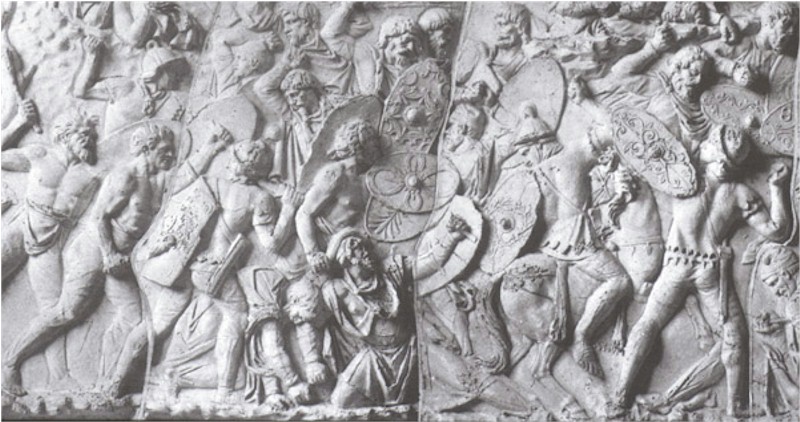
Roman ala on Trajan's Column
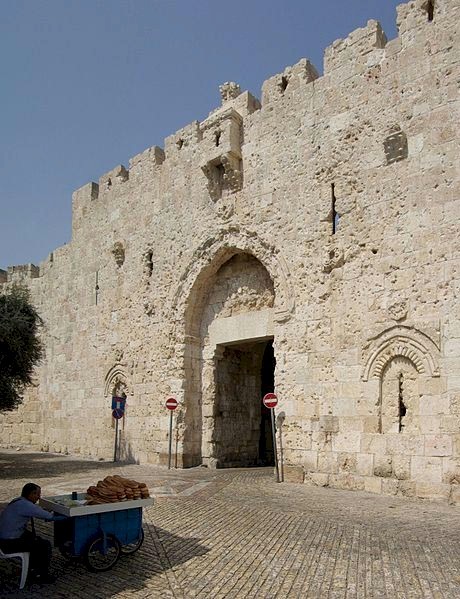
The Hebron Gate
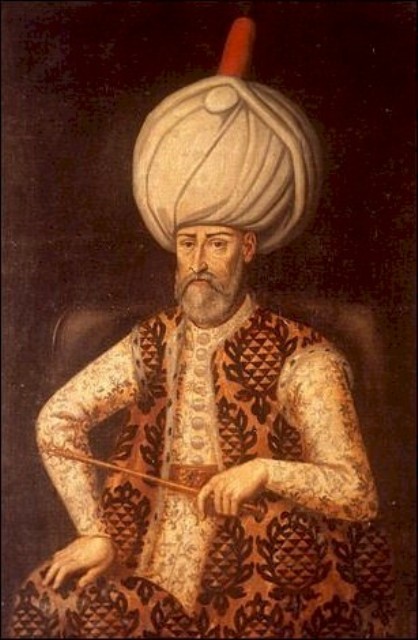
Suleiman the Magnificent
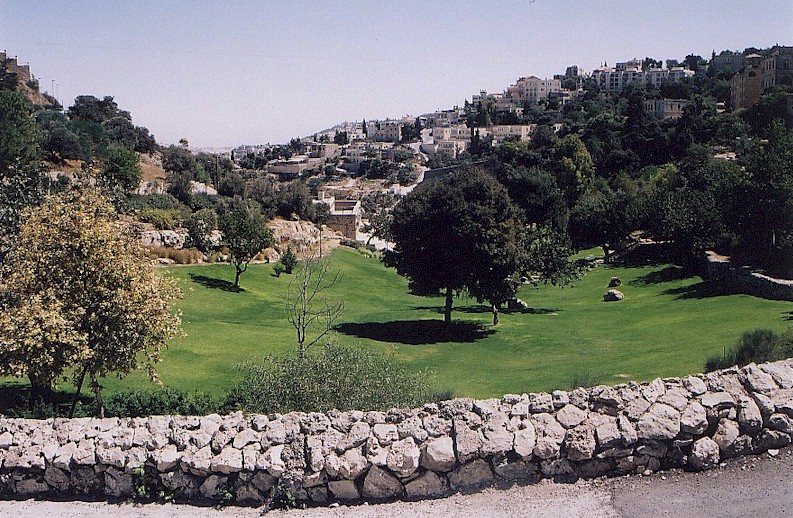
The Hinnom valley