7. A naughty apartment
English > The novel > Annotations per chapter > Chapter 7
Stepan Styopa) Bogdanovich Likhodeev
Лиходей [Likhodey] means scoundrel, blackguard, villain or rogue. To increase ambivalence, Bulgakov gives this character a christian patronymic or father's name, since Богданович [Bogdanovich] comes from «данный Богом» [danny Bogom] or given by God.
In the 1929 version of The Master and Margarita, this character's name is not Styopa Likhodeev, but Garusha Pedulaev, and its real life prototype was Tuadzhin Peizulaev (?-1936). Peizulaev was a lawyer whom Bulgakov knew when he lived in Vladikavkaz in the Caucasus from 1919 to 1921, and the co-author of The Sons of the Mullah, one of Bulgakov's very first theatre plays.
At the end of this chapter, Woland will send Likhodeev to Yalta. In the 1929 version, Woland sent Pedulaev to Vladikavkaz. In later versions Pedulaev's name changed into Stepa Bombeev and later into Stepan Likhodeev. Tuadzhin Peizulaev died in 1936 and that's probably why Bulgakov, out of respect, changed Pedulaev's name into Likhodeev and sent him to Yalta. In the final version of The Master and Margarita, Likhodeev keeps one small detail from the earlier versions, though: he returns to Moscow with «a Caucasian fur cap and a felt cossack coat».
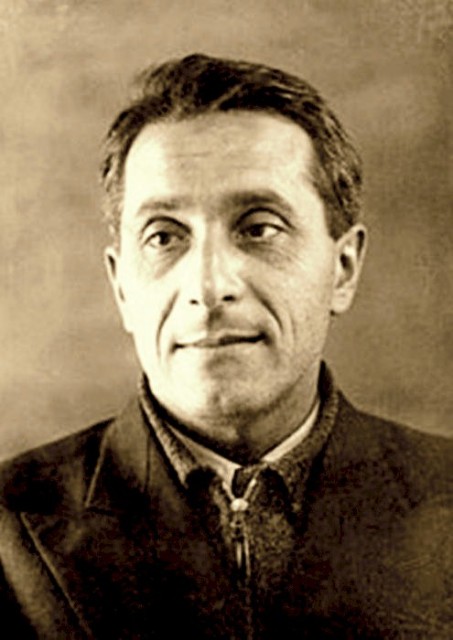
The situation in Yalta refers to Earthquake, a story from 1929, written by Mikhail Mikhailovich Zoshchenko (1895-1958) in which the hero, Ivan Yakovlevich Snopkov, wanders through Yalta in his underwear, as the result of a drinking problem. Before the earthquake mentioned in the title, Snopkov had emptied one and a half bottle of vodka, he fell asleep, and got robbed of his clothes by plunders. Such incidents really happened after the earthquake which disstressed the area of Yalta on September 11, 1927, by the way.
The syndrom of black tomcats and amnesia as a result of drinking port already appeared in earlier work of Bulgakov: in Чаша жизни [Chasha zhizni] or The Cup of Life (1922) and in День нашей жизни [Den nashey zhizni] or Days of our Life (1923).
Likhodeev's concern about the seal on Berlioz's door and a «dubious conversation» that had taken place in the apartment is an allusion to what happened to one of Bulgakov's friends, the actor Nikolai Vasilevich Bezekirsky. Bezekirsky was arrested and banned to Ryazan because of «a contarevolutionary discussion in a certain house that I visited regularly». Bulgakov had received a letter from Bezekirsky on this subject in April 1929.
A big, six-storeyed, U-shaped building on Sadovaya Street
A difficult case, this sentence. Which is due to the twisted translation of one simple Russian word: покой [pokoy]. Bulgakov's original text wrote that Styopa lived «в большом шестиэтажном доме, покоем расположенном на садовой улице». It can be translated as: «in a big house of six [five] storeys, peacefully situated in Sadovaya street».
But the English translators Richard Pevear and his spouse Larissa Volokhonsky translated the word покоем [pokoyem], which means peaceful, as «U-shaped». The Dutch translators Marko Fondse and Aai Prins obviously have read this English translation, because they also mention a «five-storeyed, U-shaped building».
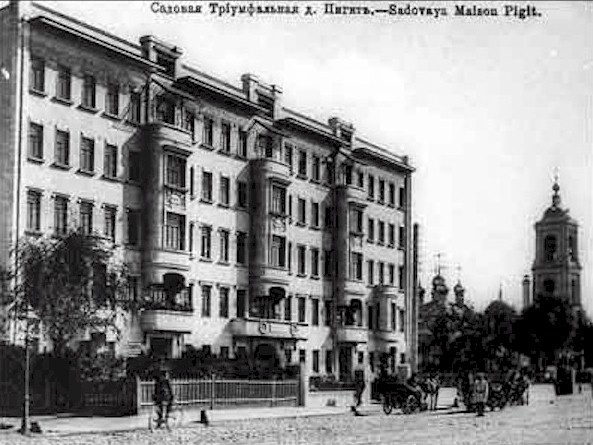
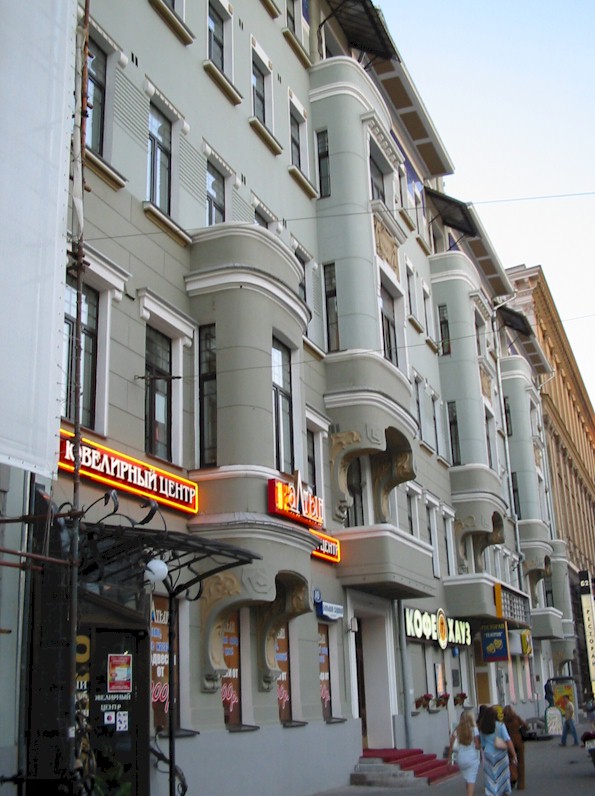
This house is situated at the Bolshaya Sadovaya street No. 10 in Moscow. Bulgakov has been living here with his first wife Tatyana Nikolaevna Lappa (1892-1982), from 1921 to 1924, exactly in apartment No. 50, which is mentioned here. The building still exists, and it has got two museums commemorating Bulgakov: the Bulgakov House on the ground floor, and the Museum M.A. Bulgakov in the notorious apartment No. 50.
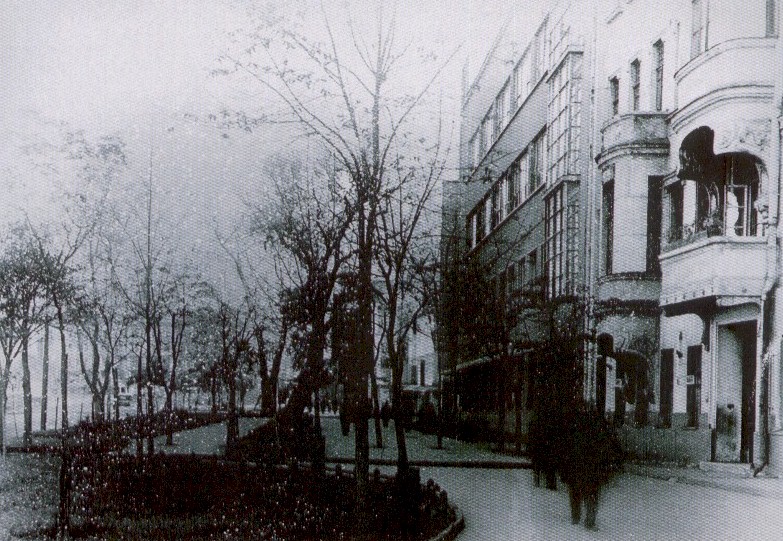
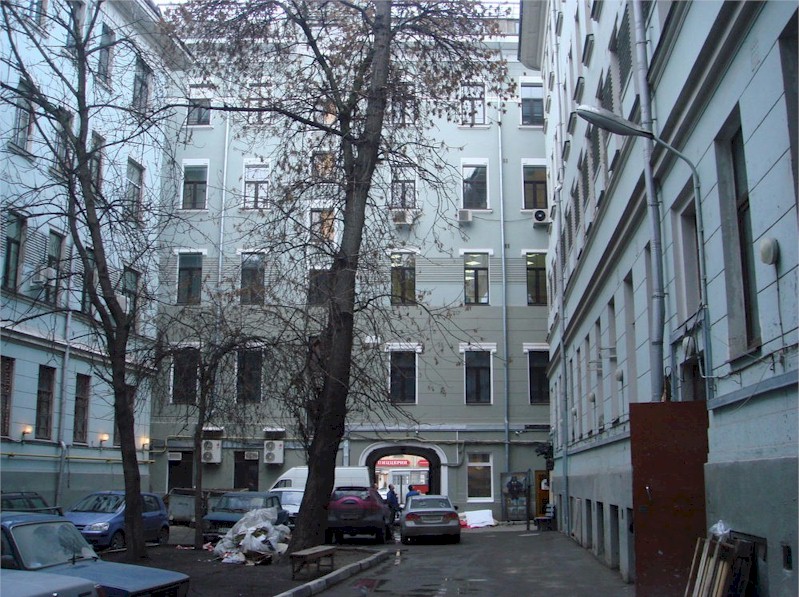
Obviously, the translators never saw the house on Bolshaya Sadovaya street. Because, if they had, they would have known that the building is not - and never was - U-shaped. It is a rectangular building, with a patio in the middle. Nowadays, Bolshoya Sadovaya is a very noisy street with much traffic, but in Bulgakov's time it was a very peaceful neighbourhood. In front of the building, like on many places on the Garden Ring, there was a very broad footway with trees and bushes. So Bulgakov's words could have been accurately translated as «a big house peacefully situated in Sadovaya street».
So why did Pevear and Volokhonsky translate покой [pokoy] as «U-shaped»?
According to them, the word покой [pokoy] seems to have another meaning besides peaceful. Until about 1900 the Russians used the Church Slavonic names to indicate the letters of the Cyrillic alphabet. And the Church Slavonic name for the letter which is now known as Pe - and written as П - was покой [pokoy]. So, according to the translators, the Russian text could possibly have been translated as: «a six-storeyed, П-shaped building on Sadovaya Street». Providing it were П-shaped, of course - which not.
But Pevear and Volokhonsky - convinced that the house was П-shaped - had a problem: the letter П does not exist in the English alphabet. So they simply turned it upside down by making it a U.
By the way, in his first translation of The Master and Margarita, made in 1968, the Dutch translator Marko Fondse described «a big house of five storeys, peacefully situated in Sadovaya street». It was only after the publication of the English Pevear and Volokhonsky translation in 1997 that he changed the house into a «U-shaped building».
The French translators and the English translator Michael Glenny did not translate the word покой [pokoy] at all, as if it wasn’t in the source text.
One more observation: when I was comparing the various translations of The Master and Margarita, I noticed that the Dutch translator counted five storeys, and the English translator counted six. In Bulgakov's text is written шестиэтажном [shestiyetazhnom] or six storeys. The English and French translators take this literarily and write about six storeys too. This confusion is due to the fact that in Russia the ground floor is considered as the first floor. So the building has six floors: five storeys and the ground floor.
Click here to read more about the house on Bolshaya Sadovaya
Anna Frantsevna de Fougeray
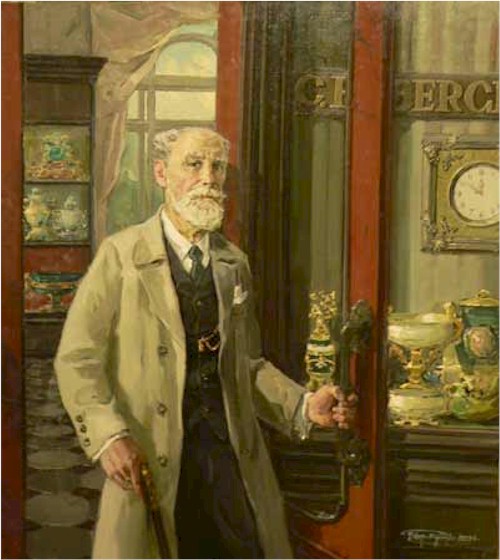
The name de Fougeray must sound odd in Russian ears, because фужер [fougèré] means wine glass in Russian. In Russia lived a real jeweller with a similar name though: Peter Carl Fabergé (1846-1920).
Fabergé was a third generation Russian operating the jewelry which his father had founded in 1870 in Saint-Petersburg. He opened points of sales in Moscow, Odesa, Paris and London. His craftsmen made many lavishly decorated objects, but got famous all over the world with the imperial easter eggs which were very popular to the last two czars from 1881 to 1917.
A far relative of the real jeweler, A. P. Fabergé, lived in Prechistenka street No. 13, where some of Bulgakov's friends lived later. Bulgakov was a frequent visitor of this house when he started living in Moscow. The candleholder and the staircase in the novel are probably based on examples he had seen there.
Belomut
I don't know (yet) if there exists a real prototype for the Belomut character. In an earlier version of The Master and Margarita, with the working title The Great Chancellor, he was called with his full name Mikhail Grigoryevich Belomut.
On a day off
During the first Five-year Plan the Soviet government experimented a few times with the calendar. In the period of the Eternal Calendar the weekly days of rest were spread. Enterprises could decide on which day their labourers had their day off. In 1939 the seven-day week was restored.
Click here to read more of it on the Calendar Issues page
People began to disappear
Here, as throughout The Master and Margarita, Bulgakov treats the everyday Soviet phenomenon of disappearances (arrests) and other activities of the secret police in the most vague, impersonal and hushed manner. The main example is the arrest of the master himself in Chapter 13, which passes almost without mention.
Bozhedomka Street
This street is now called Dostoevsky Street. In Bulgakov’s Russian tekst we read Божедомка [Boszhedomka] or Hospice Street. A hospice is an institution, usually with a homely atmosphere, specialised in terminal care. But the name boszhedomka was also used for a place in a cemetery where the poor, the beggars, the orphans and the people who died a violent death were buried.
Aspirin
In the Russian version Styopa is asking for a пирамидона [pyramidon]. Pyramidon is a medicine against pain and fever of the same type as aspirin.
Here I am!
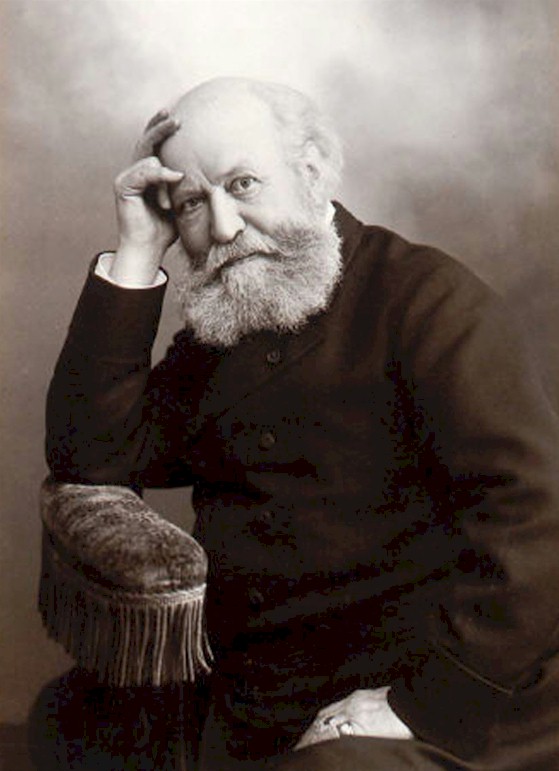
Bulgakov quotes: «Вот и я!» [Vot i ya!] or «Here I am!», which are the exact words said by the devil Mephistopheles - «Me voici!» - when he first appeared to Faust in the opera Faust, written by the French composer Charles Gounod (1818-1895). «Here I am!» was also one of Bulgakov's first working titles for The Master and Margarita.
Click here to see Mephistoteles' appearance to Faust in the opera
Click here to read more about the other working titles of the novel
the dacha of the sketch-writer Khustov in Skhodnya
Сходня (Skhodnya) is a suburb north of Moscow.
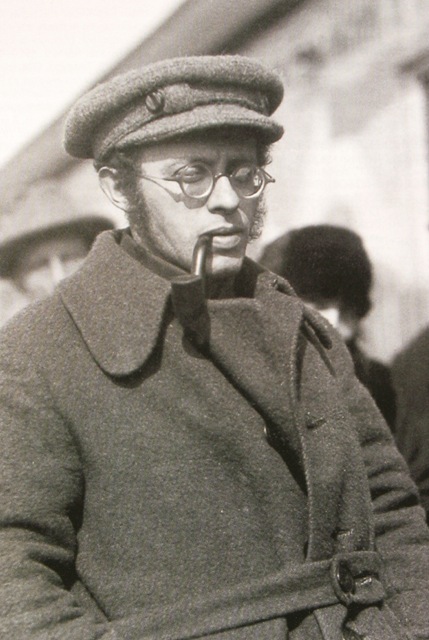
The prototype of the sketch-writer Khustov is probably Karl Bernhardovich Radek (1885-1939), whose real name was Karol Sobelsohn. Radek played a major role in the organisation of the international communist movement, and even became secretary of the Comintern or the Third International in 1920. He also worked for the newspapers Pravda and Izvestia.
Woland calls Choestov «a bastard, a squabbler, a trimmer and a toady». This refers to the fact that Karl Radek was sentenced to a rather mild punishment at the Second Moscow Show Trial in January 1937 because he had made incriminating statements about, among others, Nikolay Ivanovich Bukharin (1888-1938), who was later tried at the Third Moscow Show Trial in March 1938. He would be sentenced to death and executed.
Later, the wife of Bukharin, Anna Mikhailovna Larina (1914-1994), wrote her memoirs under the title Незабываемое [Nezabyvaemoye] or Unforgettable, translated in English in 1991 under the title This I Cannot Forget: The Memoirs of Nikolai Bukharin's Widow. In this work we learn that Karl Radek had a dacha in Skhodnya.
Click here to read more on the sketch-writer Khustov
the lady Styopa had wanted to kiss
This lady is not clearly described in the final version of The Master and Margarita. It is only said that «she was in radio, maybe not». In The Prince of Darkness, one of the earlier versions of The Master and Margarita, however, we read that Khustov had kissed a lady who was «not the wife of Khustov», and that she «stayed in a neighboring dacha». That could be a reference to the writer and correspondent of Izvestia Larissa Michailovna Reisner (1895-1926). Karl Radek was married and had a daughter, but it was generally known that Reisner was his mistress.
Professor of black magic Woland
Woland introduces himself to Styopa with a German name for Satan, which appears in the old Faust legends in several variants, like Woland, Faland or Wieland.
Some see Woland as a parody on Josef Vissarionovich Stalin (1878-1953), the leader of the Soviet Union from 1924 to 1953, who committed his greatest atrocities in the 30s, when Bulgakov was writing The Master and Margarita. There are similarities indeed. Just like Stalin saved Bulgakov while he eliminated others unconditionally, Woland saves the master while he punishes others. In 1899, Stalin was banned from the Russian orthodox seminar of Tbilisi, just like Satan, as a fallen angel, was banned from heaven.
The name Woland is very un-russian. It's a variant of the devil's name in Faust written by Johan Wolfgang von Goethe (1749-1842): the knight Voland or Faland. Some see in him the «almighty» Stalin who, like Woland, had a freign of terror, as well as moments of «goodness». Because thanks to Stalin's whimsical character Bulgakov could survive as an artist.
Click here for a comprehensive description of Woland
Findirector
Финдиректор [findirektor] is a typical Soviet contraction for financial director - the Soviet language was interspersed with such expressions: Nakompros, Komsomol, Gulag, agitprop and many more. In The Master and Margarita, Bulgakov invented more of such contractions and acronyms, like Massolit and Dramlit, to denounce this habit.
Rimsky
Grigory Danilovich Rimsky is the financial manager of the Variety Theatre. Римский [Rimsky] means Roman in Russian. His name comes from the Russian composer Nikolay Andreevich Rimsky-Korsakov (1844-1908), who wrote the famous Flight of the Bumblebee from the opera The Tale of Tsar Saltan (1899-1900) and the symphonic suite Sherazade (1888).
Ironically enough, the financial director of the Variety Theatre, with his rational mind an opponent of the black magic sceances, has the same name as the composer who put pagant legends and folklore onto music, like May Night (1880) and Night on Bald Mountain (1886), a symfonic poem he finished for Modest Petrovich Mussorgsky (1839-1881).
For the trivia: in Vladimir Bortko's TV-series Мастер и Маргарита [Master i Margarita] from 2005, the orchestra of the Variety Theatre plays Rimsky-Korsakov's Sherazade at the beginning of Woland's show.
An enormous wax seal
A seal on the door was, in general, the sign that someone had been arrested and his possessions had been sealed for further investigation. That is why Styopa is afraid of some dubious conversation he had with Berlioz «on some unnecessary subject». Styopa immediately assumes that Berlioz has been arrested, hence his «disagreeable thoughts» about whether he may have compromised himself with the editor and thus be in danger of arrest himself.
Voronezh
Воронеж [Voronezh] is a big city in the south of Russia, not far from Ukraine. In the period that Bulgakov worked on The Master and Margarita it had an explosive expansion. It grew from 120.000 people (1926) to 345.000 (1939). And the growth would not stop, because today there are some 850.000 people living in Voronezh.
Azazello
Bulgakov adds an Italian ending to the Hebrew name Azazel, a demon who lived in the wilderness.
In the Old Testament apocryphal Book of Enoch Azazel was the leader of the grigori, a group of fallen angels who mated with mortal women, giving rise to a race of giants, known as the Nephilim. Azazel is particularly noteworthy among the grigori because it was he who taught men how to make weapons of war, as well as teaching women how to make and wear cosmetics. Eventually, Azazel's teachings created such iniquity that God decided to destroy all life on Earth with Noah's Flood.
Thanks to Azazel, women learned the «sinful art» of painting their faces, so it is clear why, in Chapter 19, he delivers the cream which has the effect of making Margarita young again.
Click here to read more about Azazello
Yalta
The Ukrainian city of Ялта [Yalta] is located on the southern coast of the Crimean Peninsula on the Black Sea. The city is known by the Conference of Yalta, which took place in February 1945. That meeting place was chosen because Stalin refused to travel farther than the Black Sea Resort. In Yalta were defined the spheres of influence of the United States and the Soviet Union after the war. Those spheres of influence would last for about 45 years.
Chapters
- Introduction
- 1 Never Talk with Strangers
- 2 Pontius Pilate
- 3 The Seventh Proof
- 4 The Chase
- 5 There were Doings at Griboedov's
- 6 Schizophrenia, as was Said
- 7 A Naughty Apartment
- 8 The Combat between the Professor...
- 9 Koroviev's Stunts
- 10 News From Yalta
- 11 Ivan Splits in Two
- 12 Black Magic and Its Exposure
- 13 The Hero Enters
- 14 Glory to the Cock!
- 15 Nikanor Ivanovich's Dream
- 16 The Execution
- 17 An Unquiet Day
- 18 Hapless Visitors
- 19 Margarita
- 20 Azazello's Cream
- 21 Flight
- 22 By Candlelight
- 23 The Great Ball at Satan's
- 24 The Extraction of the Master
- 25 How the Procurator Tried...
- 26 The Burial
- 27 The End of Apartment No. 50
- 28 The Last Adventures of Koroviev...
- 29 The Fate of the Master and...
- 30 It's Time! It's Time!
- 31 On Sparrow Hills
- 32 Forgiveness and Eternal Refuge
- Epilogue
English subtitles

All films based on The Master and Margarita are subtitled in English, French, German, Dutch, Spanish and Italian.
Illustrations
Mikhail Mikhailovich Zoshchenko
A very peaceful street...
... with much walking space, very pokoy
A completely enclosed rectangle - no «U»
Bulgakov House in Bolshaya Sadovaya 10
Peter Carl Fabergé
Charles Gounod
Karl Bernhardovich Radek
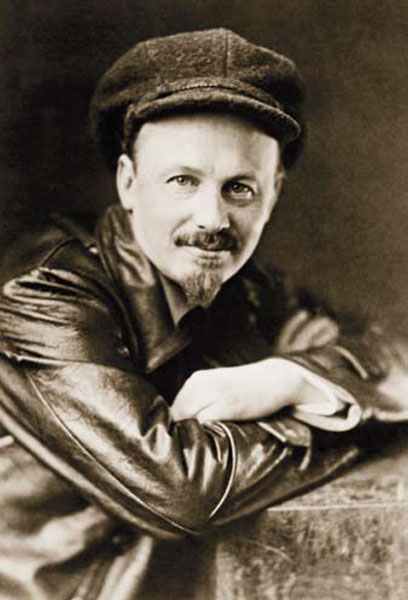
Nikolay Ivanovich Bukharin
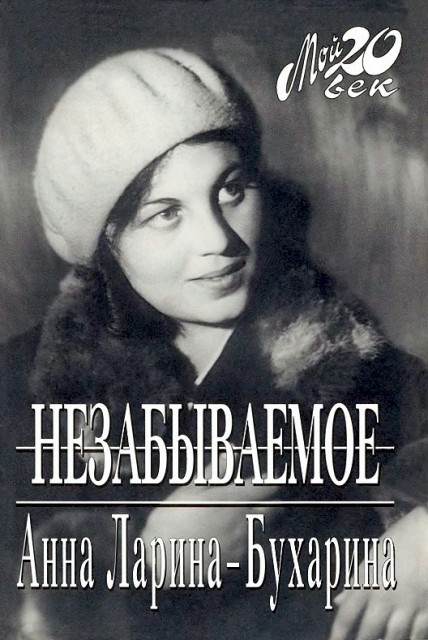
Anna Mikhailovna Larina
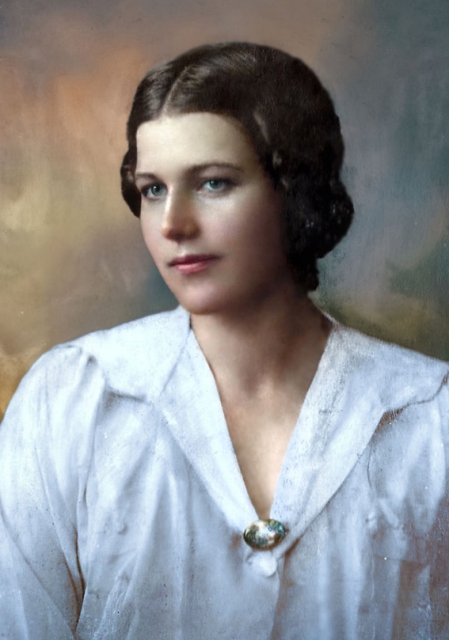
Larissa Mikhailovna Reisner
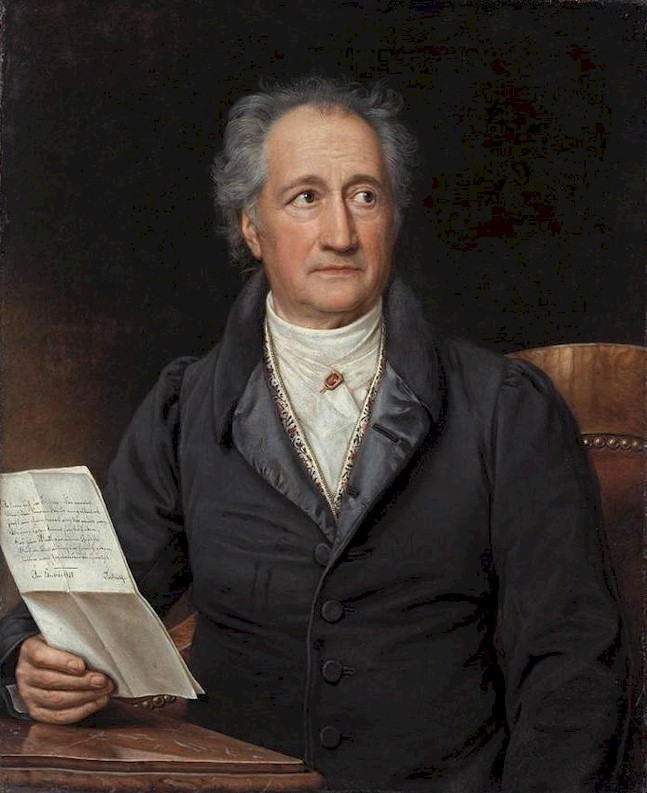
Johan Wolfgang von Goethe
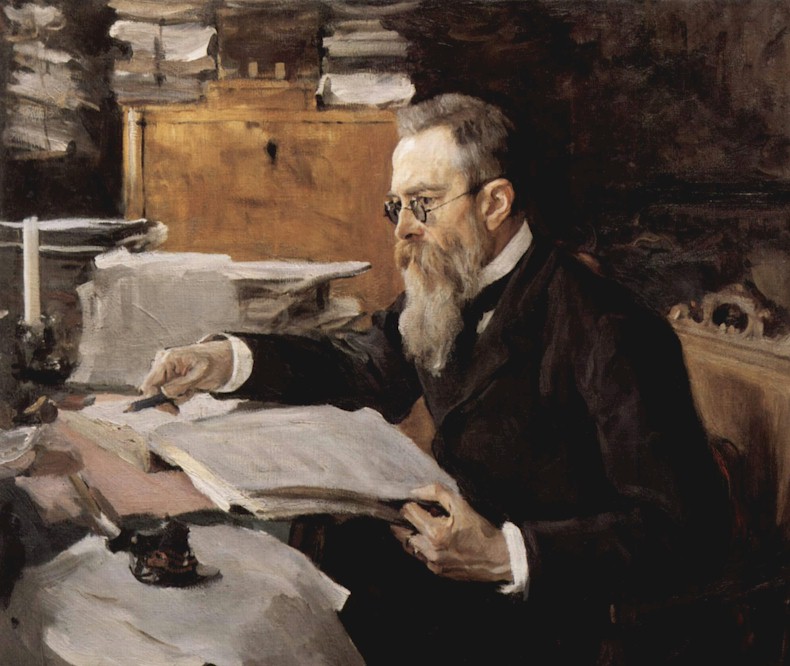
Nikolay Andreevich Rimsky-Korsakov