15. Nikanor Ivanovich's dream
English > The novel > Annotations per chapter > Chapter 15
The Chapter's title
This chapter of The Master and Margarita is perhaps most astonishing to the Western reader. In the Russian commentaries though, it's perhaps the most commented section. Because it is full of references to all elements of the the Soviet state which Bulgakov hated: the arrests of dissidents, their internment and «treatment» in psychiatric hospitals, the show trials, the rampant cronyism and corruption, the monetary policy, the attitude to foreign currency and the housing policy. No wonder that, with the first publication of The Master and Margarita in 1966, 2,848 of the 3,492 words (almost 82%) of this chapter were gone. The whole dream was censored out, and the title of the chapter was simply Nikanor Ivanovich.
Originally this chapter was called The Castle of Miracles. Later, other titles followed: The Intimate Conversation, The Extraordinary Adventures of Bosoy and Moscow Nights. On October 12, 1933, after the arrest of playwright and screenwriter Nikolay Robertovich Erdman (1900-1970) and his colleague Vladimir Zakharovich Mass (1896-1979), Elena Sergeevna Shilovskaya (1893-1970) wrote in her diary: «In the morning, a call from Olya: Nikolay Erdman and Mass have been arrested. Misha frowned [...] During the night, MA burned a part of his novel». It was a part of the text of this chapter 15. After the arrest of the poet Osip Mandelstam (1891-1938) on the night of on May 13-14, 1934 he destroyed some more pages of it. But in July 1936, he added The Dream of Nikanor Ivanovich to the novel again.
After first visiting another place
The reader already knows where Nikanor Ivanovich passed some time as a preliminary precaution before he got to Stravinsky's hospital. The other place was, of course, the Главное управление государственной безопасности (ГУГБ) [Glavnoe upravleniye gosudarstvennoy bezopasnosty] (GUGB) or General Directorate of State Security, the secret police situated at Lubyanka square in Moscow.
The interrogation scene is written almost entirely in the indefinite personal form, which consists of the third person plural verb with no subject. We know somebody is doing the interrogating, but we never know who they are: [they] asked, [they] raised their voice, [they] hinted...
Noteworthy is not only the impersonality of the interrogation that follows, but the combination of menace and tenderness in the interrogating voice . The same combination will reappear in Nikanor Ivanovich's dream - an extraordinary rendering of the operation of secret police within society, which also suggests the «theatre»of Stalin's trumped-up show trials of the later thirties.
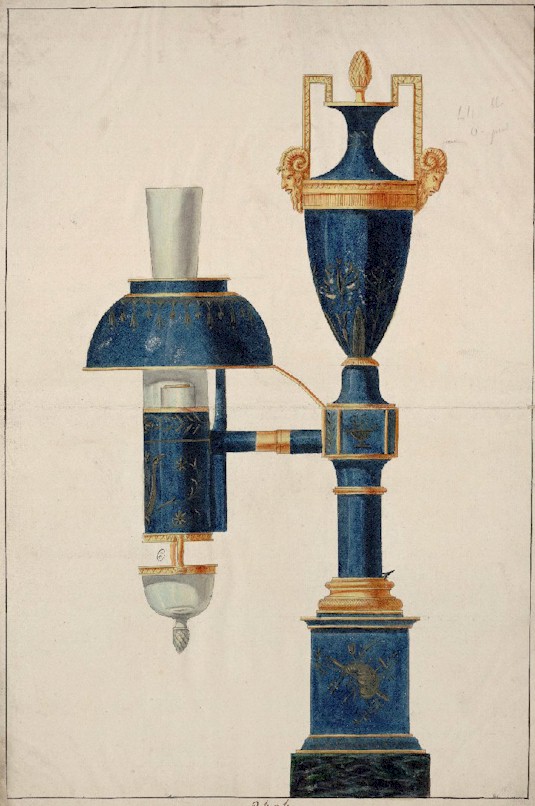
Quinquets
In 1780, the French chemist Joseph Louis Proust (1754-1826) invented an oil lamp in which the oil reservoir was higher than the wick: the oil, stored at a higher level than the nozzle, was pushed to it by its own weight. Later the Swiss physicist and chemist François Pierre Ami Argand (1750-1803) invented improvements on this lamp in such way that the light was much brighter than a candle, it burned cleanly, and it was cheaper than using candles. In France this Argand is hardly known though, because the French pharmacist Antoine Quinquet (1745-1803) used the improvements of both Proust and Argand to introduce the Quinquet lamp in 1784. Until today the British, Swiss and French antiquarians discuss the legitimacy of the name Quinquets because, except for the French, they all accuse Quinquet of industrial spying.
In 1783, both Antoine Quinquet and Ami Argand had already co-operated in the construction of the montgolfière, a hot air balloon which Jacques Étienne Montgolfier (1745-1799) had offered to the French king.
Bedsornev or Prolezhnov
In the Pevear and Volokhonsky translation, the «perplexed and dispirited secretary of the house management» is called Bedsornev. In the Russian text he is called Пролежнев [Prolezhnev]. Michael Glenny translitterated his name to Prolezhnov. The verb Пролежать [prolezjat] means to laze away or to lie down. This shows once more how Bulgakov estimated such officials.
Turn over your currency
In 1928-1929 and in 1931-1933, the Объединённое государственное политическое управление (ОГПУ) [Obedinyonnoe gosudarstvennoe politicheskoye upravlenye] (OGPU) or the United State Political Administration organised a campaign to confiscate foreign currency, gold and jewels of the population. The OGPU was the secret police which became part of the previously mentioned NKVD in 1934, and from then on was called Главное управление государственной безопасности (ГУГБ) [Glavnoe upravleniye gosudarstvennoy bezopasnosty] (GUGB) or General Directorate of State Security.
The suspected валючыки [valjuchiki] or foreign currency speculators were put in jail for several weeks until they «voluntarily» gave up their foreign currency and their valuables. The confiscated items - jewelry, icons, Faberge eggs, porcelain and rare manuscripts - were sold abroad, mainly in the United States. The regime needed hard currency to import goods to ensure the success of the Five Year Plans. The American historian Robert Chadwell Williams (1917-1991) summed it up as: «Tractors were needed more than Titians, Fords more than Fabergé». A wide variety of methods were used to get the population handing in their goods, such as giving salted foods and abstain people from drinking water. More sinister methods are described in the book I Speak for the Silent (1935) by Professor Vladimir Vyacheslavovich Chernavin (1887-1949), a contemporary of Bulgakov.
I Speak for the Silent was reprinted in 1964 in Readings in Russian Civilization, an historical text in three volumes published by professor Thomas Riha (1929-?), a lecturer of Russian history in Denver at the University of Colorado, but from Czech origin. On March 20, 1969 Thomas Riha disappeared without a trace. His wedding ring was found in the house of the painter, designer and inventor Gustav Ingwerson (1891-1969), when the latter was found dead on June 18, 1969 in his home in Denver. Ingwerson had died of poisoning by cyanide. Both the disappearance of Riha and the death of Ingwerson have been attributed to the glamorous master forger and impostor Galya Tannenbaum (1932-1971), born as Gloria Forest, who liked to be called The Colonel, as she claimed to be an officer the Military Intelligence Corps, the intelligence service of the US Army. On March 7, 1971, Tannenbaum committed suicide using cyanide, and the disappearance of Thomas Riha has never been solved.
Click here to download the full text of I Speak for the Silent [en]
In a theatre house
The theater is a metaphor for the working methods of the OGPU/NKVD methods, with fabricated charges and scripted trials. The prison where Nikanor Ivanovich is taken is doubly displaced - into a theater and into a dream - perhaps to avoid the censor; yet it was still cut when the novel was published for the first time in 1966.
The audience was all of the same sex - male - and all for some reason bearded
This is another reference to the fact that the theatre stands for a prison. In theatres, men and women are not segregated by sex, in prisons they are. The beards could be because the prisoners couldn't shave, or they could be a hint that the foreign currency speculators are Old Believers, like many merchants were, or Jews.
All sitting? Sitting, sitting!
Again the verb to sit is used again to indicate a prison. The Soviet citizens didn't need to see the word prison, since the construction was so familiar. «You are sitting» meant «you are in prison».
Sergei Gerardovich Dunchil
This is a very non-Russian sounding name, perhaps a combination of [Isadora] Duncan and [Winston] Churchill.
Ida Herkulanovna Vors
Dunchil's mistress Ida Herkulanovna Vors has a very bizarre name. Herkulan is an extremely rare name, and ворс [vors] refers to the fuzziness of cloths like wool or velvet.
Kharkiv
The Ukrainian name of the city is Kharkiv. This place, where Dunhil’s mistress Ida Herkulanovna Vors comes from, is an industrial city in Ukraine.
Sawa Potapovich Kurolesov
The surname of the artist Savva Kurolesov comes from the verb куролесить [kurolesit], which means as much as playing tricks or act crazy. He has already been introduced in chapter 13, when the master told Ivan that a new patient was brought in to room 119, who constantly cursed Pushkin up and down and kept shouting «Kurolesov, encore, encore!»
In Bulgakov Deciphered. The secrets of The Master and Margarita, a book from 2010, Bulgakov expert Boris Vadimovich Sokolov (°1957), who is also the author of the Bulgakov Encyclopedia, argues that the character Kurolesov would be based on Vladimir Ilyich Ulyanov (1870-1924), better known as Vladimir Ilyich Lenin.
Click here to read more in Kurolesov
The Covetous Knight
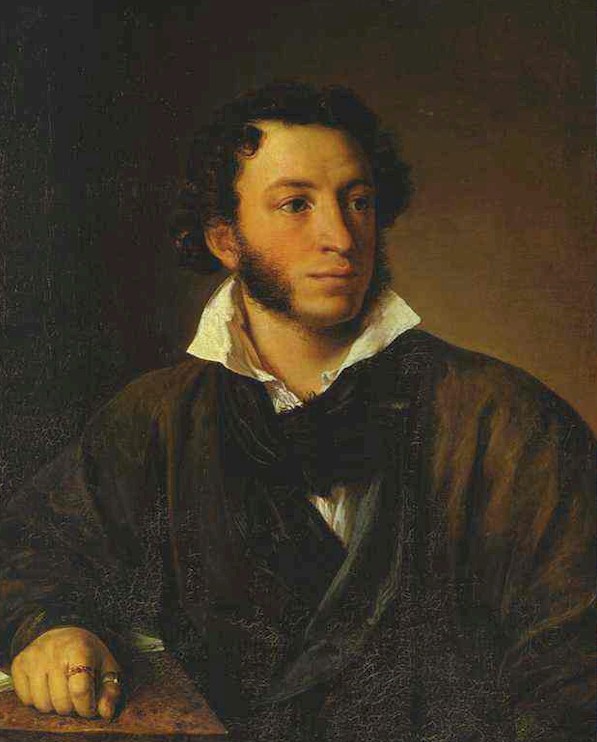
The Covetous Knight, also called The Miserly Knight, is the little tragedy Скупой Рыцарь [Skuloy Ritsar], written in 1830 by Aleksandr Sergeevich Pushkin (1799-1837), from which the quoted lines are taken. It's about the demonic and destructive fascination of gold. A not so nice father, the baron, refuses to help his son Albert, although he can afford it. Pushkin had similar problems with his father. The baron and Albert are about to fight a duel, which could be averted at the last moment. But the baron dies soon after that - from a natural cause.
This little tragedy was used by Sergey Vasilyevich Rachmaninoff (1873-1943) in 1905 as a libretto for his opera The Miserly Knight.
Click here if you want to listen to The Miserly Knight in Russian
Click here if you want to read The Miserly Knight in Russian
As a young awaits a tryst with some sly strumpet
These words are the first two lines of the second scene of The Miserly Knight. They are the start of the baron's long opening monologue. In Russian, they sound like this:
«Как молодой повеса ждет свиданья
С какой-нибудь развратницей лукавой».
And who's going to pay the rent - Pushkin?
This «household» way of referring to Pushkin is common in Russia, showing how far the poet has entered into people's everyday life, though without necessarily bringing a knowledge of his works with him, like Bulgakov already showed: «And who's going to pay the rent - Pushkin? Then who did unscrew the bulb on the stairway - Pushkin? So who's going to buy the fuel - Pushkin?». In this context, the name Pushkin means something like «nothing» or «nobody».
Click here to read our page on Pushkin
Nikolai Kanavkin
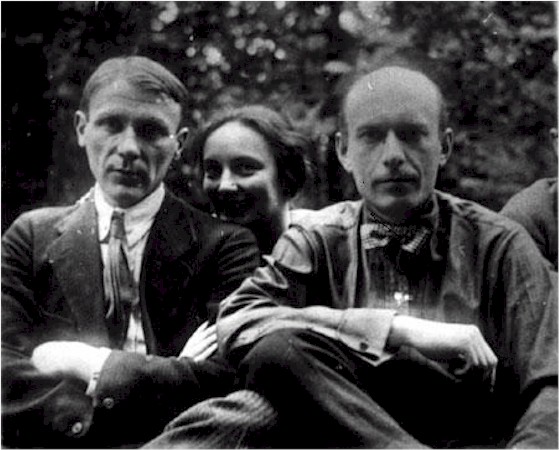
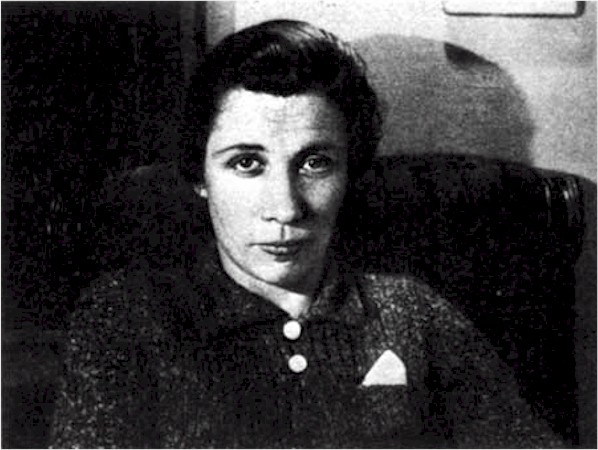
Bulgakov's description here may be inspired by the story of his friend, the philologist and translator Nikolay Nikolaevich Lyamin (1892-1941), who was held in custody for two weeks in 1931. Lyamin's wife, the artist Natalia Abramovna Lyamina-Ushakova (1899-1990) was from a famous merchant family. Her aunt had already been arrested and the OGPU was looking for a necklace. Lyamin didn't mention the aunt until they brought her before him. This may explain Bulgakov's description to «to fetch the aunt and ask her kindly to come for the programme at the women's theatre». When they searched Lyamin's apartment, they found only some cheap jewelery, and he was released.
Nikolay Lyamin was a man with a wide and interesting knowledge, who spoke several languages and who had collected a fine library. Bulgakov often addressed to him for advice.
Prechistenka
Nikolay Lyamin lived in the Saveliyevsky Pereulok, now Pozharsky pereulok, a side-lane of Prechistenka ulitsa. This neighbourhood was known for the literati living there. Many of them were friends of Bulgakov's second spouse, Lyubov Evgenyeva Belozerskaya (1894-1987).
Prechistenka is still considered as one of the nicest streets of Moscow.
In a candy tin
In the original version, Bulgakov is not talking about just any candies. He wrote в коробке из-под Эйнема [v korovke iz-pod Einema], or in «a box of Einem candies». Einem chocolates and cookies were produced by the Einem factory, started by Theodor Ferdinand von Einem (1826-1876), who had built the plant on the banks of the Moscow river. After the Russian Revolution, the factory was nationalized and was renamed in 1922 to Красный Октябрь [Krasny Oktyabr] or Red October. Red October became the most famous chocolate manufacturer of the Soviet Union. In 1965 it would start the production of Алёнка [Alyonka], one of the most popular candies ever.
The Einem candies were quite famous for the beautiful boxes in which they were sold and for the quirky advertising campaigns, which disappeared after the nationalisation. Perhaps that is why Bulgakov used the pre-revolutionary name Einem.
This passage shows again the rather high level of the Dutch translation of The Master and Margarita - despite some inaccuracies, mentioned elsewhere on this site. Marko Fondse (1932-1999) correctly mentions «een doosje van Einemtoffees» or a box of Einem candies. The English translator Michael Glenny (1927-1990) just writes «in a box», while Richard Pevear (°1943) and Larissa Volokhonsky write «in a candy tin». The French translator Claude Ligny is the worst: he writes that the money was hidden «dans une boîte de cigares» or «in a cigar box».
There great heaps... of gold are mine
These lines come from an aria of Hermann, the main character in Queen of Spades, an opera by Pyotr Ilyich Tchaikovsky (1840-1893). The libretto, written by the composer's brother Modest Ilyich Tchaikovsky (1850-1916), is based on the story by Aleksandr Sergeevich Pushkin (1799-1837). Here you can listen to Queen of Spades in Russian.
Chapters
- Introduction
- 1 Never Talk with Strangers
- 2 Pontius Pilate
- 3 The Seventh Proof
- 4 The Chase
- 5 There were Doings at Griboedov's
- 6 Schizophrenia, as was Said
- 7 A Naughty Apartment
- 8 The Combat between the Professor...
- 9 Koroviev's Stunts
- 10 News From Yalta
- 11 Ivan Splits in Two
- 12 Black Magic and Its Exposure
- 13 The Hero Enters
- 14 Glory to the Cock!
- 15 Nikanor Ivanovich's Dream
- 16 The Execution
- 17 An Unquiet Day
- 18 Hapless Visitors
- 19 Margarita
- 20 Azazello's Cream
- 21 Flight
- 22 By Candlelight
- 23 The Great Ball at Satan's
- 24 The Extraction of the Master
- 25 How the Procurator Tried...
- 26 The Burial
- 27 The End of Apartment No. 50
- 28 The Last Adventures of Koroviev...
- 29 The Fate of the Master and...
- 30 It's Time! It's Time!
- 31 On Sparrow Hills
- 32 Forgiveness and Eternal Refuge
- Epilogue
English subtitles

All films based on The Master and Margarita are subtitled in English, French, German, Dutch, Spanish and Italian.
Illustrations
A Quinquet lamp

Vladimir Vyacheslavovich Chernavin
Alexander Pushkin
Bulgakov and Nikolai Nikolaevich Liamin
Natalia Abramovna Liamina-Ushakova
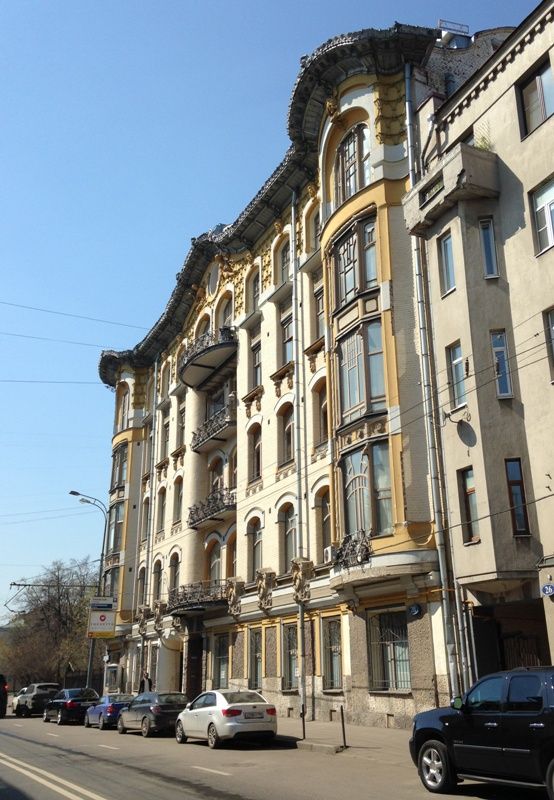
Some nice buildings on Prechistenka ulitsa
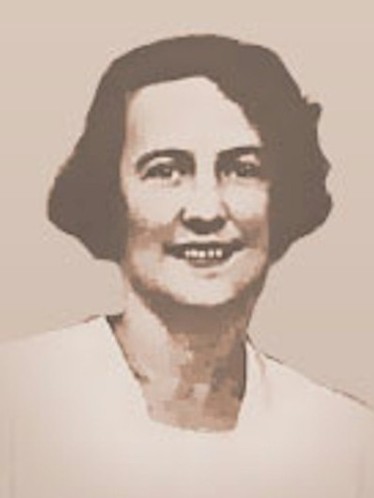
Lyubov Evgenyeva Belozerskaya
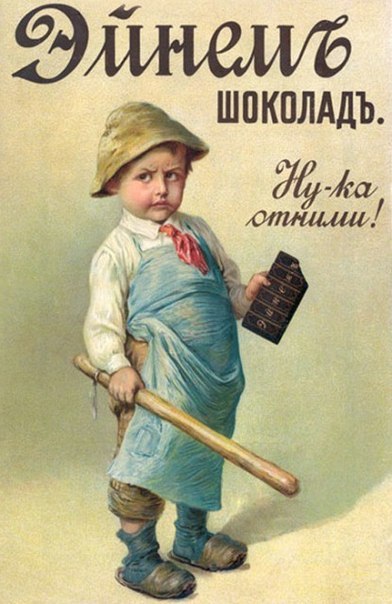
Publicity for Einem chocolate

Ferdinand Theodor von Einem
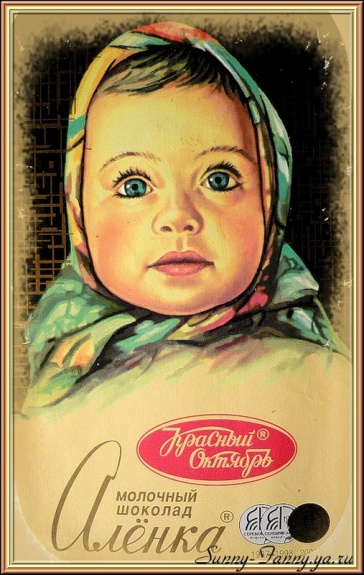
The famous Alyonka chocolate