18. Hapless Visitors
English > The novel > Annotations per chapter > Chapter 18
Maximilian Andreevich Poplavsky
Poplavsky is Berlioz’ uncle by marriage, living in Kyiv. Bulgakov himself was born in Kyiv. At the beginning of the book, in chapter 3, while Berlioz runs to the exit of the Patriarch’s Ponds to call the secret police, Woland calls out: «Would you like me to have a telegram sent at once to your uncle in Kiev?»
There exists a Russian phrase saying: «В огороде бузина, а в Киеве дядька» or «the elderberries are in the garden, and the uncle is in Kiev». It’s a reply given when there is no logical connection between the various things someone is saying, like in «you're mixing apples and oranges».
Above, the name of Bulgakov's hometown is written as «Kiev», the English transliteration of the Russian Киев. After all, The Master and Margarita was written in Russian, and most translators transliterated the name from Russian. Elsewhere on this website, however, the name of Mikhail Bulgakov's hometown is always written as «Kyiv», the English transliteration of the Ukrainian Київ.
Click here to read more about Poplavsky
The former Institutsky Street
The «former» Institutsky Street is now Institutsky Street again. In 1919, the name was changed into October 25 Street and later, in 1944, into October Revolution Street. In 1993 it got its old name back. It is one of the main streets of Kyiv, close to the Independence Square, better know as Maidan.
Have just been run over by tram-car
Bulgakov uses the impersonal form of the verb зарезать [zarezat] or cutting someone’s throat, the instrumentalis declension of the noun трамвай [tramway] or streetcar, and the accusative form of the personal pronoun я [ya] or I. This is a bizarre construction, in Russian as well as in English. The English language has no impersonal form, such as the French «on» or the Dutch «men». To get a similar effect, the third person plural «they» is often used. So the translation closest to the meaning of Bulgakov would be: «They just cut my throat with a tramway», as if one could use a tram-car as a knife to cut a throat.
For the students among you: зарезать [zarezat] also means to fail in the context of an exam.
An apartment in Moscow
If a Soviet citizen could obtain an apartment in Moscow it was a great victory. Moscow had goods that could not be found anywhere else. However, to gain a прописка [propiska] - a registration or permit to live there - one had to have been born in the city or to marry someone with a permit. Poplavsky's attempts to trade his apartment in Kyiv for one in Moscow and his desire to inherit his nephew's housing was a common scenario during the Soviet period.
Click here to read more about the housing policy of the Soviets
The spring flooding of the Dnieper
The Dnieper River flows through Kyiv.
The staggeringly beautiful view which opened out from the foot of the monument to Prince Vladimir
The statue of Prince Vladimir I of Kyiv stands on a hill overlooking the Dnieper river below. Technically the statue is a monument to the baptism of Russia. Prince Vladimir Svyatoslavich the Great (956-1015) was the pagan ruler who, in 988, brought christianity in its Byzantine form to the Kyivan Rus'. Kyivan Rus' is considered a predecessor state of three modern East Slavic nations: Belarus, Russia and Ukraine. It stretched out from Kyiv to Novgorod. Vladimir hoped for better political and cultural relation with Bulgaria and the Byzantine Empire.
The statue was made by Vasili Ivanovich Demut-Malinovsky (1779-1846) and Peter Klodt von Jürgensburg (1805-1867) and was erected in 1853.
«Aha!»
Poplavsky's several exclamations of «Aha!» show that he knows how to interpret the news that the chairman and the secretary of the management of Bolshaya Sadovaya no. 302 bis have vanished.
Management member Pyatnazhko
I don’t know (yet) if there exists a real prototype for the Pyatnazhko character. The first part of his name; пять [pyat], means five, and the verb нажить [nazhit] means earning [money].
As if on purpose, all of them at once...
In the Russian text, the men who vanish are put in the accusative, without any subject or verb. By this playing with the language, Bulgakov explains that they are the object of an action, executed by the «unmentionable» secret service. Poplavsky, clever man that he is, knows which subject and verb had been acting when, a few seconds later, «he found himself alone in the empty management room».
Three hundred drops of tincture of valerian
Again the drops that already appeared in the previous chapter. But 300 drops would be a huge dose, causing a coma or death.
The 412th office
Bulgakov uses again an impossibly high number for a department issuing passports. The number 412 will come back in chapter 27 of the novel,, when the secret police will find Grigory Danilovich Rimsky, the findirector of the Variety Theatre, in room number 412 of the Astoria hotel in Leningrad. Bulgakov knew this room very well, by the way. It's the room in which he preferred to stay when he was in Leningrad.
Believe it or not, but when your webmaster goes to Moscow, he often gets room number 412. Not at the Astoria hotel, though, but at the Baltschug Kempinski hotel.
Passports
The internal passport was abolished after the revolution and reinstated by Stalin on October 27, 1932, in the period of the Great Famine. However, the rural population did not get one, because the regime wanted to avoid that everybody left the kolchozes or collective farms. Without a passport it was impossible to move to another city. Peasants had to wait until the 60s before they could have a passport.
The application process to get a passport was quite complex with many long questionnaires, containing a series of unpleasant and dangerous questions about the past, about relatives abroad, etc.
Actually, this hasn't changed much since then. In 2009, when the webmaster of the Master & Margarita website was applying for a residence permit in Moscow, he also had to fill out many long questionnaires in which he had to mention a lot of information, not only about himself, but also about his parents, all his brothers and sisters and their activities, all the addresses he ever lived etc. Before he could actually start the procedure, he was sent to four different hospitals in four different parts of the city for a whole series of medical examinations, of which the last one was in a psychiatric center. At that time, he had a blog in which he described his experiences throughout the application procedure. Soon after he started describing the often rude and humiliating treatment of the applicants, of which most came from former Soviet republics, and details on how bribes had been requested and paid, the blog was taken offline by unknown forces. The residence permit was granted, though.
Everything was confusion in the Oblonskys' home
Bulgakov quotes the second line of the novel Anna Karenina (1873-1876), the famous novel written by Lev Nikolaevich Tolstoy (1828-1910).
An old-fashioned tussore silk suit
Bulgakov describes an elderly man в чесунчовом старинном костюме [v chessunchovom starinnom kostumye] or in an old-fashioned tussore silk suit. Чесуча [chesucha] is tussore silk. It’s a brownish kind of wild silk, produced by the caterpillar of the tussah butterfly, which is found in China.
The Dutch translators don’t talk about tussore silk, they mention shantung silk. Shangtung is the name given to a rough silk tissue produced in the province of 山东 [Shan-tung] or Shandong. Shandong is considered as the province where pottery-making, porcelain and silk originated. Are the Dutch translators mistaken than? Well, not quite. The tissues which are made from tussore silk are honan and shantung.
Andrei Fokich Sokov
Sokov is the barman at the Variety Theatre. It’s an appropriate name for a barman, because the Russian word сок [sok] means juice.
Click here to read more about Andrei Sokov
The purple scar on her neck
With this characteristic - «the only thing that might have been considered a defect in her appearance» - Bulgakov indicates that the girl who let Sokov in was a vampire. Vampires occur in many legends around the world. In most cases, they are revenants of evil beings, suicide victims, or witches, but they can also be created by being bitten - often in the neck - by another vampire.
A funereal cloak lined with fiery cloth and a long sword with a gleaming gold hilt
These are costumes and props appropriate to the devil Mephistopheles in the opera Faust by Charles Gounod (1818-1895).
Baron Meigel
The real prototype for Baron Meigel's character is Baron Boris Sergeevich (von) Steiger (1892-1937). In the '20's and '30's he worked in Moscow at the Народный комиссариат просвещения (Наркомпрос) [Narodny kommisariat prosveshcheniya] (Narkompros) or People's Commissariat for Enlightening, where he was responsible for External Relations. Simultaneously he worked as an agent of the Объединённое государственное политическое управление (ОГПУ) [Obedinyonnoe gosudarstvennoe politicheskoye upravlenye] (OGPU) or the United State Political Administration, the secret service which became part of the notorious NKVD in 1934. In 1937, Steiger was arrested and executed.
Steiger is mentioned several times in the diary of Elena Sergeevna Shilovskaya (1893-1970). He was often found at the embassy of the United States. He reported on foreigners connected with the theatre, and on Soviet citizens having contact with the embassy.
Meigel reappears in the novel in chapter 23, at the Great Ball of Satan. In the Characters section of the Master & Margarita website, you can read more on Boris Sergeevich Steiger.
Click here to read more about baron Meigel
 Next page Annotations chapter 18
Share this page |
Chapters
- Introduction
- 1 Never Talk with Strangers
- 2 Pontius Pilate
- 3 The Seventh Proof
- 4 The Chase
- 5 There were Doings at Griboedov's
- 6 Schizophrenia, as was Said
- 7 A Naughty Apartment
- 8 The Combat between the Professor...
- 9 Koroviev's Stunts
- 10 News From Yalta
- 11 Ivan Splits in Two
- 12 Black Magic and Its Exposure
- 13 The Hero Enters
- 14 Glory to the Cock!
- 15 Nikanor Ivanovich's Dream
- 16 The Execution
- 17 An Unquiet Day
- 18 Hapless Visitors
- 19 Margarita
- 20 Azazello's Cream
- 21 Flight
- 22 By Candlelight
- 23 The Great Ball at Satan's
- 24 The Extraction of the Master
- 25 How the Procurator Tried...
- 26 The Burial
- 27 The End of Apartment No. 50
- 28 The Last Adventures of Koroviev...
- 29 The Fate of the Master and...
- 30 It's Time! It's Time!
- 31 On Sparrow Hills
- 32 Forgiveness and Eternal Refuge
- Epilogue
English subtitles

All films based on The Master and Margarita are subtitled in English, French, German, Dutch, Spanish and Italian.
Illustrations
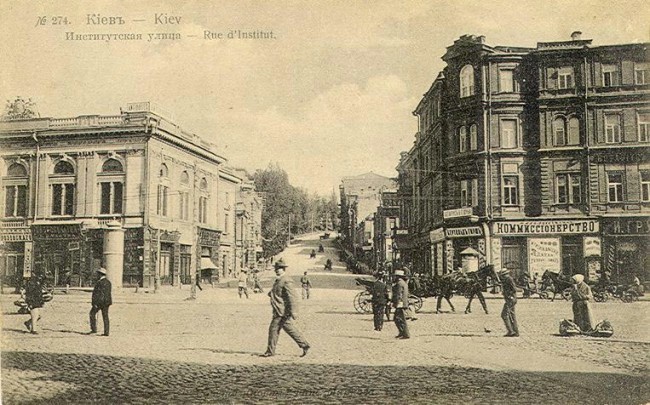
Institutsky Street in Kyiv
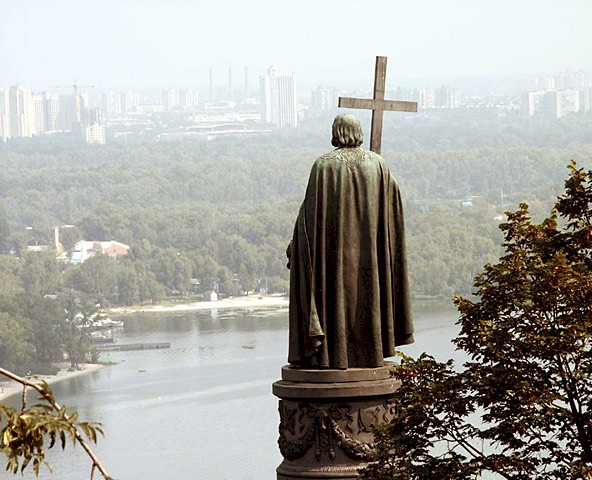
The statue of prince Vladimir
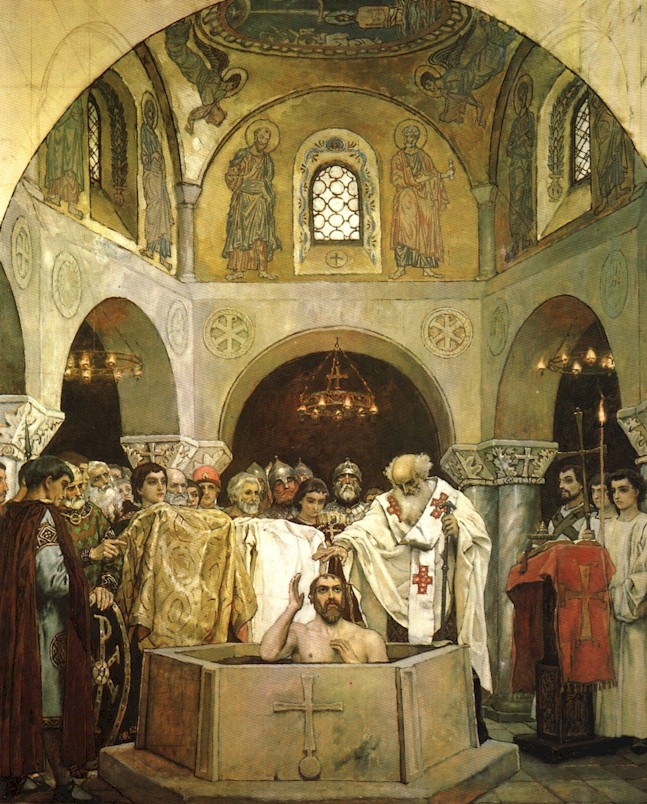
The christening of prince Vladimir
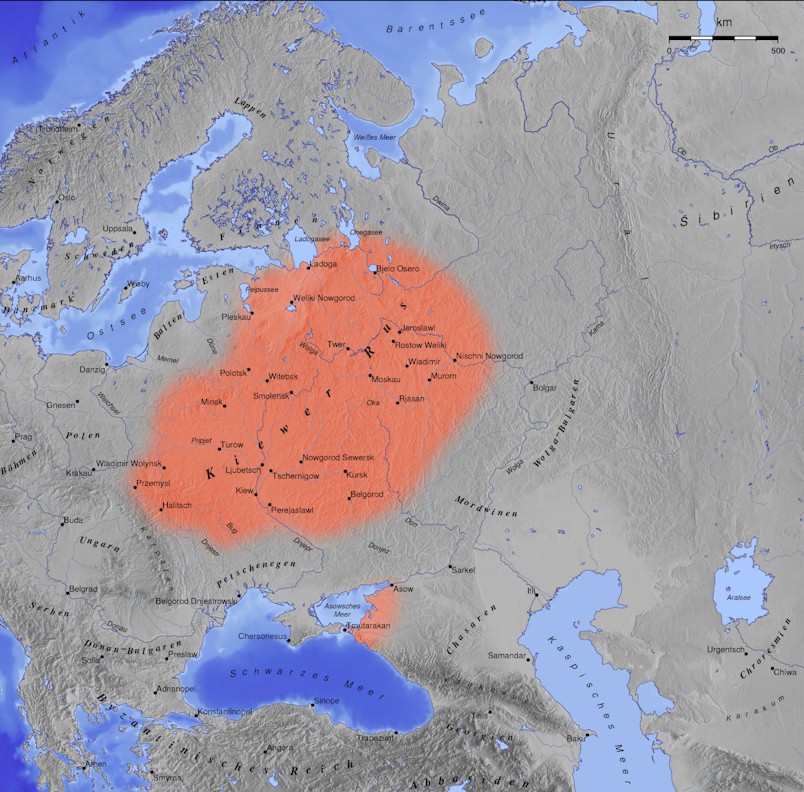
Kyivan Rus'

Valerian drops
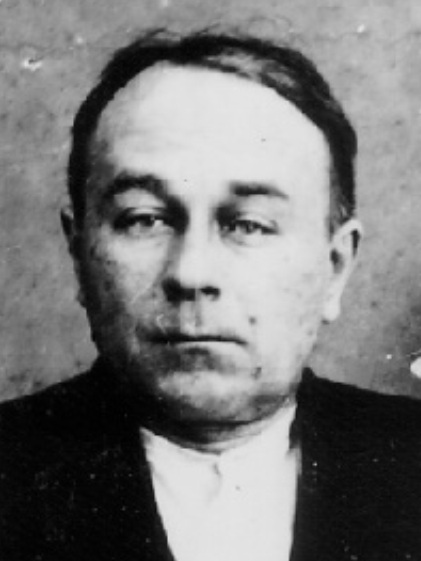
Baron Boris Sergeevich (von) Steiger