22. By Candlelight
English > The novel > Annotations per chapter > Chapter 22
Some completely deserted cemetery in the Dorogomilovo area
A map of the publishing house Suvorin from 1915 shows two cemeteries located on the banks of the Moscow River in the Дорогомиловская Слобода [Dorogomilovskaya Sloboda] or Dorogomilovo area. Next to the large Orthodox cemetery was also a small Jewish cemetery. None of the two cemeteries still exist, because they have been destroyed after World War II, when the Kutuzovsky Prospekt, a a busy traffic artery leading from the New Arbat to the outer ring, was constructed.
An extraordinary invisible, yet quite palpable, endless stairway
The staircase that Margarita will climb reminds of the mystical ladder with seven steps that occurs in Masonry at the initiation of the Knight Kadosh or Knight of the white and the black eagle, the 30th degree in the Ancient and Accepted Scottish Rite. The staircase is the link between the «earthly nothing» and the «heavenly glory», the path from ignorance to omniscience. The steps are representing justice, kindness, humility, faith, labour, duty and generosity on the one hand, and grammar, rhetoric, logic, arithmetic, geometry, music and astronomy on the other hand.
It is rather unusual that Margarita, as a woman, can climb those stairs. Many Masonic lodges are solely intended for men. In Russia, however, the economist, publicist and feminist Ekaterina Dmitrievna Kuskova (1869-1958), had broken the spell. She has been a member of the Masonic Lodge Grand Orient des Peuples de Russie from 1906 to 1917. In 1922, she was expelled from the Soviet Union.
The interest of Bulgakov for Freemasonry can be explained by the fact that, in 1903, Afanasy Ivanovich Bulgakov (1859-1907), theologian and church historian, and the father of Mikhail Afanasievich, had written an article about Modern Freemasonry in its Relationship with the Church and the State, which was published in the Acts of the Theological Academy of Kyiv. Bulgakov refers more than once to Freemasonry in the novel.
Click here to read more on Freemasonry in The Master and Margarita
The fifth dimension
In the elementary geometry three dimensions are defined: length, width and height. These (cartesian) parameters are perpendicular to each other.
A point is zero-dimensional - it has no length, nor width, nor height.
A line has one dimension - she only has length.
A plane is two-dimensional - it has length and width.
A body is three-dimensional - it has length, width and height.
The fourth dimension is an extra independent permutation direction in space. The fourth dimension is often identified with time.
The fifth dimension is a higher dimension of consciousness. When Bulgakov was working on The Master and Margarita, in 1926, the Swedish physicist Oskar Klein (1894-1977) had made an attempt to explain why we can’t perceive this additional dimension. Oskar Klein was also known for his theory about travelling in time.
A three-room apartment on Zemlyanoy Val
Земляной вал [Zyemlyanoy Val] or the Earthen Embankment - is, like Bolshaya Sadovaya, part of the Moscow Garden Ring, but it’s opposite to the city center, in the East. The Taganka Theatre, where Yury Lyubimov's theatre adaptation of The Master and Margarita is still regularly staged, is situated on Zyemlyana Vala ulitsa.
The machinations of the Muscovite described by Bulgakov in this scene were typical for that period. Clever and sometimes complex exchange schemes were often put up with regard to living space. Various people in various combinations were played off, and bribes were almost considered as a semi-legal practice.
The spring ball of the full moon, or the ball of the hundred kings
The Северная симфония [Severnaya simphoniya] or Northern Symphony from 1902, written by Boris Nikolaevich Bugaev (1880-1934), who wrote under the pseudonym Andrei Bely, ends with a feast at which the kings of the North drink blood from golden cups. Like Margarita, the queen kneels on one knee to welcome the guests, who kiss her hand and her knee.
One of the French queens who lived in the sixteenth century
In the annotations of the previous chapter you can read more about Marguerite de Valois (1553-1615) and her marriage to the French king Henri IV (1553-1610).
Seven golden claws
The menorah or seven branched candelabrum is an old symbol of the Hebrew people and one of the oldest symbols of Judaism in general. According to tradition, Moses would have been given strict instructions by God to make a seven branched candelabrum and to put it in the Tabernacle of the Ark of the Covenant where were also stored the stone tablets containing the Ten Commandments. Woland’s candelabrum with the seven golden claws is a parody of these menorah's.
A beetle artfully carved from dark stone
Bulgakov writes жук [zhuk], which is indeed beetle or bug. But yet most translators, including Michael Glenny (1927-1990), use the word scarab or scarabaeus, which is some kind of dung beetle in Egyptian mythology.
The Egyptians saw the scarabaeus beetle as a symbol of immortality because it survived the annual flooding of the Nile. The ritual use of carved stone scarabs spread to Palestine, Greece and Italy in ancient times.
The chess journals would pay good money for the chance to publish it
Margarita said to Woland: «I beg you not to interrupt your game. I imagine the chess journals would pay good money for the chance to publish it». It is very well possible that Bulgakov described the party which was played between the Russian grandmasters Mikhail Moiseevich Botvinnik (1911-1995) and Nikolai Nikolaevich Ryumin (1908-1942) at the Second International Chess Tournament, which took place in Moscow from February 15 to March 15, 1935.
Twelve Soviet players and eight players from other countries participated to this tournament. They all belonged to the world top of chess. One of them was a woman: Vera Frantevna Menchik (1906-1944), a British-Czech who, unfortunately, would finish last.
The most impressive game of the tournament was, as said earlier, the one between Mikhail Botvinnik and Nikolai Ryumin, played in Round 6 on February 22, 1935. It was, indeed, a game about which much has been written, and not only in the chess journals. It became so famous that it got even known to people who were normally not so familiar with chess. The game turned in its decisive phase when, in the 33th turn, the king of Ryumin was moved to square G2 - just like Bulgakov described it -, after which Botvinnik put him in check with his queen. Three moves later the party was finished in favour of Botvinnik.
Despite this historical game, Ryumin would not gain much honour on this tournament. He stranded on a disappointing 14th place. Mikhail Botvinnik did better: he won the tournament, although he had to share the first place with the Czech player Salomon Mikhailovich Flohr (1908-1983). Botvinnik was still very young though. Many years later, between 1948 and 1963, he would be the number one in the world almost uninterruptedly.
Some English readers of The Master and Margarita will be truly amazed when they read this explanation. Because in the English translation by Richard Pevear and Larissa Volokhonsky, Woland says: «The king is on square G-5», and in the translation of Michael Glenny is written: «The king is on square Kz». Both translations are rather strange and incomprehensible, because Bulgakov wrote indeed «Король на клетке г-два» or «The King is on g-two», as it has been translated in all other translations known to me.
On the website 365chess.com you can replay the game. The position explained in the novel is on move 33, when the king of Ryumin has just been moved from square H1 to square G2. You can browse forward and back through the game by using the buttons under the board.
Click here to replay the game on 365chess
You confounded Hans!
In the Russian text is written «Вылезай, окаянный ганс!» or «Go away, damned hans (gans)». The word ганс [hans] is pronounced gans and is one of the many loan words used in the Russian language. It sounds Dutch or German. There are many folk tales in German in which Hans, who is often the third son of a family, is presented as an idiot, or at least a little lunatic. Although, at the end, he usually winds up with the treasure or the beautiful princess. In Russian the equivalent of the Hans character is often called Ivan or Ivanushka.
Both Ivan and Hans are relatives of the Latin name Johannes, meaning Jahweh is gracious. Other relatives are Jan, Jean, Juan, John, Giovanni, Janusz, Jens, Sean, João etc.
Click here to read more about Dutch words in Russian
Sextus Empiricus
Sextus Empiricus (160-210) was a Roman philosopher, astronomer and physician. His philosophical work is the most complete surviving account of ancient Greek and Roman skepticism. In his medical work, tradition maintains that he belonged to the empiric school, as reflected by his name. However, at least twice in his writings, Sextus seems to place himself closer to the methodic school, as his philosophical views imply.
Sextus Empiricus advises that we should suspend judgment about virtually all beliefs. That is, we should neither affirm any belief as true nor deny any belief as false. This view is known as Pyrrhonian skepticism, as distinguished from Academic skepticism, which, according to Sextus, denies knowledge altogether.
Martianus Capella
We don't know much about this Latin writing author of the 5th century, apart from some details we can find in his work, De nuptiis Philologiae et Mercurii (On the wedding of Philology and Mercury). In addition to some biographical hypotheses which we can deduct from some excerpts in this huge allegorical encyclopaedia of nine volumes, we have no historical traces of the author.
Aristotle
Aristotle (384 BC-322 BC) was a Greek philosopher and is considered, together with Socrates (470 BC-399 BC) and Plato (427 BC-347 BC), as one of the most influential of the ancient Greek philosophers.
Aristotle can be seen as the first homo universalis because he introduced logics and methodology as the means to practise philosophy and other sciences. He mastered the total span of all sciences known in his time (philosophy, psychology, political and social sciences, mathematics and physics, linguistics and literature, theatre...), which he systematically and methodically elaborated to an integrated system. Aristotle can be considered as a system philosopher.
My leg hurts
Satan's lameness is more commonly ascribed to his fall from heaven.
In the year 1571, on Mount Brocken, on the Devil's Podium
The Brocken is, with its 1141 meter, the highest mountain in Northern Germany. The Brocken, also called Blocksberg, has always played a role in legends and has been connected with witches and devils. On Walpurgis Night, demonic creatures would gather on the top of the mountain. According to a popular belief, banned witches were allowed to return on earth for one night at the sabbath on the Brocken.
Johann Wolfgang von Goethe (1749-1832) described the Brocken in his Faust (written in 1808) as the center of revelry for witches on Walpurgis Night.
Now to the Brocken the witches ride;
The stubble is gold and the corn is green;
There is the carnival crew to be seen,
And Squire Urianus will come to preside.
So over the valleys our company floats,
With witches a-farting on stinking old goats.
My granny
The devil's grandma is sometimes used, like the devil himself, in Russian expressions, like, for example, in «go to the devil» or «go to the devil's grandmother!»
A war has started there
The war «in a chunk of land, washed on one side by the ocean» is the Spanish Civil War which was going on in that time (1936-1939). Bulgakov felt very sorry for this war. He wrote many letters about it. In the twelve years that he worked on The Master and Margarita, the passage with the globe only appeared in 1937, when this war was on the radio every day. Woland’s moaning about the radio coverage is, as a matter of fact, a reference to this daily news. Bulgakov's opinion was that wars could not be ended by words of indignation, but only by armed force against the agressor.
Perhaps Mikhail Bulgakov was inspired for this passage by the bombing of the Basque town of Guernica y Luno on April 26 1937 by the Condor Legion of General Hugo Sperrle (1885-1953). That legion was a military unit of volunteers from Nazi Germany which was militarily supporting the Spanish fascists of General Francisco Franco (1892-1975). The bombing took place on the weekly market day, and many shelters were not withstanding the bombs. Therefore, many people fled into the fields around the city. At that time, Heinkel-51 squadrons shot at the fleeing men, women and children. Of the 5,000 inhabitants, 1654 have been killed and 889 have been wounded. In response to this bombing, the painter Pablo Picasso (1881-1973) made his famous painting Guernica.
Abaddon
Abaddon is the English transliteration of the Hebrew word אבדון [avaddon], which means destruction or destroyer. In the Book of Job 26: 6 of the Old Testament, the word abaddon is used to describe the underworld or the place where death rules: «עָרוֹם שְׁאוֹל נֶגְדּוֹ וְאֵין כְּסוּת לָאֲבַדּוֹן» [ärôm sh'ôl neg'Dô w'ëyn K'šût läávaDôn] or «The realm of the dead is naked before God; Destruction lies uncovered».
In the Book of Revelation 9:11 of the New Testament the name Abaddon is mentioned as the angel of the abyss: «They had as king over them the angel of the Abyss, whose name in Hebrew is Abaddon and in Greek is Apollyon, that is, Destroyer».
Bulgakov's description of «some gaunt man in dark glasses, who was exceptionally pale by nature» could also be a reference to the Russian Marxist revolutionary and theoretician Lev Davidovich Bronstein (1879-1940), better known as Leon Davidovich Trotsky, the first leader of the Red Army. If you think this is too far-fetched: Bulgakov had already made a link between Trotsky and Abaddon in his novel The White Guard from 1925. In that novel, doctor Aleksey Turbin talks to the young poet Ivan Rusakov who, after a cocaine addiction, has seen the light and warns the doctor for Satan. When the doctor asks him if he means Leon Trotsky, the poet replies: «Yes, that's the name he has adopted. But his true name is in Hebrew Abaddon, and in Greek Apollyon». Bulgakov expert Boris Vadimovich Sokolov (°1957), the author of the Bulgakov Encyclopedia, adds to this that Abaddon's work is «just as flawless as Trotsky's activities» and that «they are both indifferent to the victims of war».
Click here for a comprehensive description of Abaddon
Share this page |
Chapters
- Introduction
- 1 Never Talk with Strangers
- 2 Pontius Pilate
- 3 The Seventh Proof
- 4 The Chase
- 5 There were Doings at Griboedov's
- 6 Schizophrenia, as was Said
- 7 A Naughty Apartment
- 8 The Combat between the Professor...
- 9 Koroviev's Stunts
- 10 News From Yalta
- 11 Ivan Splits in Two
- 12 Black Magic and Its Exposure
- 13 The Hero Enters
- 14 Glory to the Cock!
- 15 Nikanor Ivanovich's Dream
- 16 The Execution
- 17 An Unquiet Day
- 18 Hapless Visitors
- 19 Margarita
- 20 Azazello's Cream
- 21 Flight
- 22 By Candlelight
- 23 The Great Ball at Satan's
- 24 The Extraction of the Master
- 25 How the Procurator Tried...
- 26 The Burial
- 27 The End of Apartment No. 50
- 28 The Last Adventures of Koroviev...
- 29 The Fate of the Master and...
- 30 It's Time! It's Time!
- 31 On Sparrow Hills
- 32 Forgiveness and Eternal Refuge
- Epilogue
English subtitles

All films based on The Master and Margarita are subtitled in English, French, German, Dutch, Spanish and Italian.
Illustrations
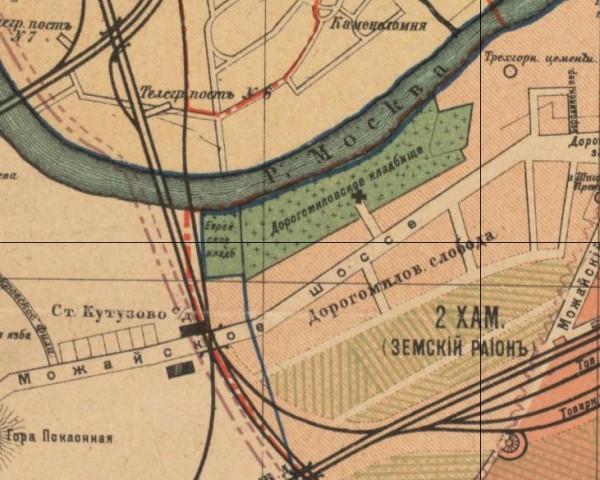
The cemetery in the Dorogomilovo area
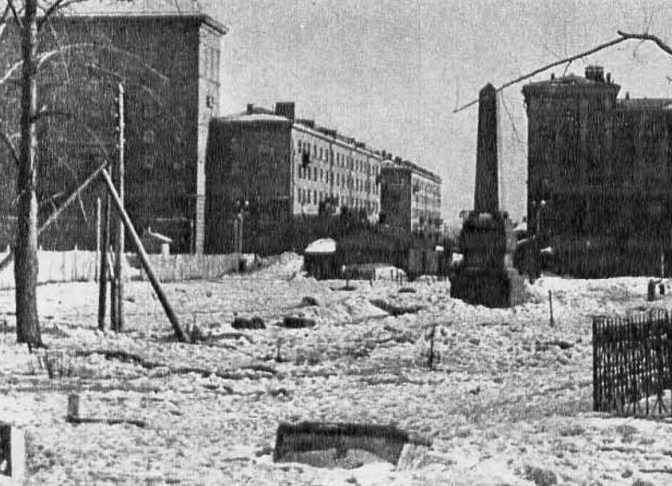
The deserted cemetery in the 40s
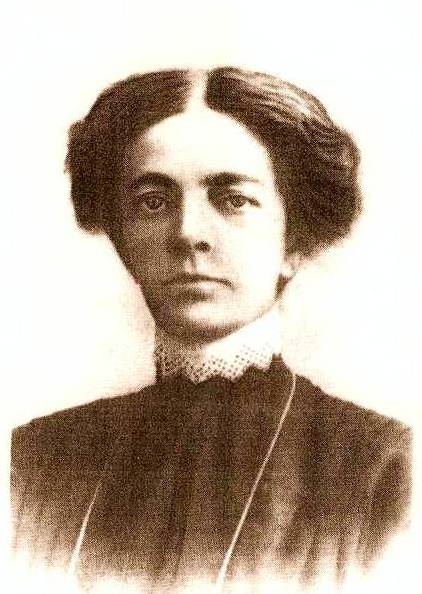
Ekaterina Dmitrievna Kuskova
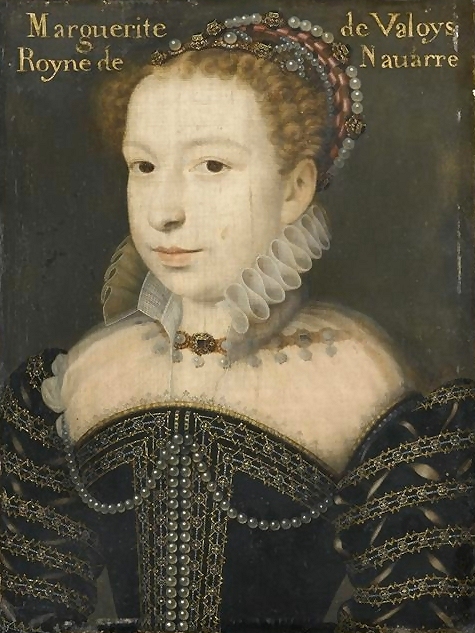
Marguerite de Valois
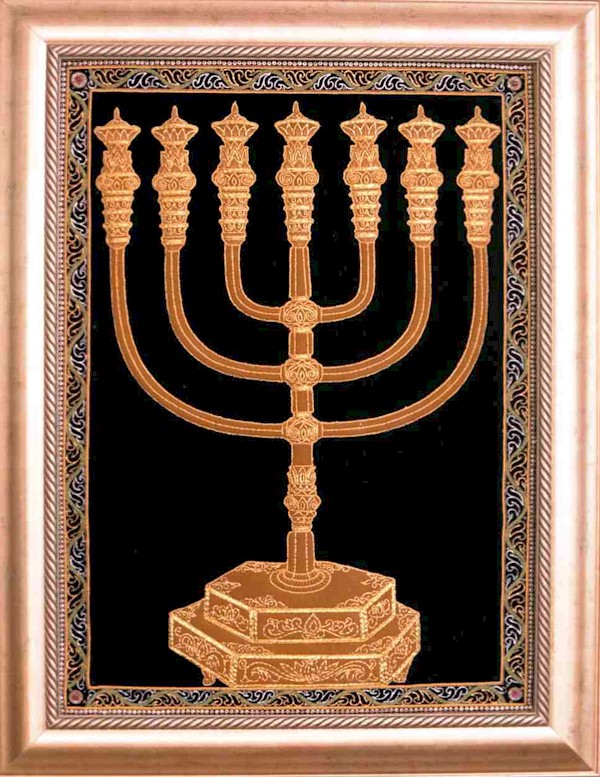
A menorah or seven branched candelabrum

A scarabaeus
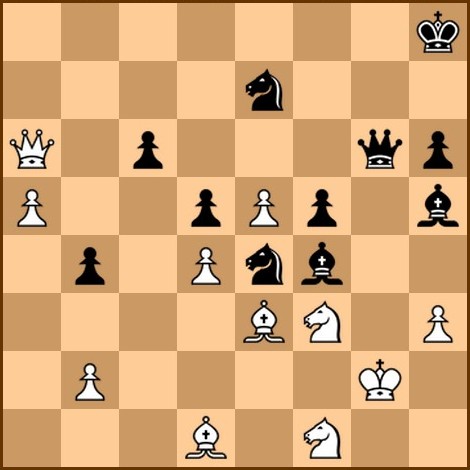
The king on square G2
Ryubin-Botvinnik, 22 February 1935

Sextus Empiricus
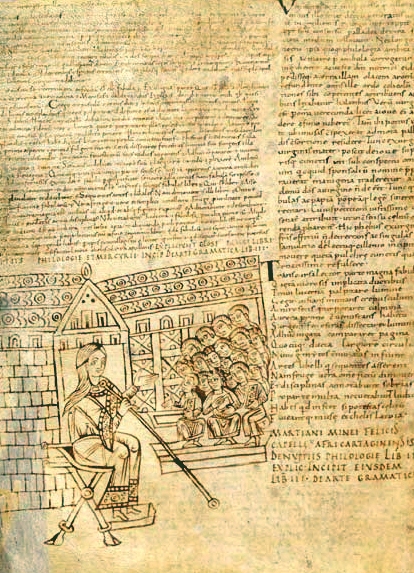
Fragment from Nuptiis Philologiae et Mercurii
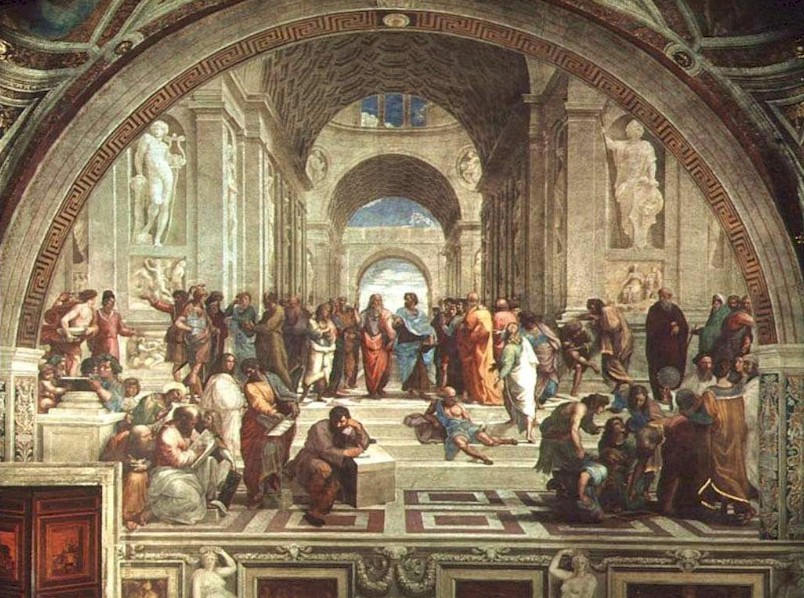
The ancient Greek philosophers
on a fresco painted by Raphael

Plato and Aristotle
(detail of the painting)

The Witches' Altar and the Devil's Pulpit
on the Brocken
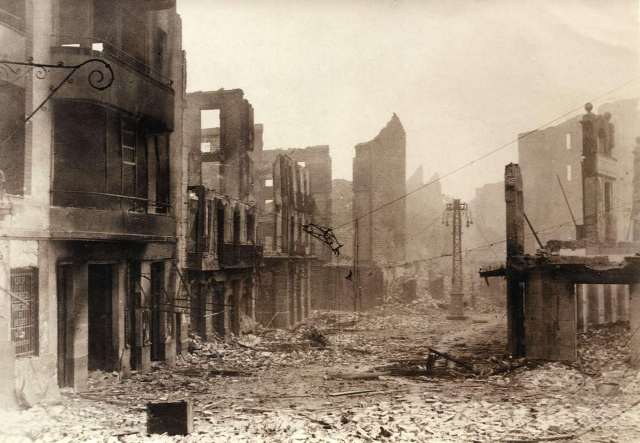
Guernica y Luno on 26 April 1937
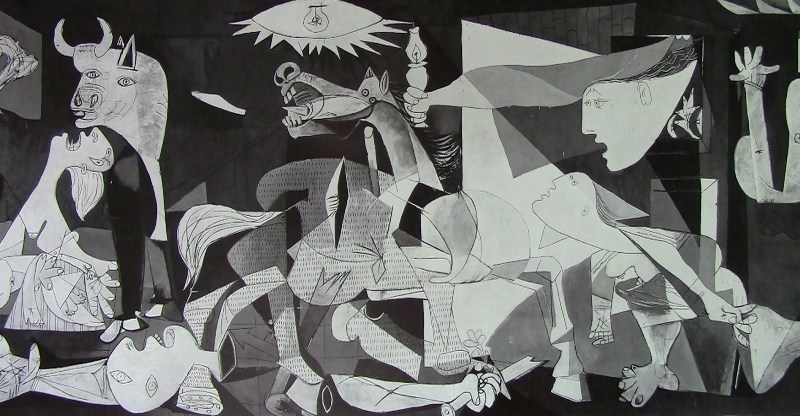
Guernica (Pablo Picasso)