21. Flight
English > The novel > Annotations per chapter > Chapter 21
The title
Margarita's flight over Moscow inspired the rock band Franz Ferdinand to the song Love and Destroy in 2004. It's the b-side of their single Michael.
Click here to read more about the song and to listen to it
Click here to watch a live version of the song
After flying down her own lane
Although there are different opinions, we have strong arguments to believe that Margarita's «own lane» was Taneyevuch ulitsa in the Arbat area.
Click here for a full description of Margarita's house
With the following link, you can follow Bulgakov's description of Margarita's flight, from Taneyevuch ulitsa to the Dramlit House.
Click here to follow Margarita's flight
The lane with the kerosene shop
Older residents recall that there was indeed an oil store at number 20 of Sivtsev Vrazhek pereulok, a street parallel to the Arbat.
The dazzlingly bright tubes on the theatre building
The theatre building is the Vakhtangov Theatre on number 26 of the Arbat. It is named after Yevgeny Bagrationovich Vakhtangov (1883-1922), a pupil of Konstantin Sergeevich Stanislavsky (1863-1938). The original 19th century building was destroyed by a bomb in the 40's. It was rebuilt at the same place.
Two primuses
Again Bulgakov mentions the primus stoves. He did it already in Chapter 4, and they will play an important role later in the novel, when Koroviev and Behemoth raise hell in Moscow in chapter 28. The shortage of living space after the revolution led to the typical Soviet phenomenon of the communal apartments, in which several families would have one or two private rooms and share the kitchen and toilet facilities. The primus stove, a portable one-burner stove fuelled with pressurized benzene, made its appearance at the same time and became a symbol of communal-apartment life. Each family would have its own primus.
An eight-storeyed, obviously just-constructed building
Dramlit, the House for Dramaturgists and Literators is, according to Bulgakov’s flight description, situated in Bolshoi Nikolopeskovskii pereulok near Arbat.
But there was no such building in Nikolopeskovsky pereulok. Bulgakov had simply projected another building, finished in 1935, to this spot. This other building was on the other side of the Moscow River in Lavrushinsky pereulok 17, close to the Tretyakov Gallery. The apartment 84 of that building was indeed on the seventh floor and is similar to the description in the novel, and the other appartements as well.
Furthermore, in apartment 84 lived, in reality, Osaf Semeznovich Litovsky (1892-1971). He was the head of the Главный репертуарный комитет (Главрепертком) [Glavny repertuarny komitet] (Glavrepertkom) or the Central Committee for Repertoires from 1930 to 1937. Litovsky introduced the term Bulgakovism after the first representations of Bulgakov's play Days of the Turbins. A description which very closely matches the personality of the critic Latunsky.
Click here to read more about the Dramlit house
Becker's drawing-room instrument, not guilty of anything
Jacob Davidovich Becker (1811-1879), a craftsman born in Germany, created his piano building workshop in Saint-Petersburg in 1841. His piano’s enjoyed great fame, and he was the first to apply American and European technologies in the building of piano’s in Russia. In 1903 the company merged with the piano building factory of Ivan Karlovich Schröder (?-1889), and in 1917 it was nationalized and renamed the Red October Factory.
In 1991, after the collapse of the Soviet Union, the company was renamed the Saint Petersburg Piano Factory, but it went bankrupt with a total debt of 13 billion roubles. Lee Alexander Magness, the Texan grandson of Ivan Karlovich Schröder, uses all possible means since 1994 to lay hands on the factory.
In 1999, U.S. District Judge David Hittner in Houston, Texas, awarded the damages, estimated at 234 million dollars, to Magness, his mother Nina Schröder, and his aunt Agnes Schröder, the daughters of Ivan Karlovich Schröder, after the Russian Federation had failed to respond to the lawsuit. But in April 2001, The U.S. 5th Circuit Court of Appeals in New Orleans ruled that the Russians had not been properly served with the lawsuit, and set aside the judgment. The United States government intervened in this case in favour of the Russian Federation with a so-called amicus curiae document. Magness filed for a rehearing of the case, but in October 2001, the U.S. Supreme Court declined to hear Magness' arguments.
I'm your dream
The way in which Bulgakov plays with the Russian grammar here is untranslatable. «To dream of someone» in Russian is expressed with the verb сниться [snitsya] but in a particular construction, with the person dreamed of as the subject, and the person dreaming in the dative. Simply said: «I dreamed of her» in Russian sounds as: «She was dreamed of by me».
That is why the verb almost always appears in the third person singular, since one rarely talks about oneself being seen in someone else's dream. But that's what Margarita does: «Я тебе снюсь» or «I was dreamed by you», she says.
After that she says: «Lie down now (…) I'll go on being your dream». And the boy answers: «Ну, снись, снись», which is the imperative form: «Well, be my dream, be my dream».
My French queen!
With this exclamation, Natasha already indicates what will be confirmed by Koroviev in the next chapter - the fact that Margarita is «a great-great-great-granddaughter» of «one of the French queens who lived in the sixteenth century».
Some naked fat man with a black silk top hat pushed back on his head
I don’t know (yet) who this man could be. But he used to know Claudine, «the ungrieving widow» (see below), as well as the «bright Queen Margot» - the popular name given to Marguerite de Valois (1553-1615) (see below). And apparently he used to be a friend of the publisher François Guessard (1814-1882) in Paris, who lived three centuries after the two abovementioned ladies.
Claudine
Claudine de La Tour-Turenne (1520-1591) was lady-in-waiting of Marguerite de Valois (1553-1615), the spouse of the French king Henri IV (1553-1610). On October 31, 1535, Claudine married, at the age of 15, to Justus II (1510-1557), Seigneur of Tournon and Count of Rousillon. At the age of 37 she became a widow.
Bright queen Margot
Queen Margot is Marguerite de Valois (1553-1615), queen of France and Navarra. She was the daughter of Henri II (1519-1559) and Catherina de Medici (1519-1589). Three of her brothers have been kings of France: François II (1544-1560), Charles IX (1550-1574) and Henri III (1551-1589).
Her mother first tried to pair her off to various other men, but eventually arrived at her cousin, Henri of Navarra (1553-1610), the later king Henri IV. The marriage took place on August 18, 1572. Henri was a protestant, and according to various sources Catherina de Medici would have tried to take advantage of the gathering of the Huguenots in Paris to organize the bloodbath of the St. Bartholomew's Day in the night between August 24 and 25, 1572.
The marriage of Marguerite and Henri knew much reciprocal cheating, and long periods of separation. In 1599 it was annulled. Marguerite kept her title of queen.
Her memoirs, published more than one hundred years after her death, described innumerable anecdotes about the kings Charles IX, Henri III and Henri IV. Meanwhile she caused many scandals herself. She died on May 27, 1615.
The bloody wedding of his friend Guessard
The drunken man is indeed quite confused: His feeling for time fails. François Guessard (1814-1882) was a writer and publisher from Paris, who published the correspondence of Marguerite de Valois (1553-1615), but he lived in the 19th century - he published Les Mémoires et lettres de Marguerite de Valois in 1842. The «bloody wedding» was the notorious St. Bartholomew's Day in 1572.
The readers of the Michael Glenny translation may wonder why Guessard is mentioned here, because Glenny wrote that the fat man sad that he had just come «from a wedding in Paris», without mentioning which wedding.
The Yenisey River
The Yenisey is a 4,129 km long river which is often considered as the separation between eastern and western Siberia.
Transparent naiads
The English translators Pevear and Volokhonski call the water nymphs naiads, and Michael Glenny calls them water-sprites. But naiads are water nymphs of the Greek mythology, while Bulgakov described Russian русалки [rusalki], singular: rusalka. Rusalki were connected to the world of death. They were young women who died before they could get married. In the middle of the night they went to the river bank to dance in the meadows. If they saw handsome men, they would fascinate them with songs and dancing, and then lead the person away to the river floor, to live with them.
Someone goat-legged
Wood ghosts and devils were often portrayed with the lower part of the body of an animal. The Russian writer Boris Nikolaevich Bugaev (1880-1934), who wrote under the pseudonym Andrei Bely (see annotations to chapter 18) described a goat-legged man at a sabbath in his Северная симфония [Severnaya simphoniya] or Northern Symphony from 1902.
A black, long-beaked rook
A rook is a big black bird, the trypanocorax frugilegus, resembling a crow. The Russian sculptor Aleksandr Rukavishnikov (°1950) made a huge statue of Margarita's driver. Originally, it was part of a large monument which would be erected on the Patriarch's Ponds in honour of Bulgakov, with a huge primus stove and Yeshua walking on the water. But in February 2003, the project was withdrawn after much protest. The rook statue is now placed in the garden of the sculptor in Bolshaya Molchanovka ulitsa in Moscow, next to a beautiful image of a sleeping Aleksandr Pushkin. Rukavishnikov also made the statue of Koroviev and Behemoth which now adorns the courtyard of the Bulgakov House in Moscow.
Share this page |
Chapters
- Introduction
- 1 Never Talk with Strangers
- 2 Pontius Pilate
- 3 The Seventh Proof
- 4 The Chase
- 5 There were Doings at Griboedov's
- 6 Schizophrenia, as was Said
- 7 A Naughty Apartment
- 8 The Combat between the Professor...
- 9 Koroviev's Stunts
- 10 News From Yalta
- 11 Ivan Splits in Two
- 12 Black Magic and Its Exposure
- 13 The Hero Enters
- 14 Glory to the Cock!
- 15 Nikanor Ivanovich's Dream
- 16 The Execution
- 17 An Unquiet Day
- 18 Hapless Visitors
- 19 Margarita
- 20 Azazello's Cream
- 21 Flight
- 22 By Candlelight
- 23 The Great Ball at Satan's
- 24 The Extraction of the Master
- 25 How the Procurator Tried...
- 26 The Burial
- 27 The End of Apartment No. 50
- 28 The Last Adventures of Koroviev...
- 29 The Fate of the Master and...
- 30 It's Time! It's Time!
- 31 On Sparrow Hills
- 32 Forgiveness and Eternal Refuge
- Epilogue
English subtitles

All films based on The Master and Margarita are subtitled in English, French, German, Dutch, Spanish and Italian.
Illustrations
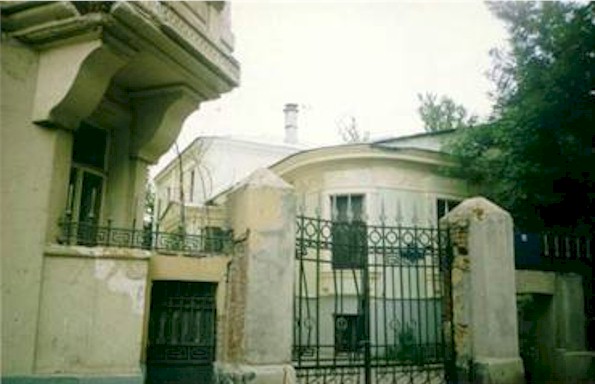
Margarita's house
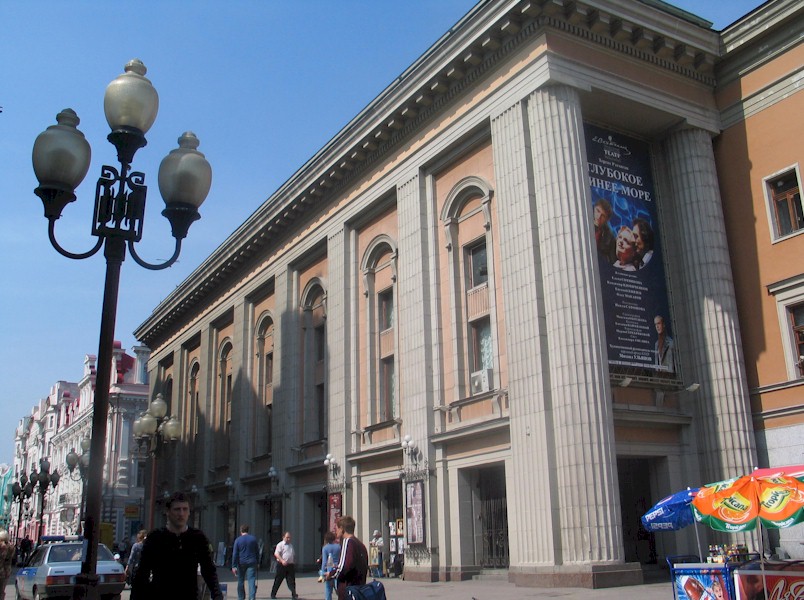
The Vakhtangov theatre
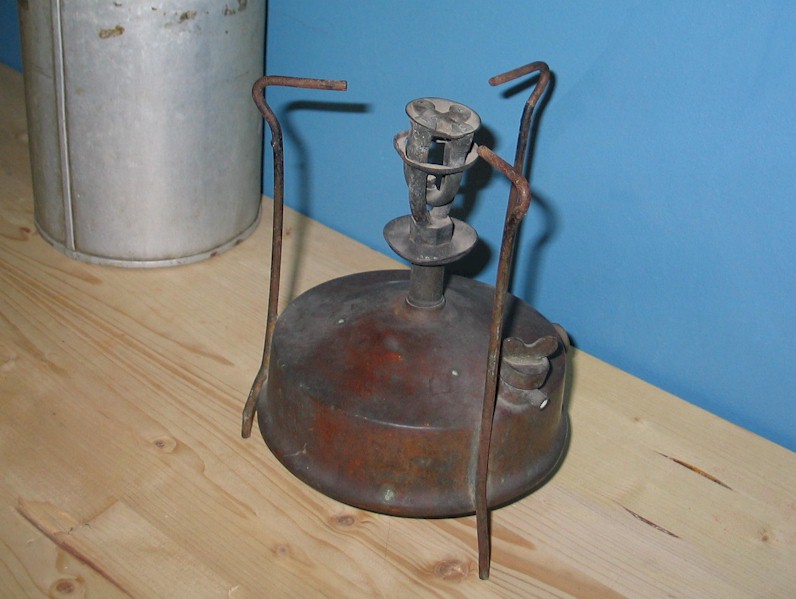
A primus stove in the Bulgakov house
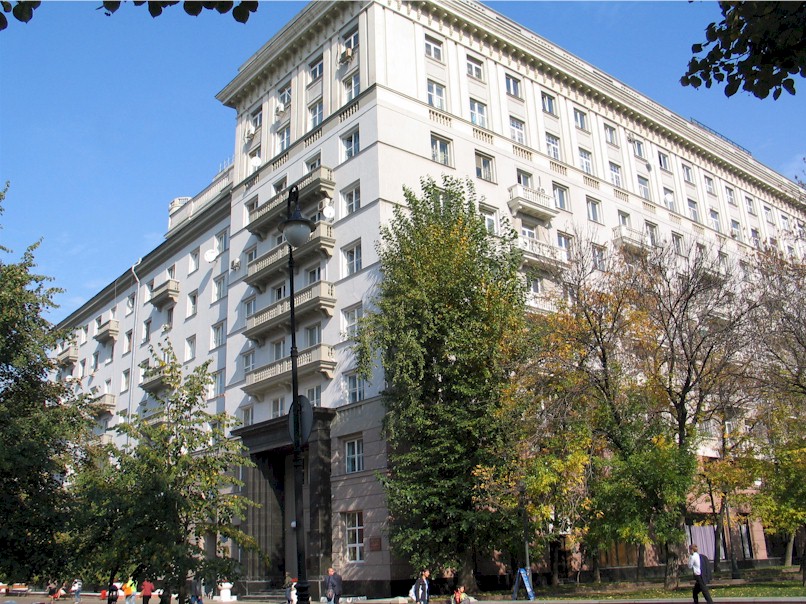
The Dramlit house
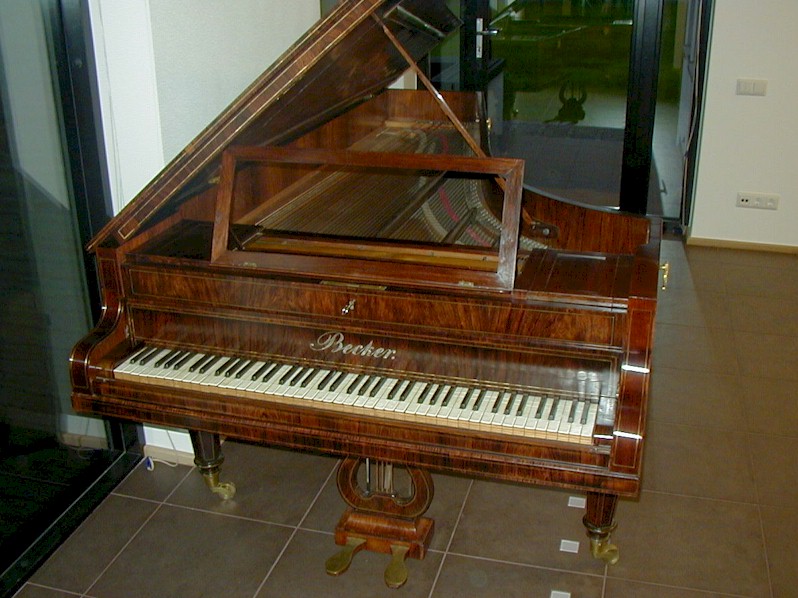
A Becker's drawing-room instrument
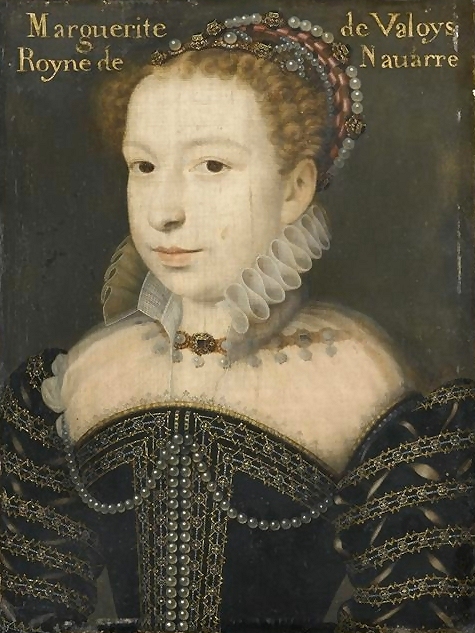
Marguerite de Valois
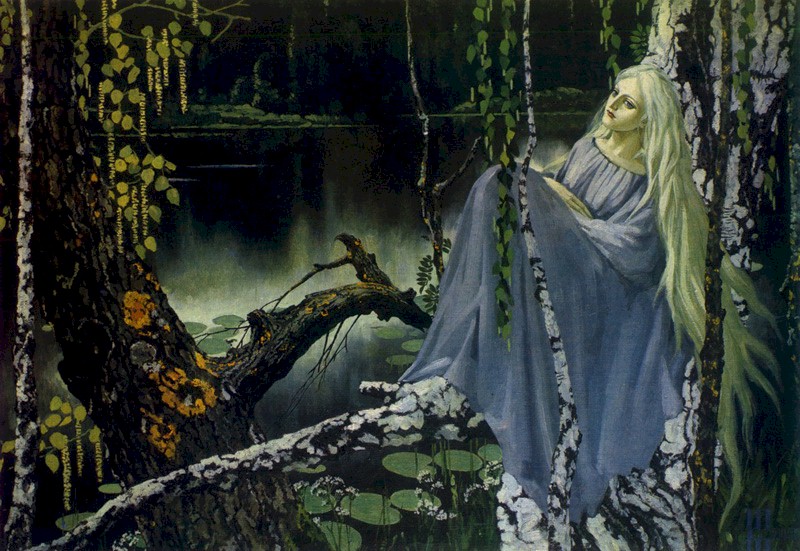
A rusalka according to
Konstantin Vasilyev
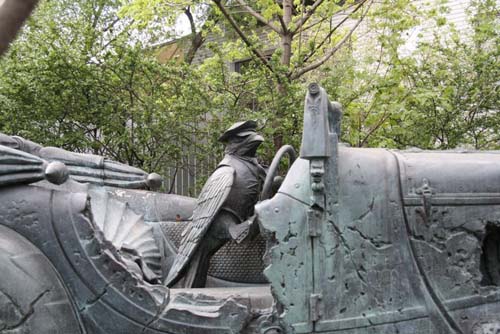
Margarita's driver
by Aleksandr Rukavishnikov