19. Margarita
English > The novel > Annotations per chapter > Chapter 19
Follow me, reader!
This is one of the few cases where the narrator addresses the reader directly. The narrator seems to prepare the reader for some great expose.
Margarita
The name which Bulgakov gives to his heroin recalls that of Gretchen (the German diminutive of Margarete), the young girl ruined by Faust in the drama written by Johann Wolfgang von Goethe (1794-1832). In the novel are also made references to Marguerite de Valois (1555-1615), spouse of the French king Henri IV (1553-1610), also known as la reine Margot.
The main prototype for Margarita was, without any doubt, Elena Sergeevna Shilovskaya (1893-1970), born Nyurenberg, Bulgakov's third wife. Like the master and Margarita, they were both married when they met each other, and they both fell in love immediately. Elena Sergeevna was married to Yevgeny Aleksandrovich Shilovsky (1889-1952), and she met Bulgakov on February 28, 1929 or March 17, 1929 - the sources are contradictory - in the home of the brothers and artists Moyseenko at Bolshoy Gnezdnikovsky pereulok no. 10, apartment 527. Bolshoy Gnezdnikovsky pereulok is a lane down Tverskay. In the novel, the master and Margarita met each other for the first time when «she turned down a lane from Tverskaya».
Click here to read more about Margarita
The house stands untouched to this day
This sentence was correct when Bulgakov wrote it, but it is no longer true. In order to identify the house of Margarita, I relied on on a clue presented by Bulgakov's himself in chapter 21 of the novel, in which he gives a detailed description of Margarita's flight from her house to the Dramlit House, the building where Latunsky lived. If you follow this description in the reverse direction, back to the starting place, you arrive at a house in Taneevukh ulitsa, now called Maly Vlasevsky pereulok, no. 10 in Moscow. It corresponds quite nicely with the description in the novel, at least it did until 1964, when it was demolished.
Bulgakov must have known that house very well. Because there, or in the house just next to it, in no. 9a - the sources are not unanimous - lived Olga Sergeevna Bokshanskaya (1891-1948), the sister of Bulgakov’s wife Elena Sergeevna Shilovskaya (1893-1970). Olga Sergeevna lived there with her husband, MKHAT actor Yevgeny Vasilevich Kalushki (1896-1966).
The house next door, Maly Vlasevsky pereulok, no. 12, which was built in the same style, has been completely restored. In January 2012, it has been put on the market. The advertisement called it, rather deceptively, Margarita's house, and the price asked was 42 million dollar.
You can read much more on Margarita's house in the Locations section of the Master & Margarita website.
Click here to read more about Margarita's house
The Antonia Tower was a fortress in ancient Jerusalem. It housed the Roman garrison in the city and was the place where the Roman procurator normally stayed on official visits. It was named by Herod the Great (?75 BC-04) in honour of the Roman general and triumvir Mark Antony (85 BC-50 BC), who ruled the eastern third of the empire.
The Has-monaean dynasty, under the lead of Simon Maccabaeus (?-135 BC), ruled over Judea from 140 to 34 BC. The Has-monaean palace was situated west in the Upper City. From the roof, the Xystus, one could address the people gathered on the huge square below.
The trolley-bus
The history of the trolleybus goes back to April 29, 1882, when Ernst Werner von Siemens (1816-1892) ran his Elektromote in Halensee, a suburb of Berlin, Germany. In my younger years, this public transportation vehicle was in use in Belgium too, but it has disappeared from our streets. In Moscow, however, these electric buses which are driven by overground electrical cables like trams, are still popular. Because they run on tires, rather than tracks, they are more manoeuvrable than trams.
The cremation is at two, you say?
Like many other Christian religions, the Orthodox Church in Russia was strongly opposed to cremation. Cremation was regarded as a «sacrilege», and a crematorium was called «a chair of wickedness». The Bolsheviks had introduced cremation in the Soviet Union as an alternative to the ecclesiastical burial. The first cremation took place on December 14, 1920, in Leningrad. However, there were many technical problems, and the first crematory in Moscow was only opened in 1927. In order to convince the population and to provide a good example, official representatives of the regime and party members, such as Mikhail Berlioz, were cremated.
The Manege
The Manege is a building next to the Kremlin and the Aleksandrovsky Garden. Originally it was a riding academy built after the war with Napoleon. Later it was used as a concert hall. In 1867, Hector Berlioz (1803-1869) and Nikolai Rubinstein (1835-1881) gave a concert there for a public of 12.000 people. Abandoned after the revolution, it served in Bulgakov's time as a garage and warehouse for the Kremlin. It was completely restored as a permanent art-exhibition space, but it got totally destroyed by a fire on March 14, 2004. It was completely repaired again and on February 18, 2005, it re-opened with the exhibition which was planned for the day it burned down.
Lovelace
In the Russian text the name Lovelace is written in a Cyrillic translitteration Ловеласе. Lovelace was the main character in the novel Clarissa, or the history of a young lady written by Samuel Richardson (1689-1761), which was very popular in Russia. Clarissa may well be the longest novel in the English language. The full volume of its third edition, the edition most extensively revised by Richardson, spans over one million words.
Lovelace is a womanizer who is more and more impressed by Clarissa Harlowe, a beautiful and virtuous young lady whose family has become very wealthy only in recent years. He finds it difficult to keep convincing himself that truly virtuous women do not exist. His growing passion for Clarissa forces him to extremes and eventually he rapes her. Today Lovelace is the equivalent of Don Juan or Cassanova in Russian.
Clarissa, or the history of a young lady can be downloaded in 9 volumes at the Project Gutenberg website.
Click here to download the novel
I'd pawn my soul to the devil
Again Woland's suite appears when invoked through the thoughts of a Muscovite. Margarita's appeal is more direct than Berlioz's in the first chapter.
You want to arrest me?
Margarita's reaction reflects the terror which existed in the Soviet Union: she is prepared to be arrested even though she has committed no crime.
A very distinguished foreigner... a street pander
It was very common for the secret police to use sex to entrap foreigners or extract secrets from them. Margarita naturally assumes that this is what she is meant to do.
Oh God!
This is a quite funny reaction, given the circumstances and the company. So note Azazello's reaction to Margarita's words: «Please, no excitements and exclamations».
I must give myself to him
These words contain a double pun: Margarita persists in thinking she is being drafted to work for the secret service. At the same time, in traditional witchlore, communion with the Devil always meant sexual intercourse as well.
The name «Niura»
According to Alyona Rudko, a fan of the Master & Margarita website from Rostov, Russia, the name Niura is, just like Annushka, an informal diminutive of the name Anna.
When Woland, in Chapter 2, said to Berlioz that «Annushka has already spilled the oil», he indicated that there was no way back. His death is planned, there is no escape possible. The name Annushka symbolized the irreversible destiny.
The variant of this name, Niura, «carved on the back of the bench in big letters» could mean that the decision of Margarita is also final and irreversible. Her death is now planned, there is no possible escape for her neither.
Share this page |
Chapters
- Introduction
- 1 Never Talk with Strangers
- 2 Pontius Pilate
- 3 The Seventh Proof
- 4 The Chase
- 5 There were Doings at Griboedov's
- 6 Schizophrenia, as was Said
- 7 A Naughty Apartment
- 8 The Combat between the Professor...
- 9 Koroviev's Stunts
- 10 News From Yalta
- 11 Ivan Splits in Two
- 12 Black Magic and Its Exposure
- 13 The Hero Enters
- 14 Glory to the Cock!
- 15 Nikanor Ivanovich's Dream
- 16 The Execution
- 17 An Unquiet Day
- 18 Hapless Visitors
- 19 Margarita
- 20 Azazello's Cream
- 21 Flight
- 22 By Candlelight
- 23 The Great Ball at Satan's
- 24 The Extraction of the Master
- 25 How the Procurator Tried...
- 26 The Burial
- 27 The End of Apartment No. 50
- 28 The Last Adventures of Koroviev...
- 29 The Fate of the Master and...
- 30 It's Time! It's Time!
- 31 On Sparrow Hills
- 32 Forgiveness and Eternal Refuge
- Epilogue
English subtitles

All films based on The Master and Margarita are subtitled in English, French, German, Dutch, Spanish and Italian.
Illustrations
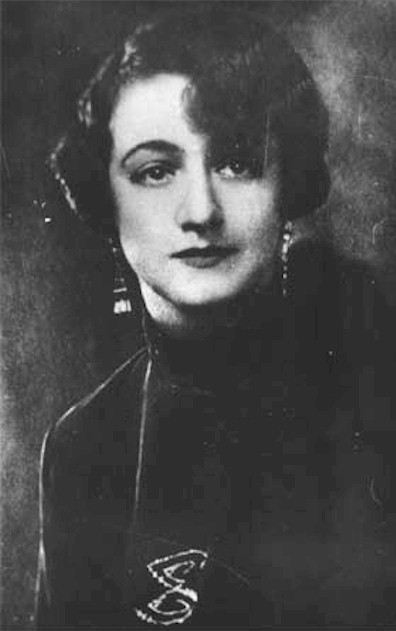
Elena Sergeevna Shilovskaya,
born Nyurenberg
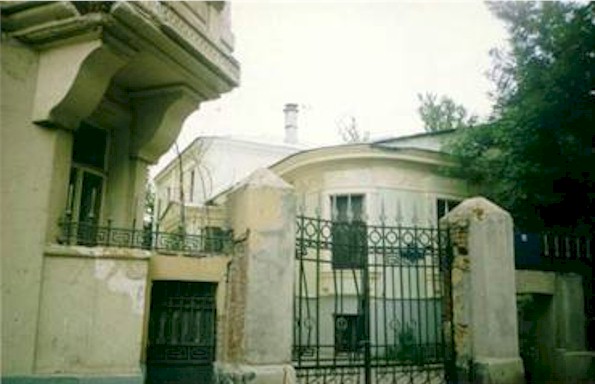
Maly Vlasevsky pereulok no. 10
before 1964
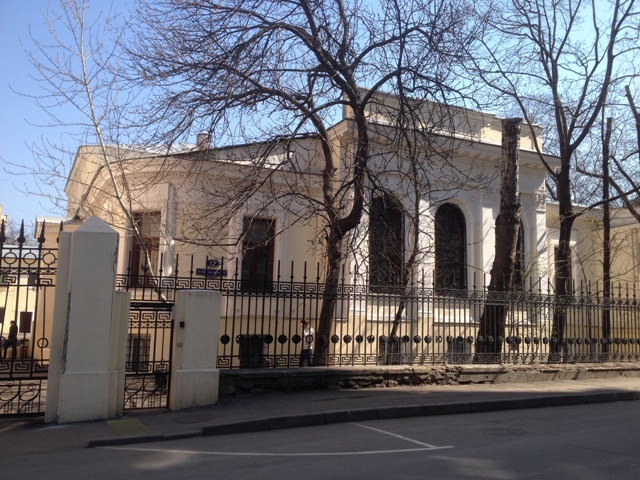
Maly Vlasevsky pereulok no. 12 today

The Antonia Tower
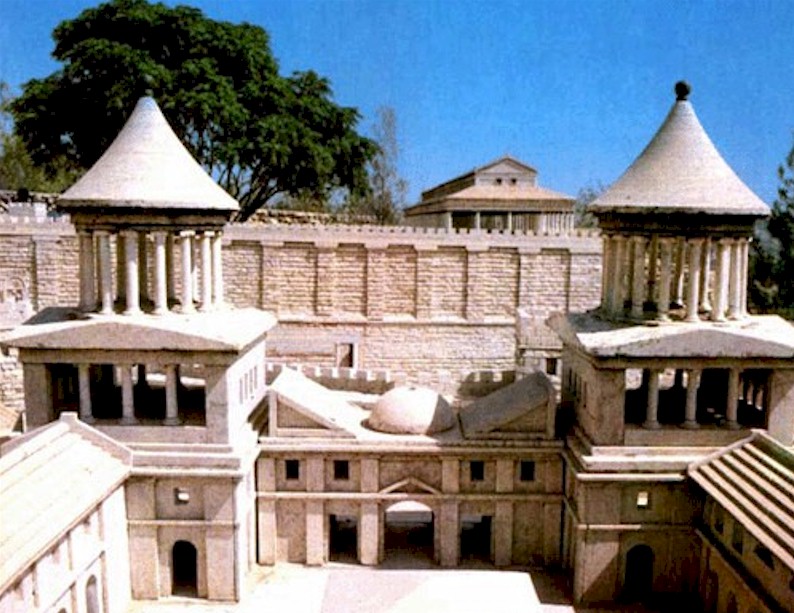
The Has-monaean palace

A trolley-bus at the Bulgakov house
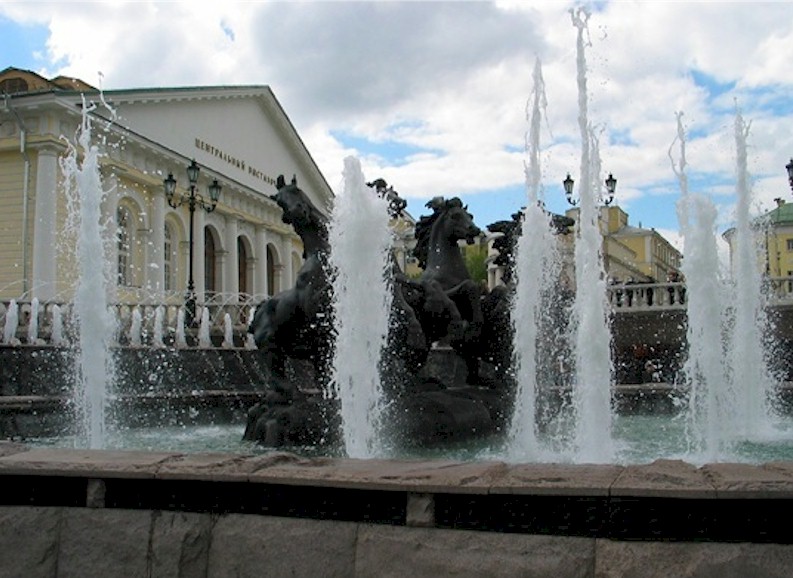
The Manege in Moscow, seen from
the Alexander Garden