13. The hero enters
English > The novel > Annotations per chapter > Chapter 13
The title
The Russian titleof this chapter is Явление героя [Yavleniye geroya] which could be translated as The apparition of the hero. The word Явление [Yavleniye] or Apparition is often used in the Bible when Christ shows himself to the people or his disciples.
Clean-shaven...
The master is introduced as «a clean-shaven, dark-haired man of approximately thirty-eight, with a sharp nose, anxious eyes, and a wisp of hair hanging down on his forehead». Bulgakov himself was 38 years old in 1929. Some readers recognize Nikolai Vasilyevich Gogol (1809-1852) in this description. Gogol burned the manuscript of the second part of Dead Souls.
Here we sit
The verb which is used by Bulgakov in the Russian text - Сидим [sidim] - means we sit, but is also used to say «we are in prison».
I cannot stand noise, turmoil, force, or other things like that
The master's aversion to noise and screaming almost literally repeats the words of Wagner in Faust.
Yesterday in a restaurant I socked one type in the mug
Such acts of vandalism were characteristic of workers and peasants in the 1920s in the Soviet Union. The authorities were very concerned about this kind of «social promiscuity», which was explained by a «lack of cultural needs» and by the low educational level of the population. Characteristic of this time was also a widespread anti-Semitism.
The incident in which Bezdomny was involved, was inspired by the behaviour of the poet Sergei Alexandrovich Yesenin (1895-1925), who has been married a short time with the 18 year older American dancer Isadora Duncan (1877-1927). Yesenin and Duncan had met each other at The Stables of Pegasus, a cafe which was located in the basement of the building at Bolshaya Sadovaya no. 10. Yesenin hit his wife repeatedly and in 1923 he was put into a psychiatric hospital. One year later he was, for reasons of drunkenness, assault and anti-Semitic incidents, banned from the restaurant of the Herzen House, the writers’ house which was the prototype of the Griboedov House from The Master and Margarita.
You dislike my poetry?
The master dislikes Ivan's poetry without ever having read it. Bulgakov is commenting on the low quality and the unoriginal nature of accepted and published Soviet poetry. If Ivan is published and famous, it means he can't be good!
In 1936, when the working title of The Master and Margarita was The Great Chancellor, the master replied:
«On the wide river, where the carp jumps,
over the fulness of the sun, the wind and the intensity of the fields strength,
and harmony...
did you write this?»
Is your poetry good? «Monstrous!»
Bulgakov writes indeed Чудовищны [Chudivishchny] or monstrous. Even Ivan is aware that his officially-approved poems are no good. The first English translator, Michael Glenny (1927-1990), got this a little wrong in 1967. He translated Ivan’s reaction as «stupendous».
Currency in the ventilation, Pushkin, Kurolesov
Bulgakov introduces the character Kurolesov without telling us who he is or where he comes from. The explanation will follow later in the novel, in chapter 15. The new arrival in room 119 is Nikanor Ivanovich, and we will see that he knows Kurolesov as the actor who recites excerpts of The Covetous Knight by the Russian poet Aleksandr Sergeevich Pushkin (1799-1837) in Nikanor Ivanovich’s dream.
Click here to read more in Kurolesov
The critic Latunsky
The critic Latunsky is probably a hint at one of Bulgakov's indefatigable enemies, Olaf Semenovich Litovsky (1892-1971), the chairman of the Главный репертуарный комитет (Главрепертком) [Glavny repertuarny komitet] (Glavrepertkom) or the Central Committee for Repertoires. In a debate at the Meyerhold Theatre, Litovsky had introduced the term Булгаковщина (Bulgakovshchina) or Bulgakovism after the first performances of Bulgakov's play Days of the Turbins.
Litovsky actually lived in the building at Lavrushinsky pereulok 17, which Bulgakov will use in Chapter 21 as a prototype for the Dramlit house. Moreover, he lived on the seventh floor, in apartment 84, exactly the apartment which Margarita will destroy in that chapter.
Click here to read a comprehensive description of Latunsky
Mstislav Lavrovich
The Lavrovich character is a parody of Vsevolod Vitalyevich Vishnevsky (1900-1951), a writer and playwright who also was an archrival of Bulgakov. He prevented the production of his plays Бег [The Flight] and Мольер [Molière].
Click here for a comprehensive description of Lavrovich
The opera «Faust»
Bulgakov mentions his favorite opera here, while elsewhere he merely uses the details, or only indirect references. But that’s not enough in this situation, because Ivan obviously did not understand the hints which could have make him understand that he met the devil at Patriarchs’ Ponds.
A black cap with the letter «M» embroidered on it in yellow silk
«I see, I see, Ai-yai-yai, what a thing!», Ivan rasped after the master’s hint to Faust. The master shows himself to Ivan both in profile and full face, to prove that he is a master. Besides, Bulgakov himself had such a cap with the letter «M» embroidered on it. Elena Sergeevna Shilovskaya (1893-1970) had made it for him.
In English, many people refer to the protagonist of Bulgakov's novel by writing «the Master», with a capital «M». However, throughout the novel, Bulgakov consistently writes мастер [master], with a small «м». Which is logic, since a capital letter would turn the common generic noun мастер [master] into a proper name, and the master «no longer has a name», as you will read in the next paragraph.
So, why do so many people, including scholars and translators, write «the Master»? The first reason for this misunderstanding may be the fact that the Russian title of the novel is written as Мастер и Маргарита [Master i Margarita], with a capital «М». But that is due solely to the fact that it is the first word of the title, since the Russian language has got no articles like «the» or «a». If Bulgakov had reversed the title, like in Маргарита и мастер [Margarita i master], the word мастер [master] would have been without a capital.
Confused? I haven't finished yet. In English, nouns, adjectives and verbs are generally capitalized in titles. Consequently, in the title of the novel and in its chapters titles, «The Master» should be capitalized, but not in the text. So, in the text of The Master and Margarita, the master should be written with a small «m», except in the titles of the chapters. Yet, some English translators like Richard Pevear and Larissa Volokhonsky, write «the Master» across the board, and the French translator Claude Ligny writes «le Maître». But other translators follow Bulgakov's logics, like the Dutch Marko Fondse with «de meester», the Spanish Amaya Lacasa Sancha with «el maestro» and the British Michael Glenny with «the master».
I no longer have a name
The master's name is never revealed in the novel. By saying «I no longer have a name», he actually means: «I lost my identity».
In the movie picture The Master and Margareth (1972), the Serbian film director Aleksandar Petrović (1929-1994) made, in my humble opinion, an unforgivable mistake by giving a name to the master. Personally I think you should not do it but, if you really want, you can watch it here.
The name which Petrović gave to the master, is the name of the protagonist of A Theatrical Novel, one of Bulgakov's last novels, also known as Black Snow.
In the television series Master i Margarita from 2005, director Vladimir Bortko (°1946) refers to this naming. In episode 8, when Behemoth returns the manuscript of the novel to the master, we see briefly, but clearly, the title page on which the same name is mentioned as author.
From what languages?
This dialogue is very similar to a scene from The Count of Monte Cristo, a novel written by the French author Alexandre Dumas (1802-1870), completed in 1844. Edmond Dantès, the main character, meets the «mad priest» Abbé Faria when they are both imprisoned at the Château d'If in the Mediterranean Sea. Faria had tried to tunnel his way to freedom but, due to wrong calculations, he ended up in Dantès' cell. The two became friends and one of the dialogues they had was the following:
(Dantès) «You are, doubtless, acquainted with a variety of languages?»
(Faria) «Yes, I speak five of the modern tongues - that is to say, German, French, Italian, English, and Spanish. And by the aid of ancient Greek, I learned modern Greek. I don't speak it so well as I could wish, but I am still trying to improve myself.»
By the way, in the Russian text, Bezdomny asks «С какого языка?» or «From what language?», in the singular form. So he supposed the master only spoke one foreign language - which was already a feat in the Soviet Union. No wonder that he enviously whispered «Oh, my!» when he heard that there were five.
One day he won a hundred thousand roubles with a state bond
Lotteries were arranged by the Soviet government to fund various activities. One way to do this was by the emission of state bonds. Citizens were «asked» to buy state bonds at work, like the master did it at the museum. Often there was a lottery connected to it by which some bonds could win an important amount of money. Because there were not many safe places, the master kept his bond in the basket of dirty laundry.
A room on Myasnitskaya
The Мясницкая улица [Myasnitskaya ulitsa] or Butchers’ street, connects Lubyanka square with Turgenevskaya square, close to Chistiye Prudy. Between 1935 and 1990 it was named Kirov street. Nowadays, you can find in this street one of Moscow's nicest book shops, the Biblio-Globus. It is situated next to the Mayakovsky Museum.
Two rooms in the basement of a little house in the garden
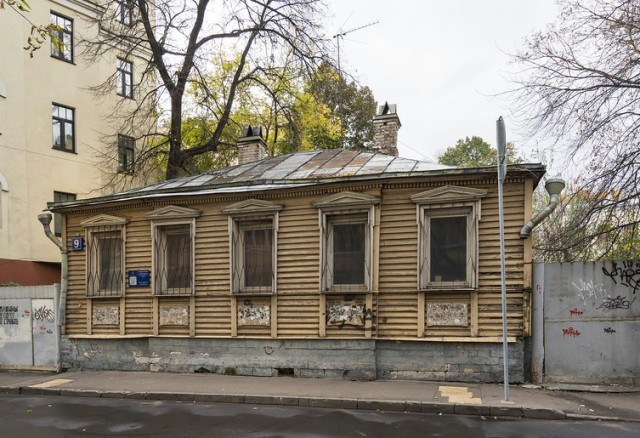
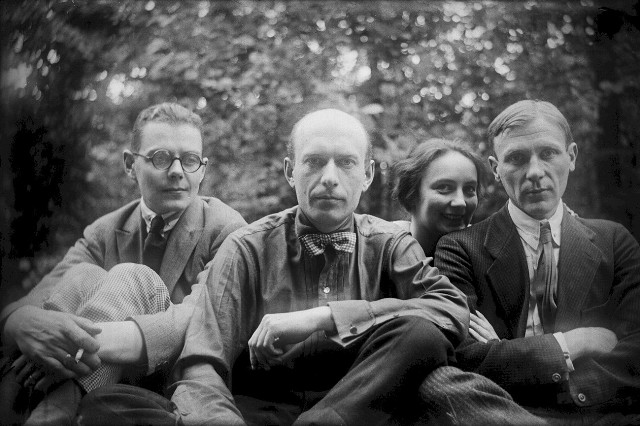
During the period of the New Economic Policy (NEP) from 1921 to 1928, private persons were allowed to build and possess small houses in the Soviet Union. The prototype of the basement of the master is situated in Mansurovsky pereulok no. 9 in Moscow and belonged to the brothers Sergey Sergeevich Topleninov and Vladimir Sergeevich Topleninov. Sergey, the younger brother, was stage designer and make-up artist at the Moscow Art Theatre MKhAT. Vladimir was an actor at various theatre companies. When Sergey got married he moved out and a part of the house was rented to the playwright and scriptwriter Sergey Alexandrovich Yermolinsky (1900-1984) and his wife Maria Artemievna Chimishkian (1904-?).
From 1916, Bulgakov was there often. He worked there on The Master and Margarita and he read parts of it to his friends. Bulgakov’s second wife Lyubov Yevgenyeva Belozerskaya (1894-1987) didn’t trust Yermolinsky, though. She called him «a man with two faces», and said that Bulgakov used him as the prototype for the Aloisy Mogarych character in The Master and Margarita.
Click here for more information on the basement of the master
A front hall with a sink in it
Some older buildings in Moscow did not have running water yet. The master is very pleased with his sink, he mentions it «with special pride». The reason for this pride is in the fact that in the communal apartments in that time there were only sinks in the shared rooms of kitchen and bathroom. So, other than most people, the master could wash himself privately.
Actually, there was a porcelain sink in the front hall of the Topleninov house, and there really was, «only four steps away, near the fence, lilacs, a linden and a maple». The house was built in 1834 and it is a miracle that it still exists. Today, it is completely ruined and doesn't look as a house where you want to live.
In the movie picture [Est] Ouest from 1999, the French director Régis Warnier (°1948) shows some aspects of the allotment of rooms in a communal apartment in the Soviet Union.
Click here to watch a fragment of the film [Est] Ouest
The last words of the novel
The master already knew that the last words of his novel would be «…the fifth procurator of Judea, the equestrian Pontius Pilate». There is some disagreement about the question whether Pilate was the fifth or the sixth procurator of Judea. Bulgakov chose for the fifth, according to some because it offered him a nicer alliteration in Russian: пятый прокуратор Иудеи, Понтий Пилат [pyatny prokurator Yudey, Ponty Pilat]. He used more or less the same words to finish The Master and Margarita.
Yet we fear that this description is one of the few mistakes of Bulgakov about the Palestine of that time, for the title «procurator» was not yet used in the reign of Emperor Tiberius (42 BC-37) to designate the governor of a Roman province. Pilatus was a «prefect». It was only under Claudius I (10BC-54), who was emperor from 41 to 54, that the title «procurator» was introduced. Despite the fact that there was no noteworthy difference in functions, Pontius Pilate was not «the fifth procurator», but «the fifth prefect of Judea».
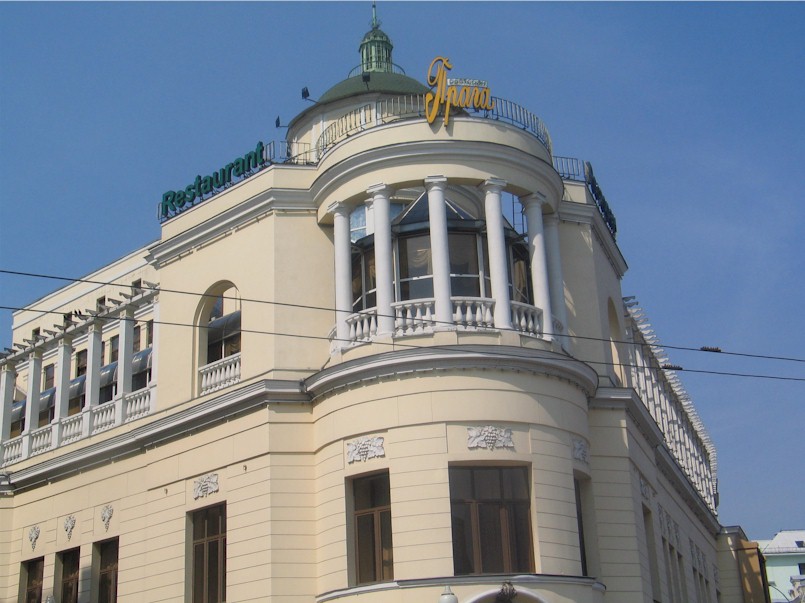
There was a wonderful restaurant on the Arbat
The wonderful restaurant is the Praga, situated at Arbat no. 2. It's the first building you see when you walk to the Arbat from the Arbatskaya metro station. Originally on this site was a restaurant frequented by cabbies and known as Braga home brew. In 1896 the entire building was won by the merchant Pyotr Semenovich Tararykin on a bet at playing billiards with his left hand. He spared no expense in renovating the restaurant, employing the architect Lev Nikolayevich Kekushev (1862-1916/1919). Moscow's best chefs, like the Belgian-Russian Lucien Olivier (1838-1883), the creator of the well-known Salade Olivier, and Ivan Yakovlevich Testov (1890-?) worked here. After the revolution it became a cheap cafeteria, then in the 30's a special canteen for Stalin's bodyguards. Today it is again an expensive and elegant restaurant with nine palatial dining rooms and separate smaller private rooms.
Repulsive, alarming yellow flowers
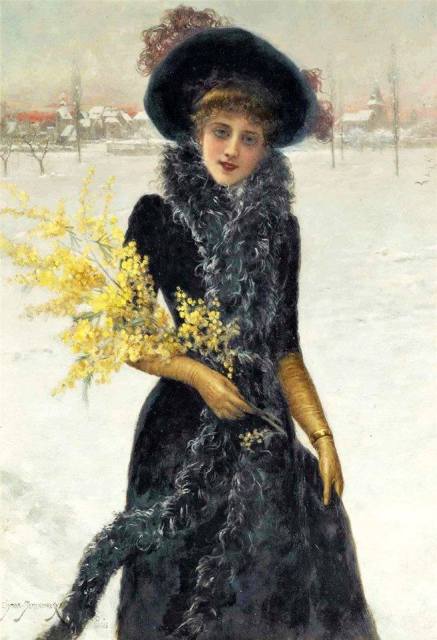
While the yellow flowers which Margarita is carrying are not identified in Book One of the novel, they would be instantly recognizable to Muscovites of the Soviet period as mimosas. Mimosas are the first flowers to appear in the spring and were imported to Moscow from the South.
It is probably not insignificant that both the mimosas and Margarita are only named in Book Two - «What did she need, this witch [...] who had adorned herself with mimosa that time in the spring?». Margarita's flowers are a symbol of misery; yellow is the colour of the madhouse - state buildings were painted dark yellow - and «yellow house» meant «madhouse». But yellow is also the colour of betrayal - one should never give yellow flowers to a lover in Russia.
The way in which Bulgakov describes the appearance of Margarita with her yellow flowers, reminds of the painting Первый признак весны [Pervy priznak vesny] or The first sign of spring by the Polish-French painter Emile Eisman-Semenowsky (1857-1911), an assistant of the Belgian painter Jan van Beers (1852-1927), who understood the lucrative aspect of commercial reproductions of his work by publishing prints of it. It is therefore possible that Bulgakov has seen a reproduction of this painting. Anyway, for some Polish people the link is obvious, since they call this painting simply Margarita.
In his TV-series Mistrz i Malgorzata from 1990, the Polish director Maciej Wojtyszko (°1946) clearly shows how the master dislikes yellow flowers.
Click here to see the meeting of the Master and Margarita
She turned down a lane from Tverskaya
When Bulgakov and Elena Sergeevna Shilovskaya (1893-1970) met each other for the first time on February 28, 1929, they left a party on Bolshoi Gnezdnikovsky pereulok no. 10, just off Tverskaya, to stroll around Moscow.
Click here to read more about this place
Tverskaya
Tverskaya ulitsa still is Moscow’s main street. It was later renamed Gorki ulitsa, and then Tverskaya again. It is the road to Tver, later renamed Kalinin, now again Tver.
 Next page of Annotations chapter 13
Share this page |
Chapters
- Introduction
- 1 Never Talk with Strangers
- 2 Pontius Pilate
- 3 The Seventh Proof
- 4 The Chase
- 5 There were Doings at Griboedov's
- 6 Schizophrenia, as was Said
- 7 A Naughty Apartment
- 8 The Combat between the Professor...
- 9 Koroviev's Stunts
- 10 News From Yalta
- 11 Ivan Splits in Two
- 12 Black Magic and Its Exposure
- 13 The Hero Enters
- 14 Glory to the Cock!
- 15 Nikanor Ivanovich's Dream
- 16 The Execution
- 17 An Unquiet Day
- 18 Hapless Visitors
- 19 Margarita
- 20 Azazello's Cream
- 21 Flight
- 22 By Candlelight
- 23 The Great Ball at Satan's
- 24 The Extraction of the Master
- 25 How the Procurator Tried...
- 26 The Burial
- 27 The End of Apartment No. 50
- 28 The Last Adventures of Koroviev...
- 29 The Fate of the Master and...
- 30 It's Time! It's Time!
- 31 On Sparrow Hills
- 32 Forgiveness and Eternal Refuge
- Epilogue
English subtitles

All films based on The Master and Margarita are subtitled in English, French, German, Dutch, Spanish and Italian.
Illustrations
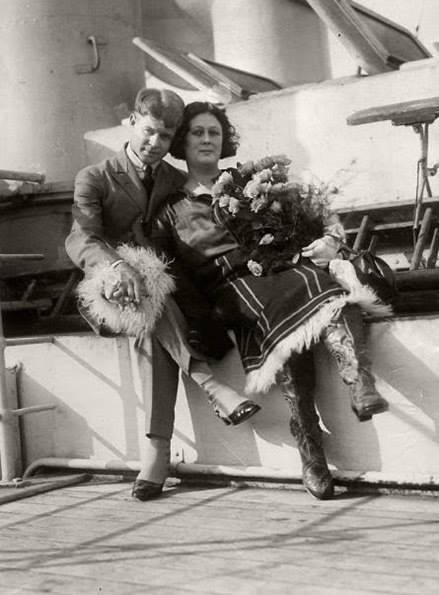
Sergei Yesenin and Isadora Duncan
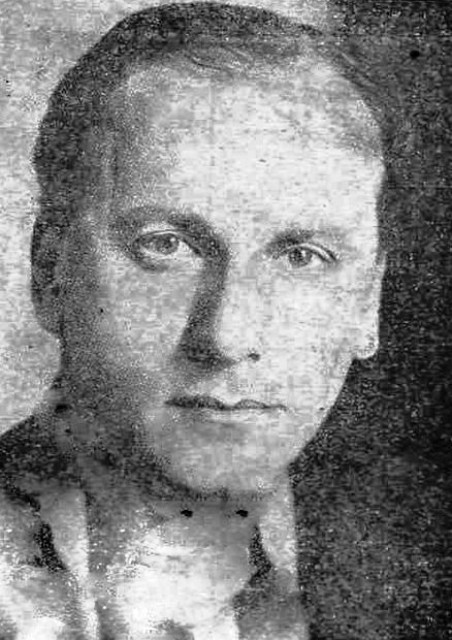
Osaf Semenovich Litovsky
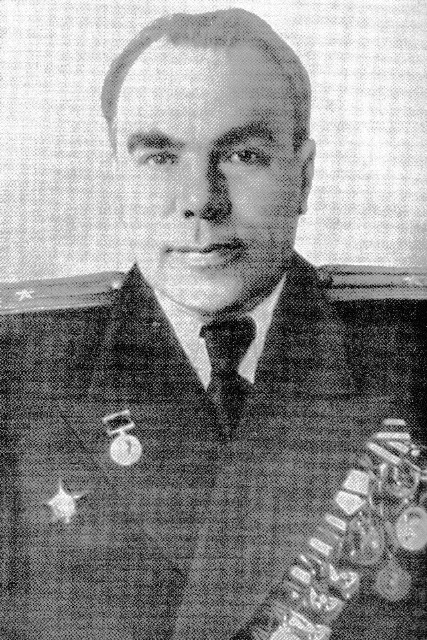
Vsevolod Vitalievich Vishnevsky
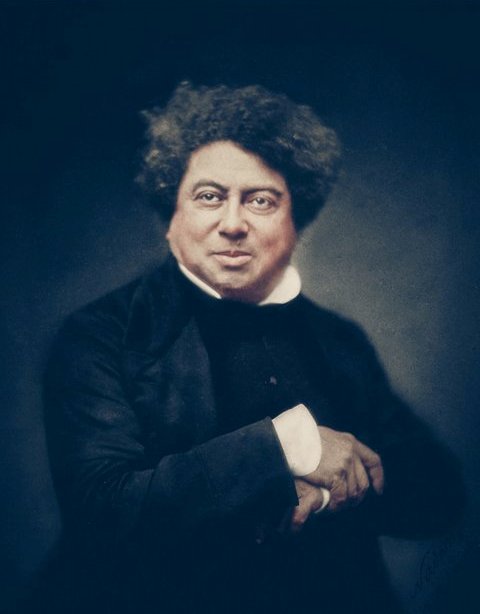
Alexandre Dumas
The basement of the master
Sergey Topleninov, Nikolay Lyamin,
Lyubov Blozerskaya and Mikhail Bulgakov

An obligation from 1929
The restaurant Praga
The first sign of Spring
Emile Eisman-Semenowsky
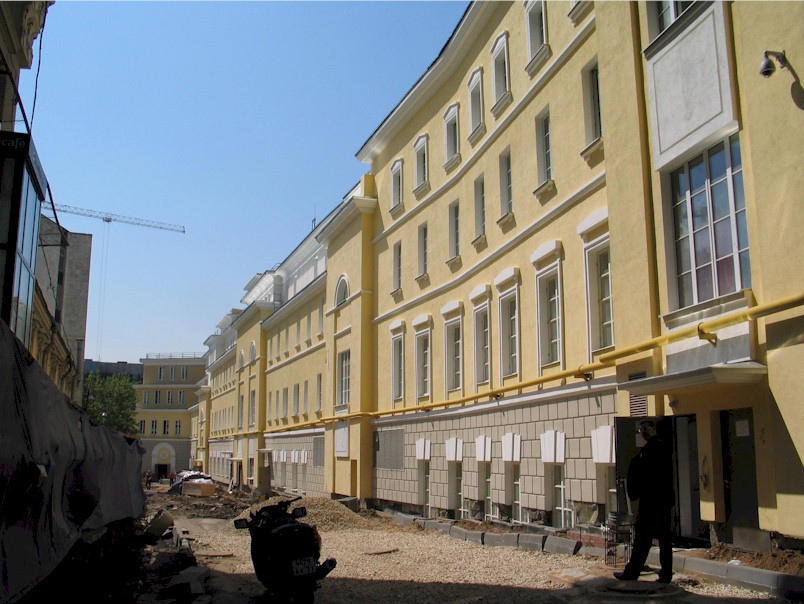
Bolshoy Gnezdnikovski pereulok
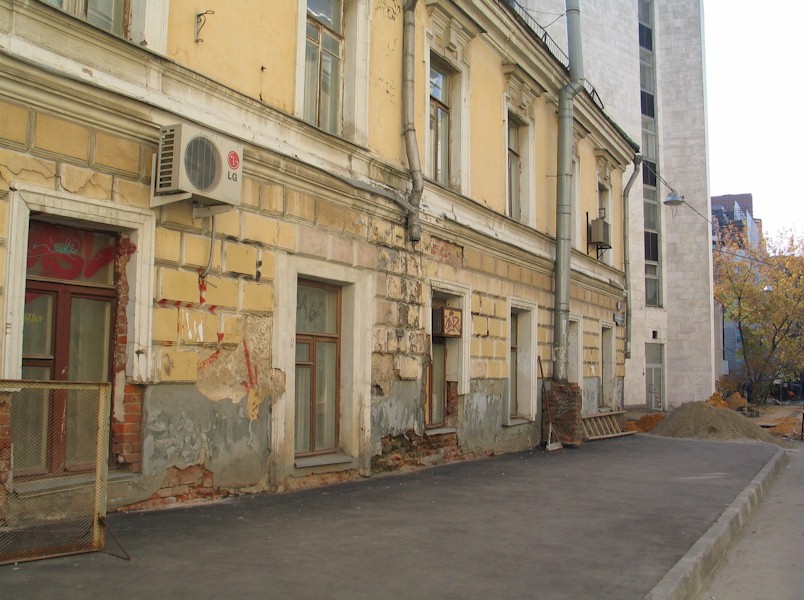
Bolshoy Gnezdnikovski pereulok 10,
where Bulgakov met Elena Sergeevna