28. The Last Adventures of Koroviev and Behemoth
English > The novel > Annotations per chapter > Chapter 28
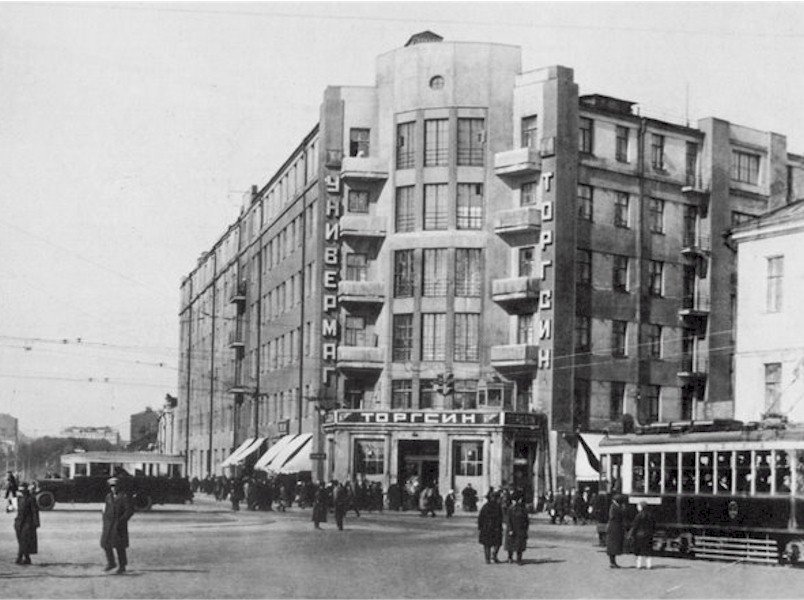
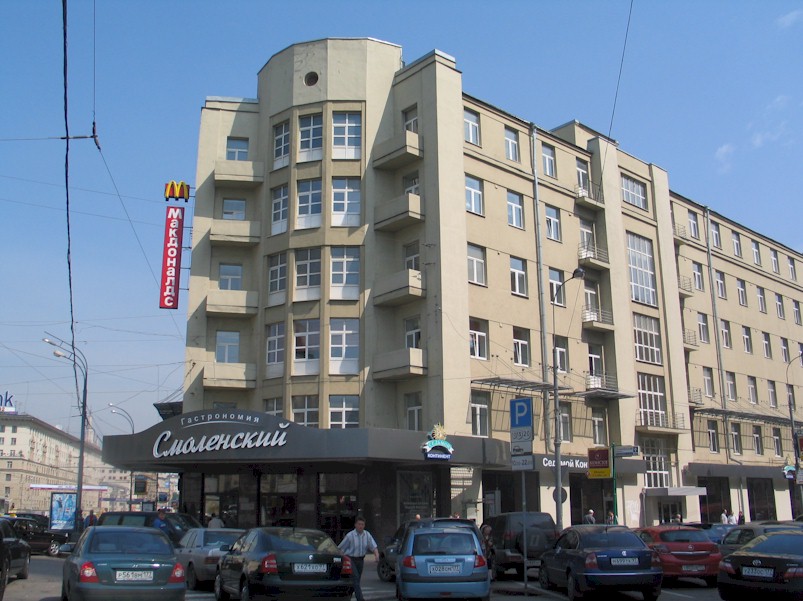
A currency store
In the Russian text the name of the currency store is mentioned: it’s the Торгсин [Torgsin] warehouse. Torgsin is a typical Soviet contraction for Торговля с иностранцами [Torgovlia s inostrantsami] or Trade with foreigners. This was the name for these stores in the 20’s and 30’s. In theory, anyone with hard currency and valuables could enter this store and purchase unobtainable goods such as food and clothing. There were, of course, security guards at the door who would not let people in if they looked as if they did not possess any valuables.
Click here to read more about the foreign currency stores in the Soviet Union
Click here to read more about the Torgsin store
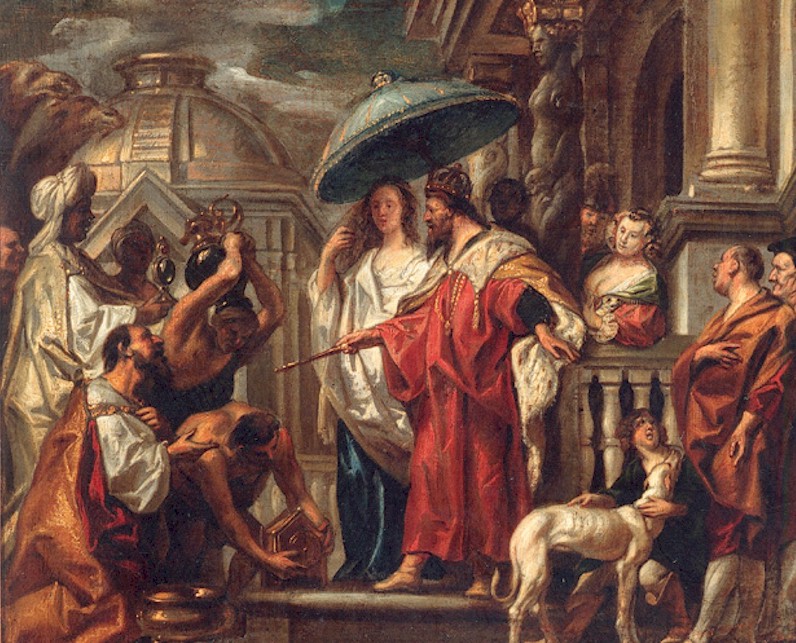
Harun al-Rashid
The Abbasid was a dynasty of the Arab Empire which ruled from 750 to 1258 from the capital Bagdad. The dynasty was headed by a caliph. One of the caliphs was Harun al-Rashid (?766-809). He was known in legend for walking about the city at night disguised as a beggar, familiarizing himself with the life of his subjects. He became a hero of songs and figures in some tales from The 1001 Nights.
Palosich
Palosich is the contraction of the first name and the patronymicum of Pavel Iosifovich. In rapid speech, first names and patronymics are often run together in Russian.
Choice Kerch Herring
Kerch Herring is a much-prized kind of herring from the city of Kerch, which is situated in the south-western corner of the Crimea, on the Sea of Azov.
Whistle!
Just like Archibald Archibaldovich rounds off his vigorous way of acting with the exclamation «Whistle!» in Griboedov (see chapter 5), the impressive Pavel Iosifovich in Torgsin gives exactly the same command to call the police.
Bitter, bitter!
There’s an old Russian custom of shouting Горько! [Gorko] or Bitter! every now and then during the banquet of a wedding. The newly-weds are then expected to kiss so as to make it sweet.
In the much praised movie picture Москва слезам не верит [Moskva slezam ne verit] or Moscow doesn’t believe in tears by Vladimir Valentinovich Menshov (°1937) from 1979 we can see a wedding party at which the guests chant «Bitter! Bitter!» to see the bride and groom kissing. The movie was awarded with the Oscar for the Best Foreign Language Film in 1979. The scene with «Bitter!» is at the end of the fragment. At the beginning, you can see people dancing the kamarinskaya (see chapter 23).
Click here to watch an excerpt of Menshov's movie
Don Quichote
Don Quixote is the world-famous novel written between 1605 and 1615 by the Spanish author Miguel de Cervantes (1547-1616). Bulgakov knew this novel very well, since he had made a stage adaptation of it in 1937-1939.
Dead Souls
Dead Souls is the world-famous novel written between 1842 and 1852 by the Russian author Nikolai Vasilevich Gogol (1809-1852). Bulgakov knew this novel very well too, since he had made a stage adaptation of it in 1930-1932. Like Bulgakov himself, and like the master, Gogol burned a part of his manuscript.
Melpomene, Polyhymnia and Thalia
Melpomene, Polyhymnia and Thalia are three of a total of nine Greek muses: Melpomene is the muse of tragedy, Polyhymnia is the muse of dance, later also of pantomime, and Thalia is the muse of comedy.
The Inspector General
The Inspector General is, in English translations, sometimes used to refer to Ревизор [Revizor], a comedy written by Nikolai Vasilevich Gogol (1809-1852), and one of the masterpieces of Russian theatre. It was written in 1836 and Bulgakov made a film script of it, but the movie was never made.
Evgeny Onegin
Koroviev does not refer to the opera by Pyotr Ilyich Tchaikovsky (1840-1893), but to the long verse poem by Alexander Sergeevich Pushkin (1799-1837) on which the opera was based.
Your identification cards?
Griboedov is a writer's house. You can't just enter and enjoy the delights which Archibald Archibaldovich conjures up on the table. This scene is reminiscent of the philosophical novel Sur la pierre blanche, a work by the French writer Jacques Anatole-François Thibault (1844-1924), better known as Anatole France. The text was first published from April 18 to May 13, 1904, as a serial in the then newly established socialist newspaper l'Humanité.
The character Jacques Hippolyte Dufresne reads to some friends a story in which he finds himself in the year 2270. A large part of the world is united in one big Federation in which the socialist ideal has been realised and inequalities have (almost) completely disappeared.
During a walk he sees a nice big house where there are many people who seem to dine in a very pleasant environment. When he wants to enter, however, he is stopped, because he has no voucher. The doorman does not understand «how can you travel without vouchers», and does not let him enter.
Dostoevsky
«Dostoevsky's dead,» said the citizeness, but somehow not very confidently. «I protest!», Behemoth exclaimed hotly. «Dostoevsky is immortal!» This is another quote of The Master and Margarita which became very popular when the novel was first published.
In fact, Bulgakov used this idea already earlier, in The Life of Monsieur de Molière, his novel from 1933, describing the life of Jean-Baptiste Poquelin (1622–1673), known by his stage name Molière. In that novel, Bulgakov described how King Louis XIV (1638-1715) wanted to see Molière. But prince Armand de Bourbon-Condé (1629-1666) came to meet him, and said: «Molière is dead».Louis XIV took off his hat and replied: «Molière is immortal!»
And in the short story The Egyptian Mummy (The Story of a Union Member) from 1924, the chairman of a local labour union asks: «And where lives Karl Marx?» A young man screams about Marx: «He died!» But the chairman barked; «No! He lives in the hearts of the proletariat».
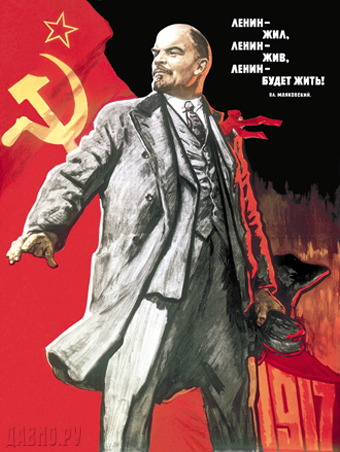
Both scenes are satirical considerations of Bulgakov on the Soviet propaganda, which often suggested the immortality of the theoreticians and leaders of the revolution - or at least their ideas. A well-known example is the poem Komsomolskaya from 1924 by Vladimir Vladimirovich Mayakovsky (1893-1930), in which, like a mantra, the following words are constantly repeated: «Ленин жил, Ленин жив, Ленин будет жить» or «Lenin lived, Lenin lives, Lenin will live!»
Sofya Pavlovna
The citizeness happens to have the same name as the heroine of Woe From Wit by Alexander Sergeevich Griboedov (1795-1829). It may have been this connection that landed her such a desirable job at the Griboedov house. She had one problem though: she didn't know that Dostoevsky was immortal.
Panaev and Skabichevsky
Koroviev and Behemoth register using the names of the writer Ivan Ivanovich Panaev (1812-1862) and the critic and journalist Alexander Mikhailovich Skabichevsky (1858-1912). None of both lived in the Soviet era, but Bulgakov considered them as second rate. According to him they could not see deep meaning, but they could judge only by superficial categories like membership in the writers' union. So they are exchangeable, which Bulgakov illustrates when they register. Next to the name Panaev, Koroviev signs with Skabichevsky and Behemoth acts exactly the other way around.
A special little balyk
The балык [balyk] or балычок [balychok] is a long fillet of fish cut in one piece, and then smoked or salted, and it is very expensive.
The fiction writer Petrakov-Sukhovey
I don’t know (yet) if there exist real prototypes for the fiction writer Petrakov-Sukhovey or his wife Antonida Porfirievna. The word суховей [sukhovey] refers to a hot dry wind, and порфир [porfir] is a hard kind of stone, like granite.
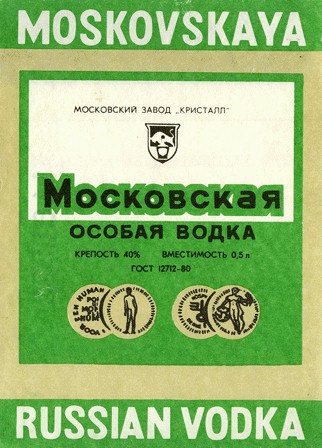
Moskovskaya vodka
Московская водка [Moskovskaya vodka] is, literally Vodka from Moscow. It’s the brand name of a 100 % grain vodka of 40 %.
The chronicler Boba Kandalupsky
I don’t know (yet) if there exists a real prototype for this character. Боба [Boba] is a diminutive for Борис [Boris], кандалы [kandaly] are chains or shackles, and a кандальник [kandalynik] is a chained prisoner. Since Bulgakov says that Boba Kandalupsky is famous in Moscow for his «astounding omniscience», лупский [lupsky] might come from лупа [lupa] or magnifying glass, which allows him to see everything.
Share this page |
Chapters
- Introduction
- 1 Never Talk with Strangers
- 2 Pontius Pilate
- 3 The Seventh Proof
- 4 The Chase
- 5 There were Doings at Griboedov's
- 6 Schizophrenia, as was Said
- 7 A Naughty Apartment
- 8 The Combat between the Professor...
- 9 Koroviev's Stunts
- 10 News From Yalta
- 11 Ivan Splits in Two
- 12 Black Magic and Its Exposure
- 13 The Hero Enters
- 14 Glory to the Cock!
- 15 Nikanor Ivanovich's Dream
- 16 The Execution
- 17 An Unquiet Day
- 18 Hapless Visitors
- 19 Margarita
- 20 Azazello's Cream
- 21 Flight
- 22 By Candlelight
- 23 The Great Ball at Satan's
- 24 The Extraction of the Master
- 25 How the Procurator Tried...
- 26 The Burial
- 27 The End of Apartment No. 50
- 28 The Last Adventures of Koroviev...
- 29 The Fate of the Master and...
- 30 It's Time! It's Time!
- 31 On Sparrow Hills
- 32 Forgiveness and Eternal Refuge
- Epilogue
English subtitles

All films based on The Master and Margarita are subtitled in English, French, German, Dutch, Spanish and Italian.