23. The Great Ball at Satan's
English > The novel > Annotations per chapter > Chapter 23
An oval-framed picture of a black poodle
The poodle appears often in this chapter, and the attentive reader knows why: in Faust by Johann Wolfgang von Goethe (1749-1832) the devil Mephistopheles appears to Faust as a poodle.
Margarita saw herself in a tropical forest
On April 23, 1935, Elena Sergeevna Shilovskaya (1893-1970), Bulgakov's spouse, described in her diary a reception, which she calls a ball. The reception was held at the Spaso House, the residence of the American ambassador in Moscow.
«I have never seen such ball in my life. They were all carrying tail coats, there were only a few jackets and smokings.
They danced in a room with columns lit by streams of light coming from a gallery; behind a gate which separated them from the orchestra, there were living pheasants and other birds. We had dinner at small tables in a huge dining room with, in a corner, living baby bears, goats and roosters in cages. During dinner, musicians played the accordeon.
In the room where we had dinner, the table where we were sitting was covered with a green transparant cloth lit from inside. There were armfuls of tulips and roses. I do not mention the abundance of food and champagne. On the upper floor (it is a big and luxurious mansion) they had arranged a room with a grillroom for shashlik and people were doing Caucasian dances.
We wanted to leave the place at half past three but they did not allow us to leave. We left at half past five in one of the cars of the embassy. A certain Steiger, I believe, a man whom we do not know but whom all Moscow knows and who can always be found when there are foreigners, joined us in the car. He was sitting next to the driver and we were in the rear. It was already daylight when we arrived home».
The tulips are also mentioned in this chapter, like many other eccentric details characterizing the parties of the American ambassador William Bullitt (1891-1967). Those parties were described in a colourful way by Charles Thayer (1910-1969), one of the embassy’s officials, in his book Bears in the Caviar (1951). The man Steiger, mentioned by Elena Sergeyevna, was Boris Sergeevich Steiger (1892-1937), the «stool pigeon» who was the prototype for Baron Meigel in the novel.
Click here for a more detailed description of the Spaso house
Click here to read Charles Thayer's report on this reception
Hallelujah
Again - for the third time in the novel - Hallelujah by Vincent Youmans (1898-1946) is played. We saw it before in Griboedov (chapter 5) and at doctor Kuzmin’s house (chapter 18).
Click here to read more about Hallelujah
An absolutely enormous fireplace
In my country we put our shoe next to the chimney on the eve of December 6 for the arrival of Santa Claus. It's not the US-import Father Christmas, but the catholic Saint Nicolas (280-342), the former bishop of Myra, Turkey, and still the Catholic patron saint of the children.
In Russia, the chimney was an important ritual place as the path to another world. It was both the entrance and the exit for supernatural beings including devils and witches like in Christmas Eve written by Nicolas Vassilyevich Gogol (1809-1852). The soul disappeared through the chimney-pot after death. In the novel’s 1936 version, Margarita enters Berlioz’ appartment through the chimney too.
Tailcoaters... and naked women with them
«The men in tailcoat and the women naked» - this was apparently the dresscode at Satan's ball. The invitation which the Bulgakov’s got for the reception at the American embassy in 1935 had a handwritten note joined to it with the text «Tailcoat or black suit». It is quite unlikely that any of the women were naked at that reception.
A tailcoat or black suit are also part of the dress code in the Freemasonry. The interest of Bulgakov for Freemasonry can be explained by the fact that, in 1903, Afanasy Ivanovich Bulgakov (1859-1907), theologian and church historian, and the father of Mikhail Afanasievich, had written an article about Modern Freemasonry in its Relationship with the Church and the State, which was published in the Acts of the Theological Academy of Kyiv. Bulgakov refers more than once to Freemasonry in the novel.
Click here to read more on Freemasonry in The Master and Margarita
The guests at the ball
All guests at Satan's ball have some common characteristics. They're all dead, of course, and with the exception of the musicians, they all did something which made them go to hell - or which could have made them go to hell. The advantage of them being dead was that Bulgakov did not have to disguise their names.
Click here for a description of the guests at the ball
Kissing her knee
The incoming guests are greeting Margarita by kissing her knee. Some see this as a reference to Freemasonry, since the candidates should bare their right knees when being initiated as apprentices. And indeed, the guests at the ball are kissing Margarita's right knee.
A Spanish boot
A Spanish boot is a wooden instrument of torture. It was some kind of mould which was put around the leg and constantly tightened. When a witch refused to confess, her legs were broken with this horrible tool.
Doctor James Fian, a schoolmaster in Saltpans (Scotland) was a male witch who was under the suspicion of high treason against the king. He would eventually be burned 1591 in Edinburgh. He described how he was «put through the most violent and the most cruel pain in the world, namely the Spanish boot», which made that «his legs were crushed and flattened, and the bones and the flesh were so bruised that the blood and the bone marrow splashed out of it in huge quantities».
Spray the walls of the office with poison
The episode in which characters spray the walls of an office with poison is based on actual accusations that came to light in March 1938 in the trial of the so-called Anti-Soviet Block of Rights and Trotskyites, also called the Trial of the 21 including, among others, Nikolai Ivanovich Bukharin (1888-1938), Aleksei Ivanovch Rykov (1881-1938) and Henrich Grigoryevich Yagoda (1891-1938).
Yagoda had been removed as head of the secret service NKVD in 1936 and, supposedly fearing implication in the murders of Sergey Kirov (1886-1934) and writer Maksim Gorky (1868-1936), he had ordered his secretary Pavel Petrovich Bulanov (1865-1938) to spray the walls of the office of his successor Nikolai Ivanovich Yezhov (1895-1940) with poison. Yagoda and Bulanov were sentenced to be shot. Bulgakov understood all the farce of the fabricated charges, and Yagoda and Bulanov join the ranks of the imaginary poisoners at the ball.
Two hamadryads with manes like lions played grand pianos
Hamadryads are Greek mythological beings that live in trees. They are a specific species of dryads, which are a particular type of nymphs. Hamadryads are born bonded to a specific tree. If their tree died, the hamadryad associated with it died as well. For that reason, dryads and the gods punished any mortals who harmed trees.
The Kamarinsky
The word kamarinskaya is derived from the name of the city of Kamarino. The камаринская (kamarinskaya) is a Russian dance song with a short, always repeated tune and quite coarse words. One version sounds as follows: “What an odd guy are you, peasant of Kamarino, how you stumble down the street. I run to the booze shop with a headache, because a peasant can’t live without booze.” or else: “Oh you son of a bitch, muzhik (peasant) from Kamarino…”
When on weddings the kamarinskaya is sung or danced, people don’t care much of the right steps. The grotesque steps, the twitching of the shoulders, the ugly and sometime disgusting movements - it’s all part of the game.
In 1848, the Russian composer Mikhail Ivanovich Glinka (1804-1857) wrote the symphonic poem Kamarinskaya in which he introduced this popular Russian tune.
You can listen to an instrumental version of a kamarinskaya here:
A salamander-conjurer who did not burn in the fireplace
At the ball Margarita sees a salamander-conjurer who did not burn in the fireplace. In medieval lore salamanders were thought to survive fires.
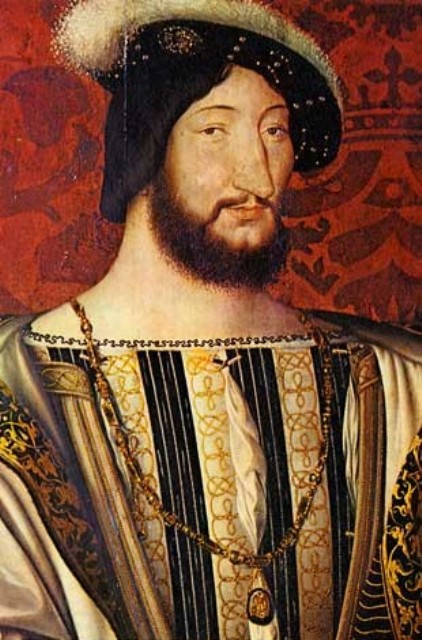
Another interesting connection is that the fireproof salamander was the symbol of the French king François I (1494-1547), who was the grandfather of Marguerite de Valois (1551-1615) and the brother of Margarita van Navarra (1492-1549).
His feet were in worn-out bedroom slippers
An apprentice who is initiated into the first degree of Freemasonry, must replace his right shoe by a slipper.
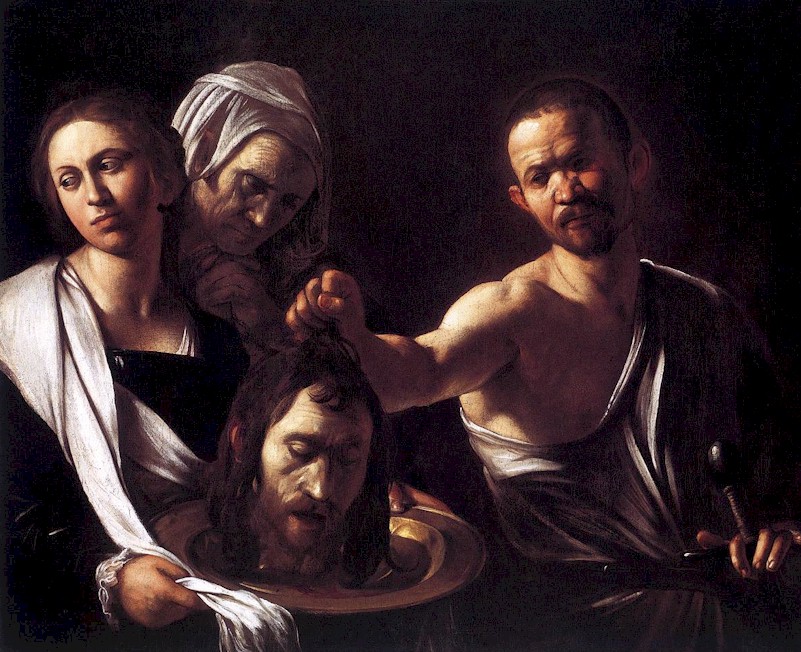
On this platter a man's severed head with the front teeth knocked out
Berlioz’ head on a platter recalls of course the biblical story of Salome who demanded to see the head of John the Baptist on a platter.
The skull being used as a cup recalls the story of the last pagan Russian prince of the land of Rus, Prince Svyatoslav I of Kyiv (942-972), the father of Prince Vladimir Svyatoslav the Great (956-1015) (see Chapter 18). The prince was caught in ambush and killed by the Pechenegs, nomad people from Turkish origin, when he wanted to cross the cataracts near Chortitsa in 972. The Primary Chronicle, a Russian manuscript from the 12th century describing the history of the land of Rus in a christian fashion, mentions that Kurya, the khan of the Pechenegs, made a chalice from his skull.
It will be given to each according to his faith
The words of Woland: «It will be given to each according to his faith» are a rather free interpretation of Matthew 9:29: «According to your faith be it done unto you».
Baron Meigel
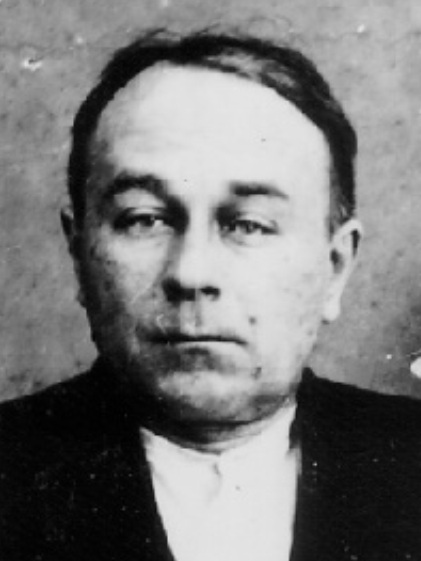
The real prototype for Baron Meigel's character is Baron Boris Sergeevich (von) Steiger (1892-1937). In the '20's and '30's he worked in Moscow at the Народный комиссариат просвещения (Наркомпрос) [Narodny kommisariat prosveshcheniya] (Narkompros) or People's Commissariat for Enlightening, where he was responsible for External Relations. Simultaneously he worked as an agent of the Объединённое государственное политическое управление (ОГПУ) [Obedinyonnoe gosudarstvennoe politicheskoye upravlenye] (OGPU) or the United State Political Administration, the secret service which became part of the notorious NKVD in 1934. In 1937, Steiger was arrested and executed.
Steiger is mentioned several times in the diary of Elena Sergeevna Shilovskaya (1893-1970). He was often found at the embassy of the United States. He reported on foreigners connected with the theatre, and on Soviet citizens having contact with the embassy.
Click here for a comprehensive description of baron Meigel
Some sort of black chlamys and a steel sword
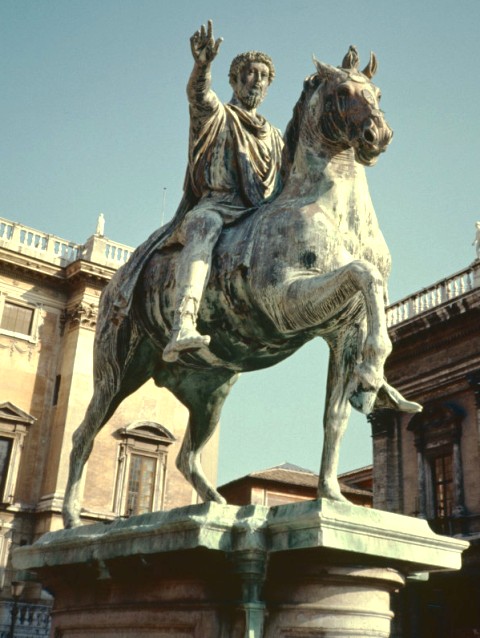
At the end of the ball, when the skull of Berlioz was filled with the blood of Baron Meigel, Woland turned the skull to his lips, and a metamorphosis took place. The patched shirt and worn slippers which Woland first wore were gone. Now he was in some sort of black chlamys with a steel sword on his hip.
A chlamys was an ancient Greek type of rather short cloak, coming from Macedonia or Thessaly. It consisted of a rectangular piece of cloth, which was thrown over the left shoulder and was held together with a clothes pin on the right shoulder.
The black chlamys and the sword correspond to the gear of a Knight Kadosh or a Knight of the white and the black eagle, the 30th degree in the Ancient and Accepted Scottish Rite.
Drink!
Woland touched the skull to his lips, but then he offered the cup to Margarita and ordered her to drink. That refers to the sealing of the brotherhood in Freemasonry by the mixing of the blood during the initiation to the degree of Entered Apprentice. The mixture is symbolically represented by a cup of red wine from which the venerable master and the candidate drink together.
Also in the ritual for the degree of Knight of the East and West, the 17th degree in the Ancient and Accepted Scottish Rite, the blood plays an important role. The Faithful Brother Master of Ceremonies leads the candidate to a basin where a lancet and some red wine are kept ready. He approaches the candidate, let some drops of wine fall on his arm while pretending leeching him. When the «blood» flows, it is collected on a cloth and shown to the candidate with the words: «One should never be afraid to shed his blood to set eyes on wondrous things»
Share this page |
Chapters
- Introduction
- 1 Never Talk with Strangers
- 2 Pontius Pilate
- 3 The Seventh Proof
- 4 The Chase
- 5 There were Doings at Griboedov's
- 6 Schizophrenia, as was Said
- 7 A Naughty Apartment
- 8 The Combat between the Professor...
- 9 Koroviev's Stunts
- 10 News From Yalta
- 11 Ivan Splits in Two
- 12 Black Magic and Its Exposure
- 13 The Hero Enters
- 14 Glory to the Cock!
- 15 Nikanor Ivanovich's Dream
- 16 The Execution
- 17 An Unquiet Day
- 18 Hapless Visitors
- 19 Margarita
- 20 Azazello's Cream
- 21 Flight
- 22 By Candlelight
- 23 The Great Ball at Satan's
- 24 The Extraction of the Master
- 25 How the Procurator Tried...
- 26 The Burial
- 27 The End of Apartment No. 50
- 28 The Last Adventures of Koroviev...
- 29 The Fate of the Master and...
- 30 It's Time! It's Time!
- 31 On Sparrow Hills
- 32 Forgiveness and Eternal Refuge
- Epilogue
English subtitles

All films based on The Master and Margarita are subtitled in English, French, German, Dutch, Spanish and Italian.
Illustrations

Bears in the Caviar by Charles Thayer
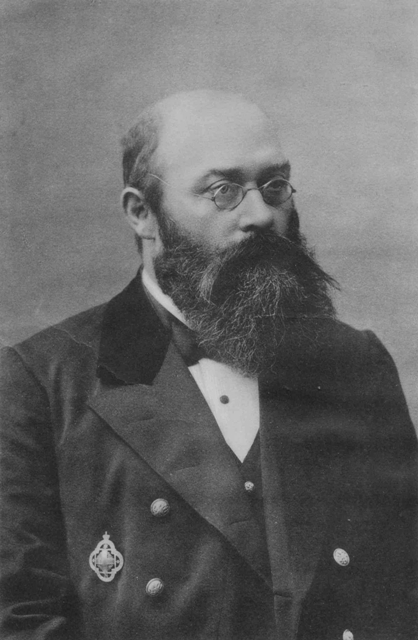
Afanasy Ivanovich Bulgakov
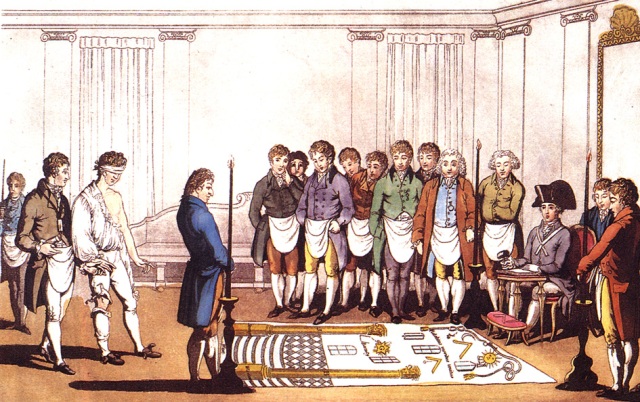
Initiation of a Freemason
with the right knee uncovered
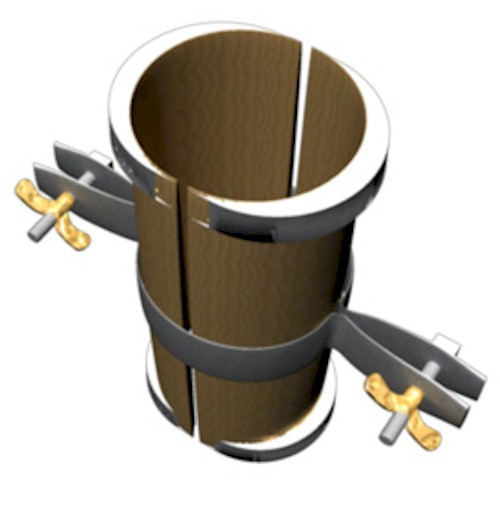
A Spanish boot
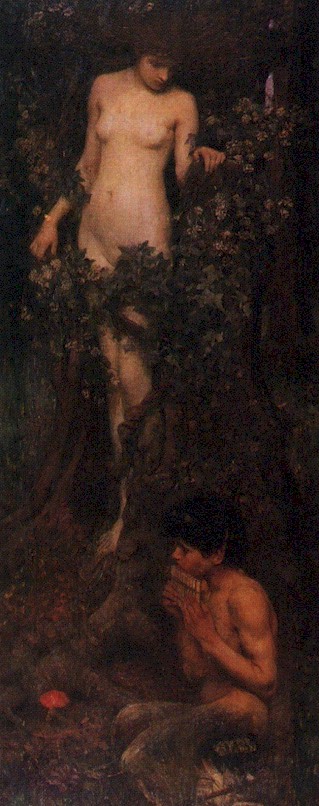
An hamadryad according to John William
Waterhouse

Mikhail Ivanovich Glinka portrayed
by Iliya Repin
François I
Salome with the head of John the Baptist
according to Caravaggio

Prince Svyatoslav according to
Ivan Akimov
Baron Boris Sergeevich (von) Steiger
Statue of Marcus Aurelius
dressed in a chlamys