29. The Fate of the Master and Margarita is Decided
English > The novel > Annotations per chapter > Chapter 29
One of the most beautiful houses in Moscow
Bulgakov describes here the Pashkov House in Mokhovaya street in Moscow. It was built between 1784 and 1787, and was indeed about 150 years old when Bulgakov wrote his novel. The house was built at the slope of the Vagankovsky hill facing the Borovitsky gates for Peter Yegorovich Pashkov (1726-1790), who was a retired officer and the son of an orderly of czar Peter I (1672-1725).
In 1812, the building was destroyed by a fire when Napoleon invaded Moscow. Later, it was acquired by the government. It was renovated and became a school for children of the nobility. After that, it was the first public library which also appeared to be a real cultural centre for Moscow. Prominent Russian writers and scientists came here to study.
After that, the Pashkov house became part of the Rumyantsev Museum, and Bulgakov visited it often in the 20s, when it had become the Lenin Library. Today it houses the manuscript collection of the State Library, including - appropriately - Bulgakov's archival manuscripts.
The building, designed by Vasily Ivanovich Bazhenov (1737-1799), is classical in style, with columns, urns, and terraces reminiscent of Rome. It had a garden with a pond, but that can’t be seen anymore. Today the house looks over a never ending car traffic stream.
Click here to read more about the Pashkov house
A black soutane and a long and broad sword
The black soutane and the long and broad sword coincide with the uniform of a Knight of Kadosh or Knight of the white and the black eagle, the 30th degree in the Freemason lodge of the Ancient and Accepted Scottish Rite.
The interest of Bulgakov for Freemasonry can be explained by the fact that, in 1903, Afanasy Ivanovich Bulgakov (1859-1907), theologian and church historian, and the father of Mikhail Afanasievich, had written an article about Modern Freemasonry in its Relationship with the Church and the State, which was published in the Acts of the Theological Academy of Kyiv.
In this article, the father of Bulgakov has described the initiation in the 30th degree of Knight of Kadosh.
Click here to read more on Freemasonry in The Master and Margarita
Resting his sharp chin on his fist
Woland imitates in a very accurate way the pose of the statue the Thinker of the French sculptor Auguste Rodin (1840-1917). This statue is the central part of his famous work The Gates of Hell.
Click here to read more about the Gates of Hell
Little hovels destined to be pulled down
From the roof of the Pashkov House, Woland could also see, between the palaces, the Храм Христа Спасителя [Khram Khrista Spasitelya] or The Cathedral of Christ the Saviour. You may think that this is not exactly a «little hovel destined to be pulled down», but maybe you should learn to now this cathedral’s story first.
Click here to read the story of the cathedral
I like Rome better
Woland and Azazello have their view over Moscow while Torgsin and Griboedov are on fire.It recalls how emperor Nero (37-68) had a view over Rome after he had put the city on fire himself in the year 64. Originally, Bulgakov had planned for this to happen to Moscow as well in the novel.
He does not deserve the light, he deserves peace
Scholars disagree about the significance of the master's fate. Some consider that the master's fate is less than light because he does not persevere in his writing, he loses faith in himself. Others think peace for a creative writer may be no less a fate than light.
Bulgakov expert Boris Vadimovich Sokolov (°1957), the author of the Bulgakov Encyclopedia, associates this fate with Freemasonry, without giving much evidence. He argues that Freemasons are regarded as «children of light» and sees a link with the Faust by Johann Wolfgang Goethe (1749-1832). He does not specify which link, though.
For sure, Goethe was a prominent Freemason. On June 23, 1780, on the eve of the feast of John the Baptist, the most important holiday of the year for the German Freemasons, he joined Amalia, a Freemason Lodge in Weimar. He had asked asked not to be blindfolded on his initiation. He had promised on his word of honor that he would keep his eyes closed. Goethe wrote many poems on the occasion of Masonic events. In 1830, for example, he wrote Dem würdigen Bruderfeste: «Fünfzig Jahre sind vorüber», a poetic acceptance speech at his 50th anniversary as a Freemason.
The Belgian mathematician, professor of Logic and Philosophy of Science Jean Paul Van Bendegem (°1953), an eminent Freemason, says about the meaning of light: «The light plays a major role in Freemasonry. A new member receives 'the light' at his initiation, a ritual having its origins in the Enlightenment thinking. Masons, however, use the light also in the biblical sense. They are inspired by the Gospel of John: 'The light shines in the darkness, and the darkness has not overcome it'.»
If this statement is correct, the master would therefore have had no access to the «heavenly glory», so rest would be a lesser reward than light.
In 1991, the Russian literary critic Yevgeny Kanchukov wrote in his article Расслоение мастера [Rassloenie mastera] or The Layering of the Master, published in the literary magazine Литературное обозрение [Literaturnoe obozrenie] or Literary Review that peace was a kind of punishment for the master.
Kanchukov compared the destiny of Levi Matthew with the fate of the master. Levi resisted, committed opposition and continued to write, so he could therefore join Yeshua in the light. The master gave up, burned his manuscript and turned away from his novel. So he showed cowardice, «the most grievous vice», and therefore he did not deserve the light.
Timiriazev
Koroviev refers to the statue of the famous Russian botanist Kliment Arkadyevich Timiriazev (1843-1920) at Nikitsky Gates.
Chapters
- Introduction
- 1 Never Talk with Strangers
- 2 Pontius Pilate
- 3 The Seventh Proof
- 4 The Chase
- 5 There were Doings at Griboedov's
- 6 Schizophrenia, as was Said
- 7 A Naughty Apartment
- 8 The Combat between the Professor...
- 9 Koroviev's Stunts
- 10 News From Yalta
- 11 Ivan Splits in Two
- 12 Black Magic and Its Exposure
- 13 The Hero Enters
- 14 Glory to the Cock!
- 15 Nikanor Ivanovich's Dream
- 16 The Execution
- 17 An Unquiet Day
- 18 Hapless Visitors
- 19 Margarita
- 20 Azazello's Cream
- 21 Flight
- 22 By Candlelight
- 23 The Great Ball at Satan's
- 24 The Extraction of the Master
- 25 How the Procurator Tried...
- 26 The Burial
- 27 The End of Apartment No. 50
- 28 The Last Adventures of Koroviev...
- 29 The Fate of the Master and...
- 30 It's Time! It's Time!
- 31 On Sparrow Hills
- 32 Forgiveness and Eternal Refuge
- Epilogue
English subtitles

All films based on The Master and Margarita are subtitled in English, French, German, Dutch, Spanish and Italian.
Illustrations
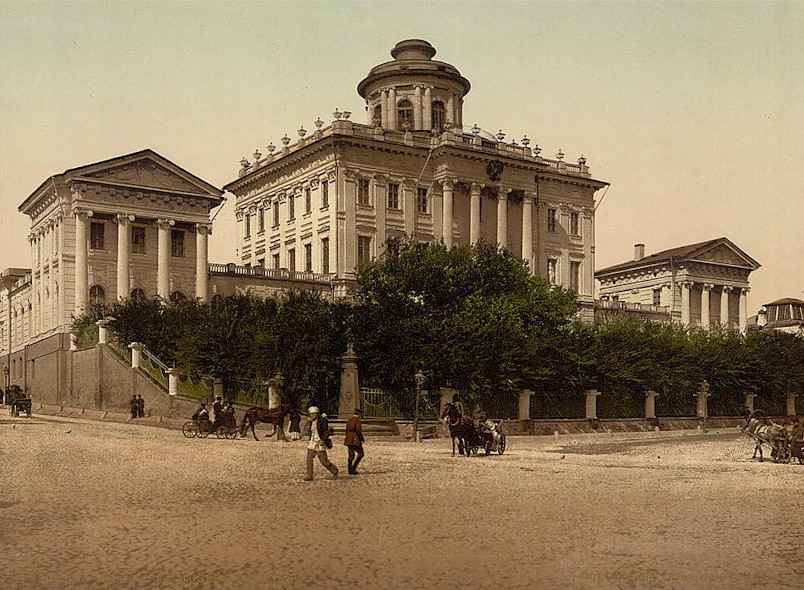
The Pashkov House
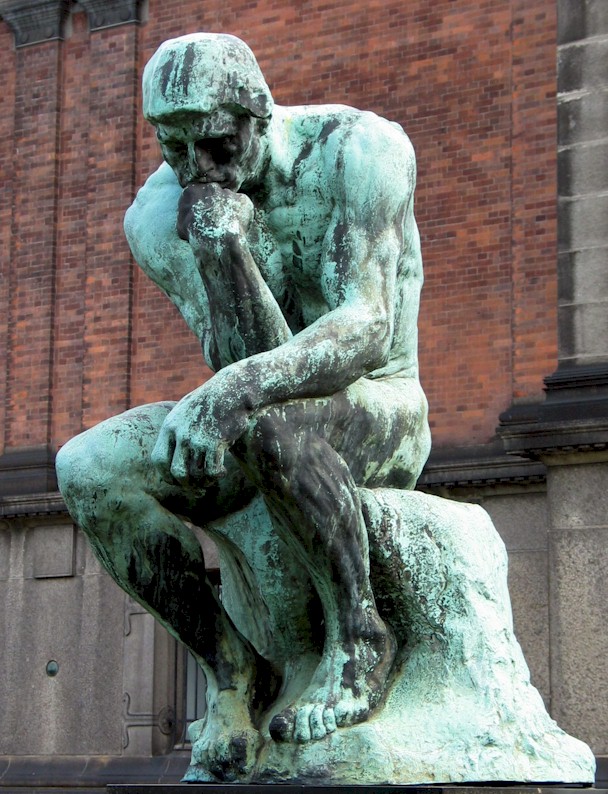
The Thinker by Auguste Rodin
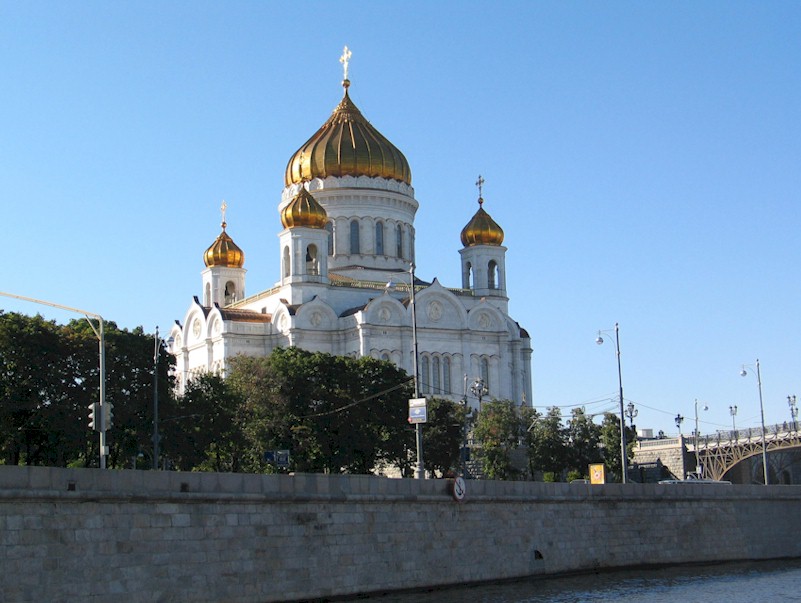
The Cathedral of Christ the Saviour
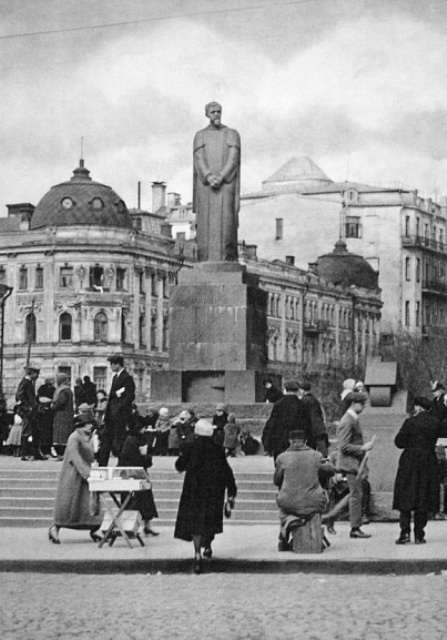
Statue of Timiriazev