10. News from Yalta
English > The novel > Annotations per chapter > Chapter 10
The Variety Theatre
The Театр Варьете [Teatr Varyete] or Variety Theatre is a fictitious building. Bulgakov based his description on the Moscow Music Hall from the 20's, which was situated on Triumfalnaya square where now the Satire Theatre is located, at only a few steps of the Bulgakov House on Bolshaya Sadovaya number 10.
Click here for a comprehensive description of the Variety Theatre
Varenukha
The name Varenukha is derived from the word варение [varenie], which means to brew. Varenukha is also the name of an Ukrainean cocktail made of honey, berries and spices boiled in vodka. It was the favourite drink of the cossacks.
Unlike the Russians, who insist on chilled vodkas, the Ukrainians prefer warm brandies and vodkas, which as they so quaintly put it «make a carnation bloom right inside your stomach». For centuries, varenukha was the favored tipple of the fearsome Cossacks, «fueling their warrior bodies by day and making them merry by night».
Click here for a comprehensive description of Varenukha
A super-lightning telegram
In the Russian text is written: «Сверхмолния вам. Распишитесь.» It means: «Super-lightning for you. Sign.» The word «telegram» is not mentioned, because the Russians know what a Super-lightning is.
In the Soviet Union, and certainly in the Stalin era, it was common to portray the realizations of the state organisations, and thus the telegraph services as well, in an exaggerated and positive way. Bulgakov didn’t have to change much to parody it. Super-lightning was only a little step more than the term Lightning which was really used by the postal services to describe a telegram. Varenukha will see a lightning soon anyhow.
A false Dimitri - the Yalta impostor
An impostor is a person who takes over authority or possessions in an illegal way. Russia has known three such impostors in the so-called Смутное время [Smutnoye Vremya] or Time of Troubles.
The Time of Troubles is the period from 1604 to 1613, which was the most turbulent period in Russia’s history before the Russian revolution. After the death of czar Fyodor I Ivanovich (1584-1598), the feeble-minded son of czar Ivan the Terrible (1530-1584), it was Boris Godunov (1551-1605), Fyodor’s father-in-law, who became czar in 1598. Another son of Ivan the Terrible, Dimitri Ivanovich (1581-1591), died seven years before from a stab wound and under mysterious circumstances, when he was ten years old.
After that, three «false Dimitri’s» have presented themselves. The first was Grigori Otrepyev († 1606) who was in fact an ambitious monk. He actually succeeded, with support of the Polish, the cossacks and the peasants, to become czar Dimitri I on June 30, 1605. Less than one year later he was killed.
In 1608, a second false Dimitri made another attempt to appoint a Polish-minded czar in Moscow, with the support of the Polish, the Germans and the cossacks. When an important part of his army of 100.000 troops went over to the king of Poland Sigismund III (1566-1632), he ran away. His real name was never known but it is believed that he was the son of a priest or a converted Jew. He was called the Thief of Tushino.
The third false Dimitri, who was supposed to be a dean named Sidorka, declared himself czar Dimitri Ivanovich II on March 28 1611 with support of the Swedish, and he also managed to get support of some cossacks in 1612. But the cossacks created havoc in the neighbourhood of Moscow, and he was arrested on May 18, 1612, and executed by the commanding officers in Moscow.
The false Dimitri’s were also called Pseudo-demetrius (Latin), Lzhedmitri (misleading Dimitri) or Dimitri Samozvanets (Dimitri, the self-declared ruler).
The Time of Troubles ended on February 21, 1613, with the election of czar Michael Fyodorovich Romanov (1596-1645), the first czar of the Romanov dinasty, the rulers over Russia until the 1917 revolution.
Rocks, my refuge...
The words «Starrender Fels, mein Aufenthalt...» or «Thundery rocks, my refuge...» are taken from Aufenthalt (Refuge), the song no. 5 of the collection Schwanengesang (Swan-song), written by Franz Schubert (1797-1828). The lyrics were written by Ludwig Rellstab (1799-1860), and were inspired by Goethe's Faust.
Take it there personally. Let them sort it out.
«Now that is really clever!» thought Varenukha when Rimsky gave these orders. Another oblique reference to the secret police. By now the reader should recognize the manner…
Mister's busy
In the Russian text the word Mister is not used. But the translation is quite accurate. Varenukha asks to speak to Woland, and the answer is: «Они заняты» - «They are busy». In plural. Woland’s retinue often uses the plural form to refer to him. It was a somewhat archaic way to show respect, like the French form «vous» or the majestic plural «we». It wasn’t used anymore in Russia after the Revolution.
A new Georgian tavern in Pushkino
Pushkino is a town situated 29 km from Moscow, and known for its many dacha’s. There was a summer theatre where Anton Pavlovich Chekhov (1860-1904) rehearsed with the Moscow Art Theatre.
In the original Russian text we don't read anything about a Georgian restaurant, since the place is mentioned by its typical name чебуречная [cheburechnaya]. A cheburechnaya is a tavern or restaurant specialised in чебуреки [chebureks], a kind of very tasty folded Caucasian pancakes filled with meat.
In the English translation by Michael Glenny and in the Dutch translation by Marko Fondse, the Yalta in Pushkino is described as a Turkish restaurant. In the French translation by Claude Ligny it was called by its real name: une tchebouretchnaïa.
The cheburechnaya Yalta in Pushkino really existed. In an advertisement in a newspaper of that time, the restaurant described itself as the лучший загородный ресторан [luchshy zagorodny restoran] or the best country restaurant.
Comr... citiz...
Varenukha can't decide how to address his attackers. Forms of address are significant in the Soviet Union. Soviets were addressed as comrades unless they were suspected of a crime, in which case they became citizens.
Click here to read more on how Russians address each other
A completely naked girl - red-haired
The woman with the red hair is Hella, a vampire. Her words «come let me give you a kiss» are reminiscent of the woman-vampire in the story Упырь [Upyr] or The Vampire, written in 1841 by Aleksei Konstantinovich Tolstoy (1817-1885), nephew of the better known Lev Nikolayevich Tolstoy (1828-1910). The woman-vampire kisses one of the heroes and turns him into a vampire.
Hella is a female vampire. From his annotations we know that Bulgakov found her name in the Энциклопедический словарь Брокгауза и Ефрона [Entsiklopedesky slovar Brokhauza i Efrona] or the Brockhaus and Efron Encyclopedic Dictionary, a work containing 86 volumes, which can be considered as the Russian equivalent for the Encyclopaedia Brittanica. Under the keyword Чародейство [Charodeystvo] or magic or witchcraft, he found that Empuza, Lamia and Hella were the names given on the Greek island of Lesbos to premature girls who became vampires after their death.
In the earlier versions of The Master and Margarita, however, this рыжая голая [ryzhaya golaya] or red naked had a different name. She was called Marta.
The Russian psychologist and translator Valery Konstantinovich Mershavka (°1957) believes that this Marta was inspired by Sofia Lvovna Perovskaya (1853-1881). Perovskaya was a prominent member of the socialist revolutionary organisation Народная воля [Narodnaya Volya] or The Will of the People, and she participated in three attempts to murder Tsar Alexander II (1818-1881). The last attempt was successful, after which Perovskaya was sentenced to death by hanging. This way of executing could explain the багровый шрам [bagrovy shram] or the red scar in Marta's - and later Hella's - neck.
Click here for a comprehensive description of Hella
Share this page |
Chapters
- Introduction
- 1 Never Talk with Strangers
- 2 Pontius Pilate
- 3 The Seventh Proof
- 4 The Chase
- 5 There were Doings at Griboedov's
- 6 Schizophrenia, as was Said
- 7 A Naughty Apartment
- 8 The Combat between the Professor...
- 9 Koroviev's Stunts
- 10 News From Yalta
- 11 Ivan Splits in Two
- 12 Black Magic and Its Exposure
- 13 The Hero Enters
- 14 Glory to the Cock!
- 15 Nikanor Ivanovich's Dream
- 16 The Execution
- 17 An Unquiet Day
- 18 Hapless Visitors
- 19 Margarita
- 20 Azazello's Cream
- 21 Flight
- 22 By Candlelight
- 23 The Great Ball at Satan's
- 24 The Extraction of the Master
- 25 How the Procurator Tried...
- 26 The Burial
- 27 The End of Apartment No. 50
- 28 The Last Adventures of Koroviev...
- 29 The Fate of the Master and...
- 30 It's Time! It's Time!
- 31 On Sparrow Hills
- 32 Forgiveness and Eternal Refuge
- Epilogue
English subtitles

All films based on The Master and Margarita are subtitled in English, French, German, Dutch, Spanish and Italian.
Illustrations
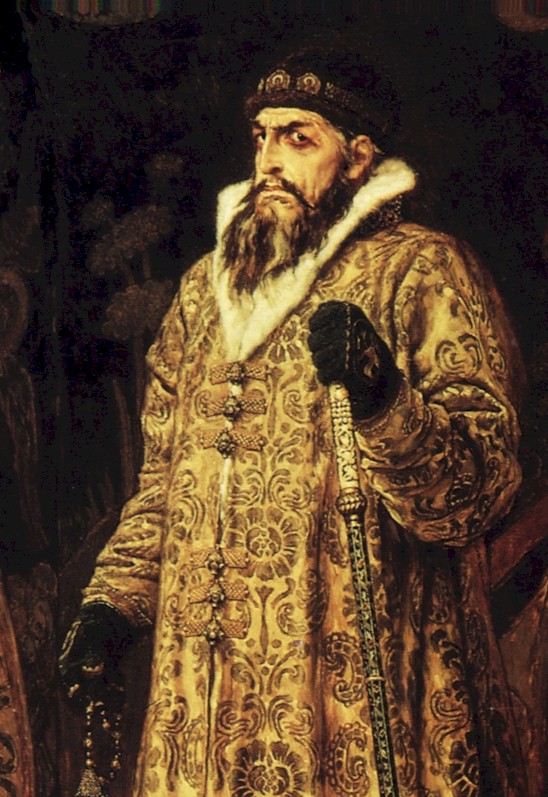
Ivan the Terrible
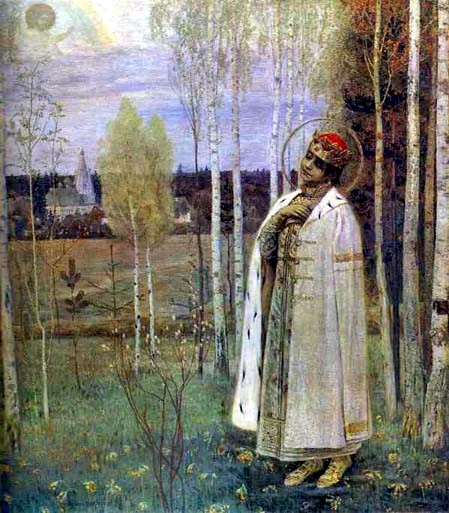
The real Dimitri
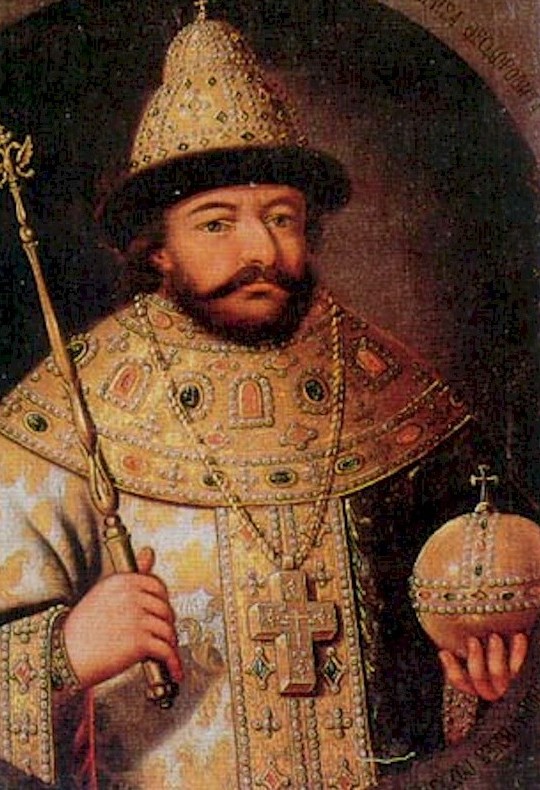
Boris Godunov

A table laid with chebureki

News paper ad of the restaurant
Yalta in Pushkino in Bulgakov's time