1. Never talk with Strangers (continued)
English > The novel > Annotations per chapter > Chapter 1 (continued)
Osiris
In Ancient Egypt, the god Osiris was the protector of the dead, brother and husband of Isis, and father of the falcon-headed god Horus
Tammoz
Tammoz is a Syro-Phoenician demi-god, his Greek equivalent Adonis is probably known better .
Marduk
Marduk is a Babylonian sun-god, the leader of a revolt against the old deities and institutor of a new order.
Vitzliputzli
Vitzliputzli, in other literary works also named Huitzilopochtli, is the Aztec god of war, to whom human sacrifices were offered.
A black knob shaped like a poodle's head
In Goethe's Faust, Mephistopheles first gets to Faust by taking the form of a black poodle.
A foreigner
Foreigners aroused both curiosity and suspicion in Soviet Russia, representing both the glamour of «abroad» and the possibility of espionage. Talking to strangers could get one into trouble with the secret police. Few foreigners visited the Soviet Union, and those who did were required to register with the authorities and to stay in special hotels, and they were observed very closely.
In Russian language a foreigner is indicated by the word иностранец [inostranyets], but in times past the word немец [nemets] was also used. This word had a double meaning, however. It stood, besides for foreigner, also for German. So when Ivan, in the first chapter of The Master and Margarita asks Woland «Вы немец?» [Vy nemets?], it can mean «are you German?» as well as «are you a foreigner?». Немец [nemets] would come from the verb неметь [nemet], which means to become dumb. A nemets is then a dumb, in the sense of someone who doesn't speak Russian.
Click here to read more about Russians and foreigners
The Phoenician Adonis
With the Phoenician Adonis Berlioz refers to the Syro-Phoenician equivalent of the Greek god Adonis: the demi-god Tammoz
The Phrygian Atris
The name Atris is probably a typing error in the English translation by Richard Pevear and Larissa Volokhonsky, since Bulgakov was writing about фригийский Аттис [Frigiyskiy Attis] or Phrygian Attis. Attis is a Phrygian god, companion to Cybele. He was castrated and bled to death
The Persian Mithras
Mithras is the Greek name for the Persian Mithra, a god who is truth-speaking, with a thousand ears, with ten thousand eyes, high, with full knowledge, strong, sleepless, and ever awake. Mithra is also protector and keeper of all aspects of interpersonal relationships, such as friendship and love, and closely associated with the goddess Aredvi Sura Anahita, the hypostasis of knowledge.
The coming of the Magi
In the original Russian text is written приход волхвов [prikhod volkhvov]. It means the coming of the magicians. In Russian, the term священные волхвы [svyachennije volkhvy] or holy magicians is used to describe the Three Wise Men, the Three Kings, or the Kings from the east who visited the newborn Jesus according to Matthew 2:1-12 - «After Jesus was born in Bethlehem in Judea, during the time of King Herod, Magi from the east came to Jerusalem and asked, 'Where is the one who has been born king of the Jews? We saw his star when it rose and have come to worship him'.»
The Magi were members of the Persian priestly caste. In other bible translations the terms diviners or astrologers are also used.
If, not being your acquaintance, I allow myself...
The foreigner's introduction inspired Mick Jagger from the British band The Rolling Stones to write the song Sympaty For The Devil, one year after the novel was published for the first time. At that time, the British singer Marianne Faithfull was Jagger's girlfriend. In an interview with Sylvie Simmons from the magazine Mojo in 2005, she said: «I got Mick to read The Master And Margarita and out of that, after discussing it at length with me, he wrote that song».
The song starts with the words: «Please, allow me to introduce myself...»
Click here to watch a video of the making of this song
Restless old Immanuel
Immanuel Kant (1724-1804), was a German idealist philosopher. In his Kritik der reinen Vernunft (1781) he wrote that, though we can not prove it, we can, by the pure reason - which is the ability to transcend the sensory reality and thus no longer depend on it - conclude that, among others, freedom, immorality and God exist.
The five proofs that Kant "roundly demolished" according to Woland, and to which he added "a sixth of his own", are the so called Quinquae viae, which are five proofs of the existence of God, formulated by the catholic philosopher and theologian Thomas Aquinas (1225-1274) in his Summa Theologiae (1265-1274).
Click here to read more about these proofs.
Schiller
Friedrich Schiller (1759-1805) was a German poet and playwright and a liberal idealist. At the beginning Schiller was a revolutionary in his work. Which, in those days, meant that he was striving for freedom and equality, and rejected arbitrariness and injustice. Later he became more moderate. Schiller is, among others, known for his poem An die Freude (1785) which was partly used by his contemporary Ludwig von Beethoven (1770-1827) in the final part of the Ninth Symphony. A well-known statement of Schiller concerned the work of Immanuel Kant related to freedom: "you can because you have to".
Schiller struck a productive, if complicated, friendship with already famous and influential Johann Wolfgang Goethe (1749-1842), with whom he discussed much on issues concerning aesthetics, encouraging Goethe to finish works he left merely as sketches; this thereby gave way to a period now referred to as Weimar Classicism. They also worked together on Die Xenien (The Xenies), a collection of short but harshly satiric poems in which both Schiller and Goethe verbally attacked those persons they perceived to be enemies of their aesthetic agenda.
Strauss
The Strauss mentioned here is David Strauss (1808-1874), a German theologian, author of Das Leben Jesu, kritisch bearbeitet or The Life of Jesus Critically Examined. He didn't care of the reality of the Jesus character, but he gave a mythical interpretation of the New Testament in the context of the poetical consciousness of the Jewish and the early christian communities. To him, the person Jesus was a fiction resulting from cultural and literary expectations.
Click here to read Das Leben Jesu, kritisch bearbeitet in English
Solovki
Solovki is a casual name for the Solovetski Islands in the White Sea. On the territory of a former convent was situated the Соловецкий лагерь особого назначения [Solovetsky lager osobogo naznacheniya] or the Solovetsky Special Purpose Camp, one of the earliest and most notorious concentration camps. The last prisoners were loaded on a barge and drowned in the White Sea in 1959.
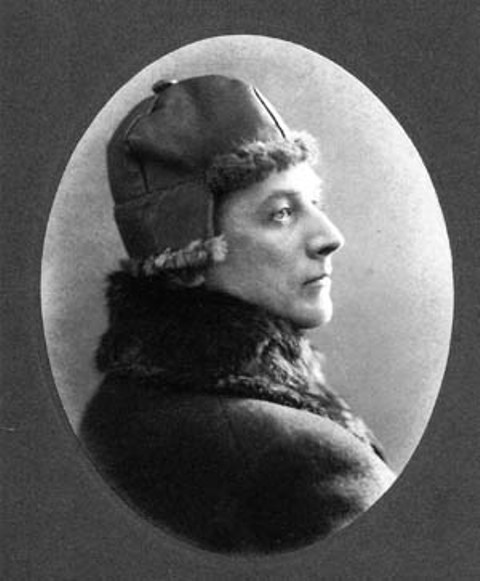
The three years in Solovki could refer to an incident that occurred in 1926, two years before Bulgakov began to write The Master and Margarita. At that time, a number of Freemasons were arrested in Leningrad by the secret police OGPU, the forerunner of the NKVD. One of those arrested was the lawyer Boris Viktorovich Kirichenko (1883-1941?), who was known under the pseudonym Boris Viktorovich Astromov.
Astromov said that he was already 2000 years old and that he was a follower of Kant. He was convicted because he had helped to organise an «international bourgeois conspiracy against the Soviet Union». He got sentenced to five years in a concentration camp, later replaced by a period of three years. In December 1926, he was pardoned and he was exiled to Siberia. In 1940, he was again arrested by the NKVD. After that, no one ever heard about him anymore.
The interest of Bulgakov for Freemasonry can be explained by the fact that, in 1903, Afanasy Ivanovich Bulgakov (1859-1907), theologian and church historian, and the father of Mikhail Afanasievich, had written an article about Modern Freemasonry in its Relationship with the Church and the State, which was published in the Acts of the Theological Academy of Kyiv. Bulgakov refers more than once to Freemasonry in the novel.
Click here to read more on Freemasonry in The Master and Margarita
Man governs it himself
Bezdomny quotes a verse from the poem Наше воскресенье [Nashe voskresenye] or Our resurrection, written by Vladimir Mayakovsky (1893-1930) in 1923: «нам не бог начертал бег […] миром правит сам человек» or «no god determines our flight [...] the world is governed by man himself ».
Motionless in a wooden box
The story which Woland describes so colourfully here, alleges Господин из Сан-Франциско [Gospodin iz San Frantsisko] or The Gentleman from San Francisco, a story from 1915 by Nobel Prize winner Ivan Bunin (1870-1953). Bunin himself said he got the idea of writing this story after having seen the cover of the novella Death in Venice by Thomas Mann (1875-1955) in a Moscow bookstore.
Bulgakov must have loved this story, since he also referred to it in his novel The White Guard, where «a cold cup of tea and The Gentleman from San Francisco lay on the table in front of Elena Turbin».
Our Brand
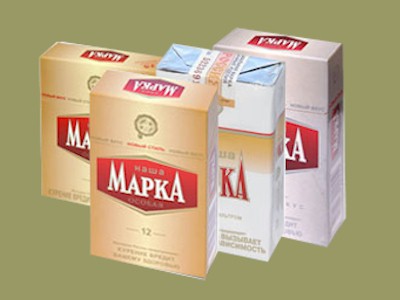
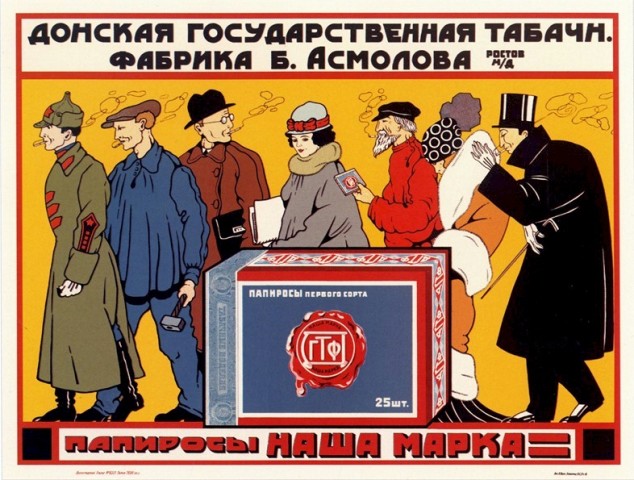
In the Russian text Ivan says that he smokes Наша Марка (Nasha Marka), or Our Brand. Nasha Marka, produced originally by V.I. Asmolov & Co in Rostov on Don, is a Russian brand of cigarettes. It still exists and is very popular - it celebrated its 100th anniversary in 2003. In 1920, the company was nationalized and the name changed to the Don State Tabacco Factory (DSTF). Production promptly decreased by 60 % compared to 1916. But the NEP gave a new impulse and in 1926 the production was four times the 1922 results. After the Soviet era, in 1992, the DSTF was reorganised and the name changed into JSC Donskoy Tabak. At the centenary celebration of Nasha Marka in 2003, a new industrial complex was built with a production capacity of 60 billion cigarettes per year. JSC Donskoy Tabak is now part of the agroholding AGROCOM.
The way Woland offers a cigarette to Ivan reminds of a scene from Goethe's Faust. The devil Mephistopheles asks some tipplers in the Auerbachs Keller in Leipzig: «Nun sagt, was wünschet ihr zu schmecken?» or «Tell me, what do you wish to taste?», which is followed by the counter-question: «Wie meint Ihr das? Habt Ihr so mancherlei?» or «How do you mean? Have you got so much choice then?». Just like Ivan replied: «What, have you got several?» when Woland asks him which kind of cigarettes he prefers.
A cigarette case
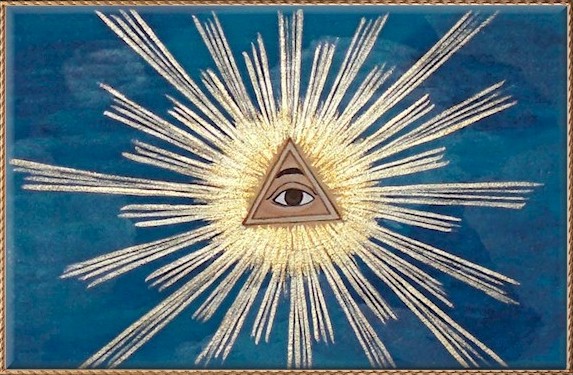
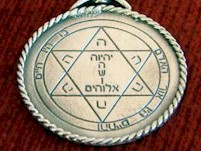
The cigarette case of the stranger contains precisely Our Brand cigarettes - it is not so strange: the devil is traditionally gifted with the power to make any desired object appear. But Berlioz and Ivan are also astonished by the triangle which adorns the case. It is one of the emblems of the devil. It is often found in esotericism (jewish mystic, mystic of numbers, freemasonry). It is the reversible face par excellence, often linked to its reversed picture, as in the Seal of Solomon and the Star of David (David was the father of Solomon). This seal is formed by two twined triangles: the one - going up - representing the negative force or the devil, the other one - going down - representing the positive force or God. The equilibrium of both triangles is the key of Wisdom.
On the lid of the cigarette case «a diamond triangle flashed white and blue fire». Blue is the highest colour of Freemasonry. It symbolizes perfection, truth and immortality. A triangle with the so-called Eye of Providence is present in all temples of Masonic Lodges on the wall opposite to the entrance, symbolizing the East.
The interest of Bulgakov for Freemasonry can be explained by the fact that, in 1903, Afanasy Ivanovich Bulgakov (1859-1907), theologian and church historian, and the father of Mikhail Afanasievich, had written an article about Modern Freemasonry in its Relationship with the Church and the State, which was published in the Acts of the Theological Academy of Kyiv. Bulgakov refers more than once to Freemasonry in the novel.
Click here to read more on Freemasonry in The Master and Margarita
Mercury and the Moon
The term retrograde comes from the Latin word retrogradus or step backwards. For astrologers, the planets or the moon are «retrograde» when, seen from Earth, they no longer seem to follow their normal orbit around the sun, but appear to be stationary, or even moving in the opposite direction. In reality, it’s only an optical illusion, because those planets don't actually turn the other way around, it just looks that way. For the planet Mercury, this phenomenon occurs about three times a year, each time for three weeks.
Astrologers and spiritually inclined people often warn about periods of full moon and periods when a planet goes retrograde. In such a period some people, depending on the time and place of their birth, may expect great disaster in the domains symbolised by the planet concerned.
Mercury is a symbol for trade, communication, travel and transport, and therefore also for trams. So it should come as no surprise that Berlioz could expect a tragic encounter with the tram.
Whoever has Mercury in the second house deals with money wisely and professionally, and always thinks of methods to increase his or her income or property. He or she becomes nervous about his or her income position during afflictions or difficult transits.
For those who like to believe in it: on October 4, 2021, the communication network Facebook and its affiliates Messenger, WhatsApp and Instagram shut down completely, with the result that 3.5 billion people worldwide could not use these platforms. The next day we could read «Mercury retrograde» as an explanation on various platforms, because that planet, symbol of communication, was indeed retrograde from September 27 to October 18, 2021.
Enemies? Interventionists?
There was constant talk in the early Soviet period of enemies of the revolution and foreign interventionists seeking to subvert the new workers' state.
Komsomol
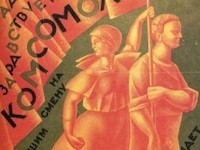
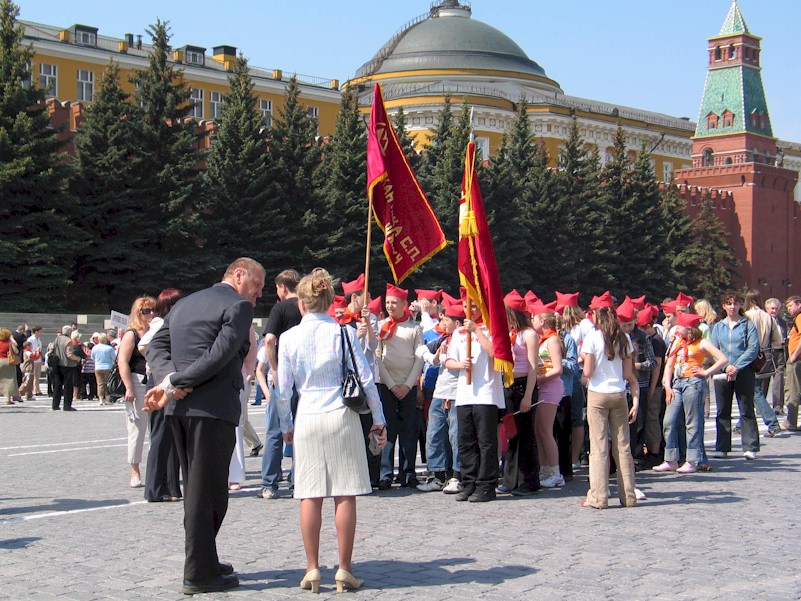
Komsomol is the contraction of Коммунистический союз молодёжи (Kommunistichesky Soyuz Molodyozhy) or the Union of Communist Youth, which all "good Soviet" young people were expected to join.
Komsomol had little direct influence on the Communist Party but played an important role as a mechanism for teaching the values of the communist party to the young, and as an organ for introducing the young to the political arena. The driver woman of the tram that wll decapitate Berlioz, is a member of Komsomol. We know that because she has got a «crimson armband». Well... in Chapter 3, we will see that it should have been a «scarlet scarf» or a «necktie».
The growing up Soviet citizen had to follow a complete ideological itinerary, starting with the Всесоюзная пионерская организация [Vsesoyuznaya pionyerskaya organizatsya] or Pioneers. At the age of 14, the youngster moved to the Komsomol, where he or she stayed until the age of 28. After that, the talented members could join the Communist Party, which was a condition for having access to more important functions. The Komsomol served as a repository for young potentials and a steppingstone for any career. Being thrown out of the youth movement, for instance because of misbehaviour at school, or because of politically incorrect ideas, was considered as one of the major punishments and after that, further career opportunities within the Soviet Union were reduced to zero.
Annushka
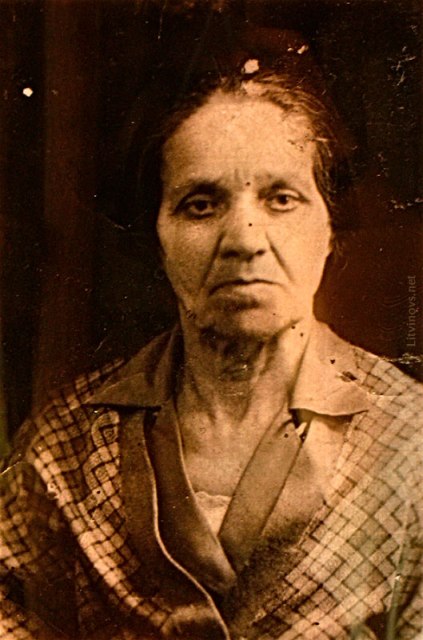
Annushka is one of the few real life persons wo kept her actual name in The Master and Margarita. Tatiana Nikolaevna Lappa (1892-1982), Bulgakov's first wife remembered Annushka Goryacheva (1871-?), who lived in the same apartment no. 50. The apartment was a sort of working-class dormitory with 7 rooms off a central corridor. Annushka Goryacheva had a son and beat him often. They used to buy home-brew vodka, get drunk, fight, and make noise.
In an earlier version of the novel, her name was Pelageyushka, in another one she was called Annushka Basina. She also played a role in No. 13 - The House of the Elpit Workers' Commune, a short story from 1922, and in Theatrical novel, also known as Black Snow, a novel from 1937.
Boulgakov could get terribely annoyed by the real Annouchka, as we can conclude from the fact that he wrote in his diary on October 29, 1923: «The first day of heating was marked by the fact that the famous Annushka left the window of the big kitchen opened during all night. I resolutely do not know what to do with the scoundrel who lives in this flat».
You can read much more on Annushka by clicking this link
A Russian emigre
Many Russians who were opposed to the revolution emigrated abroad, forming important "colonies" in various capitals like Berlin, Paris, Prague, Harbin or Shanghai - where they remained potential spies and interventionists.
Gerbert of Aurillac
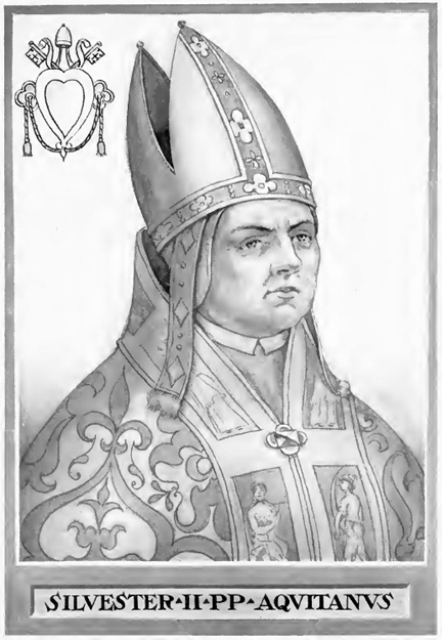
Gerbert of Aurillac (958-1005) was a theologian and mathematician, popularly taken to be a magician and alchemist. He became pope in 999 under the name of Sylvester II.
Nisan
Nisan is, according to the civil calendar, the seventh month of the Jewish lunar calendar. Originally, according to the ecclesiastical calendar, it was the first month. The fifteenth day of Nisan (beginning at sundown on the fourteenth) is the start of the feast of Pesach or Passover, (Hebrew: פסח - coming from passing over or Pasach). It's the day of the full moon, because the jewish months start on the day following the new lunar crescent. Passover is also known as Pesach, the spring feast, or freedom feast, commemorating the exodus of the Jews from Egypt.
Previous page of Annotations chapter 1
Share this page |
Chapters
- Introduction
- 1 Never Talk with Strangers
- 2 Pontius Pilate
- 3 The Seventh Proof
- 4 The Chase
- 5 There were Doings at Griboedov's
- 6 Schizophrenia, as was Said
- 7 A Naughty Apartment
- 8 The Combat between the Professor...
- 9 Koroviev's Stunts
- 10 News From Yalta
- 11 Ivan Splits in Two
- 12 Black Magic and Its Exposure
- 13 The Hero Enters
- 14 Glory to the Cock!
- 15 Nikanor Ivanovich's Dream
- 16 The Execution
- 17 An Unquiet Day
- 18 Hapless Visitors
- 19 Margarita
- 20 Azazello's Cream
- 21 Flight
- 22 By Candlelight
- 23 The Great Ball at Satan's
- 24 The Extraction of the Master
- 25 How the Procurator Tried...
- 26 The Burial
- 27 The End of Apartment No. 50
- 28 The Last Adventures of Koroviev...
- 29 The Fate of the Master and...
- 30 It's Time! It's Time!
- 31 On Sparrow Hills
- 32 Forgiveness and Eternal Refuge
- Epilogue
English subtitles

All films based on The Master and Margarita are subtitled in English, French, German, Dutch, Spanish and Italian.
Illustrations
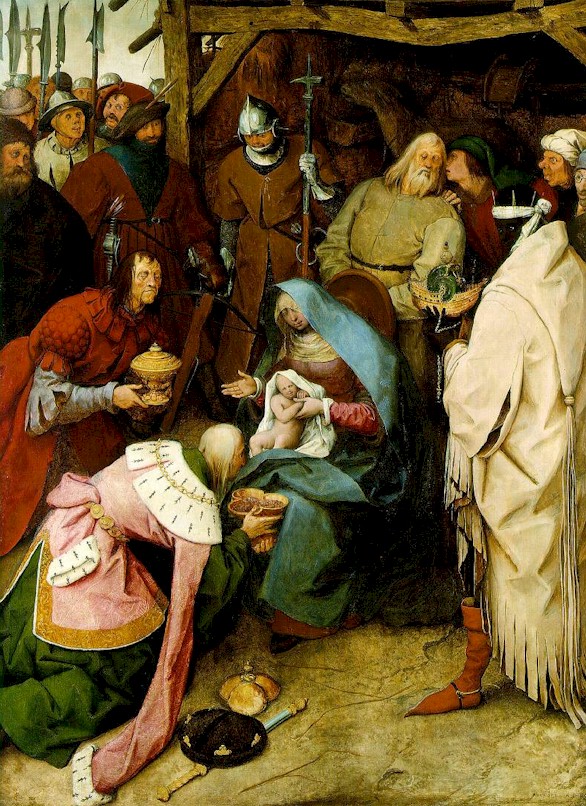
The Reverence of the Three Wise Men
according to Pieter Brueghel
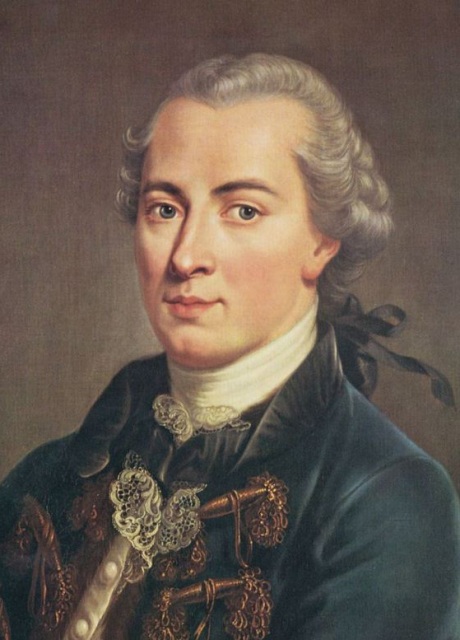
Immanuel Kant
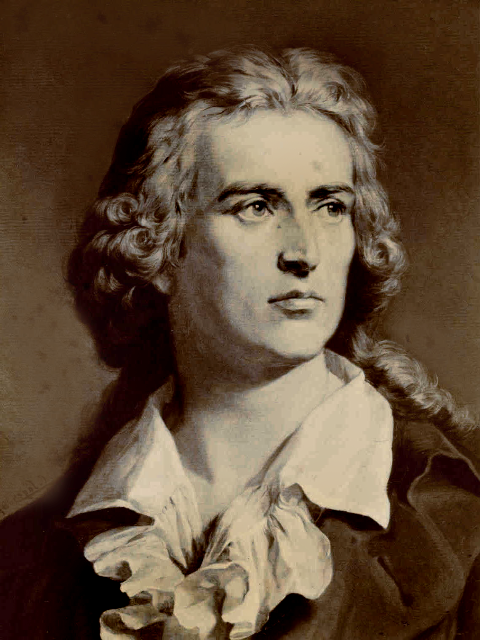
Friedrich Schiller
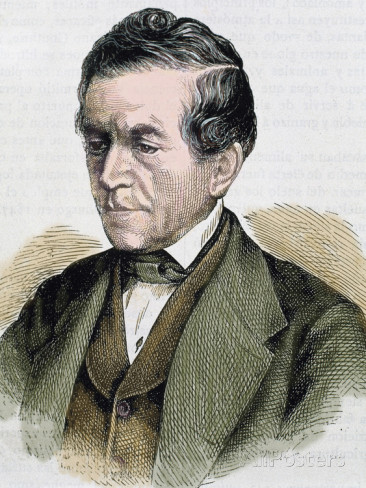
David Strauss
Boris Viktorovich Astromov
Nasha Marka (Our Brand)
Advertisement for Nasha Marka (1925)
Triangle with the Eye of Providence

Solomon's Seal
Solomon's Seal
Komsomol propaganda
Meeting of pioneers in Moscow
on the Red Square in May 2007
Pope Sylvester II
Annushka Goryacheva